
Reviewed · GALLIPOLI & TROY TOURS
Gallipoli ANZAC Battlefields Tour from Canakkale
Gallipoli is not a museum you walk through in an hour. It is a wide, quiet area where beaches, ridges, trenches, cemeteries, and memorials explain how a military plan became a human catastrophe. This half-day battlefield tour gives you a serious look at that story, with a ferry ride across the Dardanelles and several important sites packed into one afternoon.
I like the small group of no more than 15 people, since it gives you a fair chance to ask about the Australian, New Zealand, and Turkish forces. I also like the included Turkish-style lunch at Maydos Restaurant & Bar, which breaks up the long afternoon and saves you the trouble of arranging food.
The main drawback is the pace. Six or seven hours can cover the major places, but Gallipoli rewards time and reflection, and one traveler who wanted to absorb every detail suggested considering a two-day tour instead. The tour also requires good weather and is non-refundable unless the operator cancels it.
Key points to know before booking
- Cross the Dardanelles by Kilitbahir car ferry: The water crossing provides a natural transition from Canakkale to the battlefield peninsula.
- Visit at least six major sites: Brighton Beach, Beach Cemetery, Ari Burnu Cemetery, Lone Pine, Johnston’s Jolly, the Nek, and Chunuk Bair are included.
- Hear both sides of the campaign: The route covers Australian, New Zealand, and Turkish positions, memorials, trenches, and burial grounds.
- Lunch is included at Maydos Restaurant & Bar: Drinks cost extra, and a vegetarian meal is available if requested when booking.
- Expect an English-speaking guide with strong historical detail: Ercan Yavuz, Adem, and Apo are among the guides praised for explaining people, operations, and key moments.
- The tour is limited to 15 people: That is a useful size for questions without the feel of a large coach outing.
Why Gallipoli is best seen on the ground
Gallipoli can sound familiar before you arrive. You may know the basic story: Allied forces landed in 1915, met fierce Turkish resistance, and eventually withdrew. But the place itself adds scale and clarity.
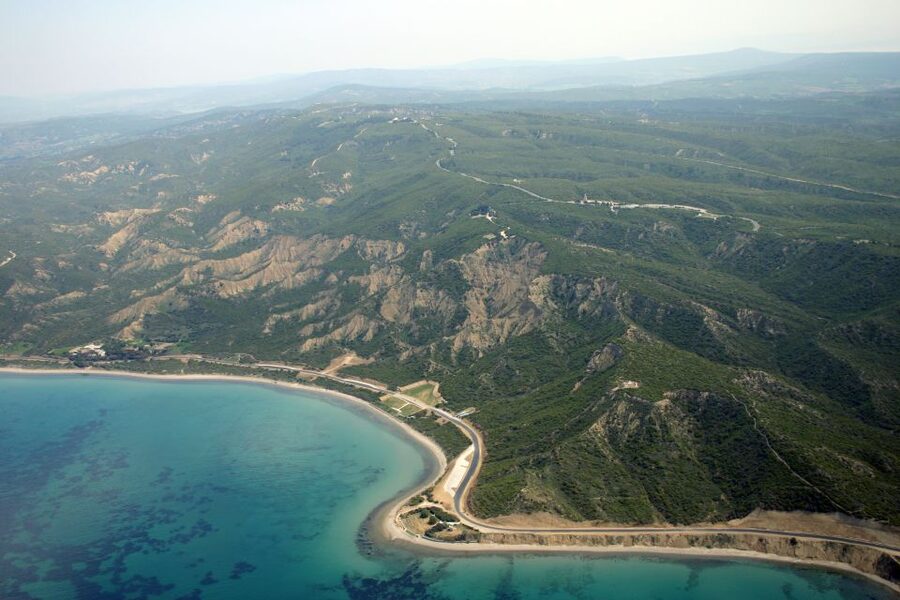
You see the beaches where troops came ashore, the narrow ground where opposing positions were close together, and the memorials that give names to the dead. The geography explains much of the campaign. Beaches led quickly to steep ground, ridges, gullies, and defensive positions. Your guide can connect each location to the movement of troops and the decisions made there.
This is also a sensitive place. The tour does not present Gallipoli as only an Australian or New Zealand story. It includes Turkish memorials, trenches, and the 57th Regiment Memorial, giving you a view of the campaign shared by all three forces. That balance matters, especially at a site remembered with great feeling in Turkey, Australia, and New Zealand.
I would not treat this as a casual sightseeing trip. The cemeteries and memorials call for quiet attention, and some of the numbers involved are difficult to take in. Beach Cemetery, for example, is associated with the first wave of ANZAC troops and the crowded military presence at ANZAC Cove. John Simpson Kirkpatrick, remembered for carrying wounded men with his donkey, is buried there.
Other battlefield and ruin days from Turkiye:
- Istanbul to Gallipoli Full Day Tour with Lunch and Transfers
★ 5.0 · 567 reviews - Gallipoli Full-Day Tour from Istanbul
★ 4.9 · 468 reviews - From Istanbul: Gallipoli and Anzac Full-Day Tour
★ 4.9 · 345 reviews
Ferry across the Dardanelles and lunch at Maydos
The day begins at the Hassle Free Travel meeting point in central Canakkale at 11:20 am. The tour departs at about 11:45, though the time can change with the season or weather, so you should confirm the departure details with the operator.
The first leg is the Kilitbahir car ferry across the Dardanelles. This is more than a transfer. The crossing gives you a little time to shift from town sightseeing to the serious subject ahead. It also places the waterway at the center of your understanding of the campaign. Gallipoli was not an isolated battlefield. Access by sea shaped the entire operation.
Before the battlefield visits begin, the group stops at Maydos Restaurant & Bar for lunch. Turkish-style food is included, making this a practical part of the tour rather than an optional stop you need to arrange yourself. Several guides, including Ercan Yavuz, have been singled out for making the lunch stop work well within the day’s schedule.
Drinks are not included, so plan to pay separately for them. If you need vegetarian food, mention it at the time of booking. Since lunch comes before the main site visits, it is worth arriving ready to eat rather than expecting a late meal after the tour.
Brighton Beach and the first approach to ANZAC Cove
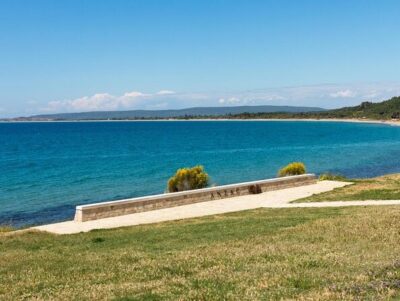
After lunch, you board an air-conditioned tour bus for the battlefield area. Brighton Beach was intended as the landing place for the ANZAC forces, and it helps you understand how the original plan was supposed to work.
The beach is also the only stop specifically described as allowing a swim, weather permitting. That possibility should be treated as a small extra, not the purpose of the tour. Conditions can change, and the day is built around battlefield visits rather than beach time.
Brighton Beach matters because it shows the gap between planned movement and what happened in practice. A military landing depends on reaching the right place, moving inland, and keeping units organized. At Gallipoli, the campaign quickly became confused and costly. Your guide can use the setting to explain that shift more clearly than a map or book can.
You will want sensible shoes and clothing suited to outdoor stops. The tour is not described as a strenuous hike, and most people can participate, but you will be moving between open sites, cemeteries, and memorials rather than staying inside a visitor center.
Beach Cemetery and the human cost of the landing
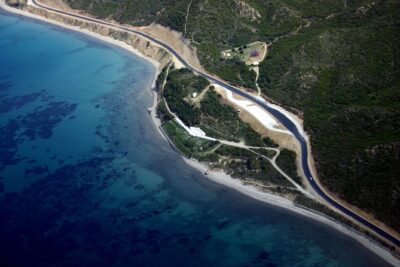
Beach Cemetery lies at the southern end of ANZAC Cove. It is connected with the first wave of ANZAC troops and the early military presence at the cove, where as many as 30,000 troops were based during the campaign.
This is one of the stops where the human side of Gallipoli becomes harder to avoid. The cemetery is not simply a place to identify a battle position. It gives the campaign individual names and graves, including that of John Simpson Kirkpatrick.
The guide’s role is especially important here. A strong guide can explain who fought, how the position was used, and why the cemetery matters without turning the visit into a string of dates. Ercan Yavuz has been praised for discussing operations, people, and defining moments involving the Australian, New Zealand, and Turkish armies. Adem and Apo have also been noted for clear, detailed explanations.
You should allow yourself a little quiet time at this stop. The schedule has several places to cover, but this is not a location to rush through while focusing only on photographs.
Same base, a different sort of day:
- Istanbul: Bosphorus Dinner Cruise & Show with Private Table
★ 4.8 · 44,561 reviews - Istanbul: Daytime or Sunset Sightseeing Cruise & Audio Guide
★ 4.8 · 14,430 reviews - Istanbul: Bosphorus Dinner Cruise with Turkish Night Show
★ 4.8 · 10,127 reviews - Best of Istanbul 1, 2 or 3-Day Private Guided Istanbul Tour
★ 5.0 · 8,922 reviews
Ari Burnu Cemetery and the ANZAC Cove story
The route continues to Ari Burnu Cemetery at the northern end of ANZAC Cove. Seen alongside Beach Cemetery, it helps you understand the physical spread of the landing area and the concentration of troops along the shoreline.
The two cemeteries also give the day a useful rhythm. Rather than treating ANZAC Cove as one broad historical label, the tour takes you to specific points with different connections to the landing and its aftermath. That detail makes the geography easier to follow.
This part of the route can be emotionally heavy, especially if you have a family or national connection to the ANZAC story. The tour is conducted in English and is designed for a mixed audience, so you can ask questions and hear the events explained in a wider Turkish, Australian, and New Zealand setting.
Lone Pine, Johnston’s Jolly, and the trenches
At Lone Pine, you see the Australian Memorial on the site associated with the attack and capture of Turkish trenches by Australian forces. The memorial gives the battle a clear focus, while the surrounding area helps explain why control of trenches and high ground mattered so much.
Johnston’s Jolly adds another layer. Here you can view Allied and Turkish trenches and tunnels. These surviving features make the battle easier to picture. You are no longer relying only on a guide’s description of opposing positions. The physical remains show how close the two sides could be and how confined life at the front must have been.
This is one of the strongest parts of the tour for anyone who wants more than memorial visits. You get a sense of the defensive system and the conditions faced by soldiers. At the same time, the stop is brief within a busy afternoon, so ask your guide about the details that interest you most.
The small group is useful here. With up to 15 people, you have a better chance of hearing the explanation clearly and following up with a question than you would in a much larger group.
The 57th Regiment Memorial and the Turkish side
The 57th Regiment Turkish Memorial brings the Turkish experience into direct view. It is an important stop for anyone who wants to understand Gallipoli as a shared national memory rather than a one-sided ANZAC pilgrimage.
The tour’s balance is one of its real strengths. You move from Australian and New Zealand memorials to Turkish positions and commemorations, seeing how the same campaign is remembered from different sides. Your guide can connect the military action with the people who held these positions and the cost paid by the Turkish forces.
This is also where the quality of the guide matters most. The strongest guides on this route do not simply recite a prepared speech. Ercan Yavuz has been praised for his research and for sharing personal stories connected with individual soldiers. Apo has also been noted for adding background accounts and explaining the wider meaning of the battlefield.
The Nek and Chunuk Bair
The Nek is associated with the attack depicted in the film Gallipoli. Even if you have not seen the film, the site is important because it represents the concentrated danger of attacking a defended position across a narrow area.
Your guide can explain what happened here and why the location became such a powerful part of the Gallipoli story. The stop is a good example of how the tour links popular memory with the actual ground. Films and books may give you an outline, but standing at the site helps you grasp the distances and the exposed position.
The final major stop is Chunuk Bair New Zealand. For visitors from New Zealand, this may be the emotional center of the day. For everyone else, it provides a clear view of the New Zealand connection to the campaign and the importance of the position.
By this point, you will have seen beaches, cemeteries, trenches, memorials, and battle sites. The sequence gives you a useful story arc, from the planned landing to the struggle for higher ground and the eventual cost of the campaign.
What you get for $140
The price is $140 per person. That includes the guide, air-conditioned transport, lunch, and hotel pickup and drop-off from selected hotels. The ferry crossing is part of the route, and admission to the battlefield visit is included.
I consider that a reasonable price if you want the main Gallipoli sites handled in one organized day. You are paying for transport across the water and around a spread-out peninsula, a meal, a dedicated English-speaking guide, and the chance to ask questions in a small group.
The value depends on how much time you want at each location. If you want a first visit that covers the key sites without arranging a car, maps, lunch, and a route yourself, this tour makes sense. If you already have strong knowledge of the campaign and want long periods of quiet study at each cemetery, the half-day format may feel compressed.
Group discounts may be available. Since drinks are extra and hotel service applies only to selected hotels, check those points before you pay.
Timing, transport, and who should book
The tour lasts about six to seven hours, with roughly five hours listed for the battlefield portion. It starts around midday and returns to the meeting point in Canakkale. That timing suits you if you want a morning in town or need a later departure, but it leaves less room for a second major activity that evening.
The air-conditioned bus is a practical benefit. Gallipoli’s sites are spread out, and walking between them would take too much time for a single afternoon. The ferry crossing also removes the need to arrange your own transport across the Dardanelles.
I would recommend this experience to:
- First-time visitors to Gallipoli
- People staying in Canakkale without a rental car
- Visitors who want both Turkish and ANZAC perspectives
- Australian and New Zealand visitors seeking the main memorials
- Anyone who prefers a small group and an English-speaking guide
- People who want a serious historical visit with lunch included
I would think twice if you need a slow, reflective visit at every cemetery or want to set your own timetable. A two-day option may suit you better if Gallipoli is the main reason for your time in the area.
The tour requires good weather. If bad weather causes cancellation, you are offered another date or a full refund. If the minimum number is not reached, you are offered another date or experience, or a full refund. Otherwise, the booking is non-refundable and cannot be changed, so choose your date carefully.
Should you book the Gallipoli battlefield tour?
Book it if you want a well-organized first look at the campaign, especially if you value clear explanations and do not want to manage transport across the peninsula. The combination of ferry, lunch, small group, and major sites gives you a practical day with real historical weight.
The strongest reason to choose it is the guide. Ercan Yavuz, Adem, and Apo have each been praised for explaining the military operations, individual stories, and Turkish, Australian, and New Zealand viewpoints in a lively but respectful way.
Skip it in favor of a longer visit if you already know Gallipoli well or want hours at each site. For most people with limited time in Canakkale, though, this is a sensible way to see the essential ground and leave with a clearer understanding of why Gallipoli still matters.
FAQ
Where does the tour start?
The meeting point is Hassle Free Travel at Kemalpaşa, Cumhuriyet Blv. No:59, in central Canakkale. The stated meeting time is 11:20 am.
What time does the tour depart?
The tour departs at about 11:45 am. Departure times can change with the season or weather, so confirm the time with the supplier.
Is hotel pickup included?
Hotel pickup and drop-off are included for selected hotels only. If your hotel is not covered, the activity ends back at the stated meeting point.
What food is included?
Lunch at Maydos Restaurant & Bar is included. Drinks are not included. A vegetarian option is available if you request it when booking.
Which Gallipoli sites are visited?
The route includes Brighton Beach, Beach Cemetery, Ari Burnu Cemetery, Lone Pine Australian Memorial, Johnston’s Jolly, the 57th Regiment Turkish Memorial, the Nek, and Chunuk Bair New Zealand.
How large is the group?
The maximum group size is 15 people. The tour is offered in English.
What happens if bad weather cancels the tour?
If poor weather causes cancellation, you are offered a different date or a full refund. The experience also requires a minimum number of participants, and a similar choice is offered if that minimum is not met.
Just added in Turkiye
- City of Side: Fire of Anatolia Dance Show Ticket & Transfer★ 4.8 · 19 reviews
- From City of Side: Antalya Aquarium Tour, Ticket & Transfer★ 4.3 · 115 reviews
- From City of Side: Sapadere Canyon Tour with Pickup & Lunch★ 4.2 · 41 reviews
- From Marmaris: Pamukkale Evening Tour with Transfer & Dinner★ 4.2 · 84 reviews
- From city of Side: Guided Day Trip to Alanya City★ 4.0 · 150 reviews
- From City of Side: Visit to Ormana Village & Altinbesik Cave★ 4.6 · 189 reviews
- From Marmaris: Day Trip by Glass Bottom Semi Submarine★ 4.7 · 129 reviews
- City of Side: Side & Caretta Bay Boat Trip w/ Lunch & Drinks★ 3.7 · 52 reviews
Gallipoli & Troy Tours, compared.
Istanbul to Gallipoli Full Day Tour with Lunch and Transfers
Read our review →
6 Days Turkey Tour Cappadocia, Pamukkale, Ephesus, Gallipoli Troy
Read our review →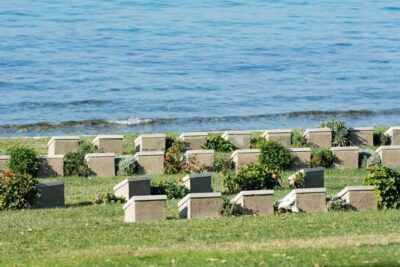
Browse the lists this tour appears in