
Reviewed · WHIRLING DERVISH SHOWS
Istanbul: Whirling Dervishes Ceremony and Mevlevi Sema
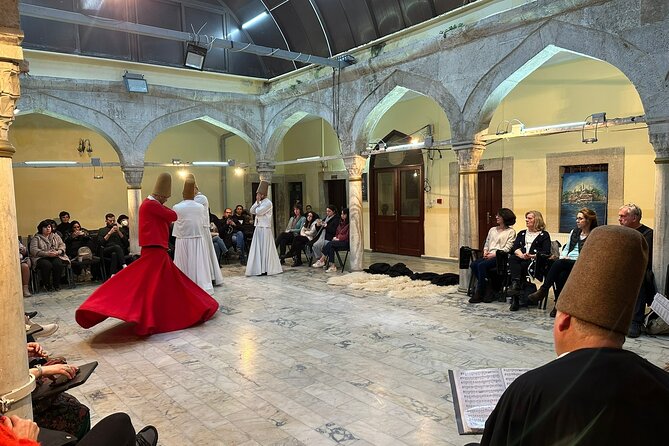
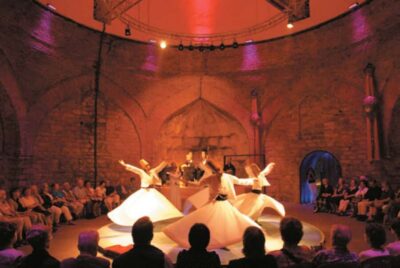
The most striking part of this Istanbul experience is the quiet control of the Mevlevi Sema ritual. Musicians begin with traditional music and chanting, then the dervishes enter in black cloaks and white robes, turning slowly in a small historic hall. It feels closer to a religious ceremony than a stage show.
I like the intimate medrese setting and the live musical opening. The venue is small, the ceremony lasts about an hour, and hot tea is often served before it begins. The main drawback is the lack of spoken explanation, so you should read about the ceremony beforehand or use the English audio guide on your phone.
I also like the simple price of $23. You are paying for a focused cultural experience, not a long evening program with dinner or transport. Seating can be tight, and arriving only 15 minutes early may leave you behind a pillar or in the back.
Key points to know before you go
- The ceremony lasts about one hour: Expect roughly 20 to 30 minutes of music and chanting, followed by the dervishes’ whirling ritual.
- It takes place at Hoca Rüstem Medrese: The central Istanbul location makes it easy to pair with a day in the Fatih and Sultanahmet area.
- Arrive earlier than the stated 15 minutes: The hall is small, with only a few rows, and the best seats fill quickly.
- This is a spiritual ritual, not simply a dance show: Quiet behavior and limited applause are appropriate.
- Kadir may be present as host: Several visitors specifically appreciated his welcome and practical help.
- Bring a charged phone and headphones: The English audio guide is accessed on your smartphone.
What the one-hour Mevlevi Sema includes
This experience follows a clear rhythm. You enter the hall, find a seat, and wait for the ceremony to begin. Depending on when you arrive, you may be offered hot tea while you settle in. The tea is a small touch, but it is welcome in cool weather and gives the evening a calm start.
The first part is devoted to music. A small group of musicians performs traditional pieces, with singing and chanting forming the opening prayer. This section can last around 20 to 30 minutes, so do not arrive expecting the whirling to begin immediately.
I think this opening matters. Without it, the ceremony could look like a brief spinning display. The music sets a solemn tone and gives you time to notice the room, the musicians, and the measured pace of the ritual.
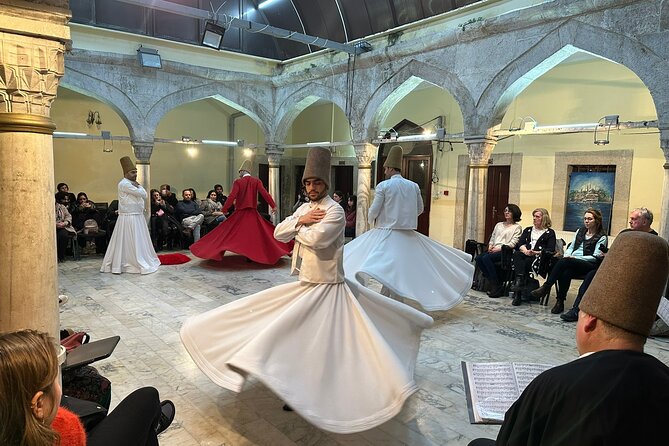
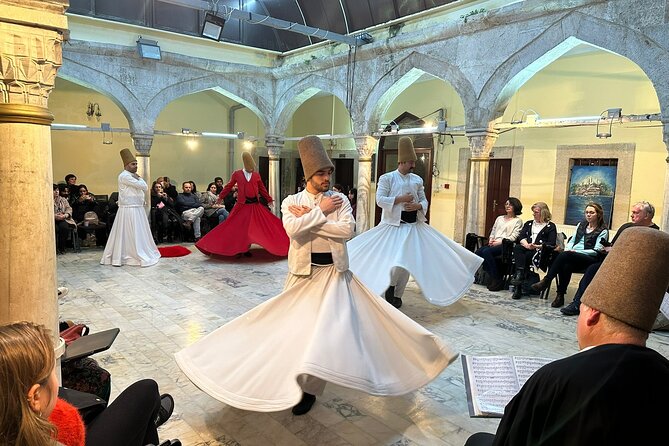
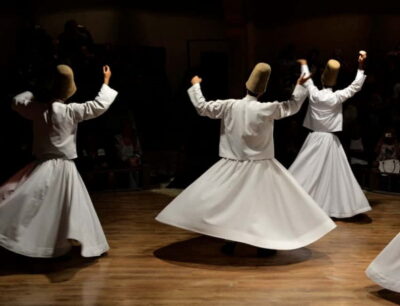
The dervishes then enter and begin the Sema. Their movements are precise and restrained rather than theatrical. The white skirts open as they turn, while the musicians continue playing. The effect is hypnotic, but the purpose is spiritual rather than entertaining in the usual sense.
The entire program lasts about an hour. That is a good length for most people. You have enough time to understand the mood without committing to a long performance late in the evening.
Other evening ceremonies in Istanbul:
- Istanbul: Hodjapasha Whirling Dervishes Show & Exhibition
★ 4.4 · 4,790 reviews - Istanbul: Whirling Dervish Ceremony next to Hagia Sophia
★ 4.5 · 906 reviews - Istanbul Hodjapasha Whirling Dervishes Show & Exhibition
★ 4.0 · 503 reviews
Why the whirling has spiritual meaning
The Mevlevi tradition is connected with Mevlana Jelaleddin Rumi, the 13th-century poet, philosopher, and religious teacher. The Mevlevi Sufi Order developed around his teachings and is often associated with a tradition of love, devotion, and harmony with creation.
The whirling is not meant to be a stunt. In Mevlevi thought, movement reflects the motion found throughout creation: day and night, the seasons, life and death, and the movement of blood through the body. The dervish turns as a way of seeking harmony with that larger order.
The clothing adds another layer of meaning. The black cloak represents death, while the white robe suggests birth or a burial shroud. The tall felt hat represents the tombstone of the ego. As the dervish removes the black cloak, the ceremony suggests a movement away from the ordinary self and toward spiritual awareness.
The position of the hands also carries meaning. The right hand is raised toward the sky to receive divine blessings. The left hand points toward the earth, symbolizing the passing of those blessings to humanity. You will understand the ceremony much better if you know these details before sitting down.
The English audio guide can help, but it is still wise to read a short introduction in advance. The ceremony itself does not come with a full spoken explanation, and that is the most common weakness of this experience.
Hoca Rüstem Medrese and the small-room atmosphere
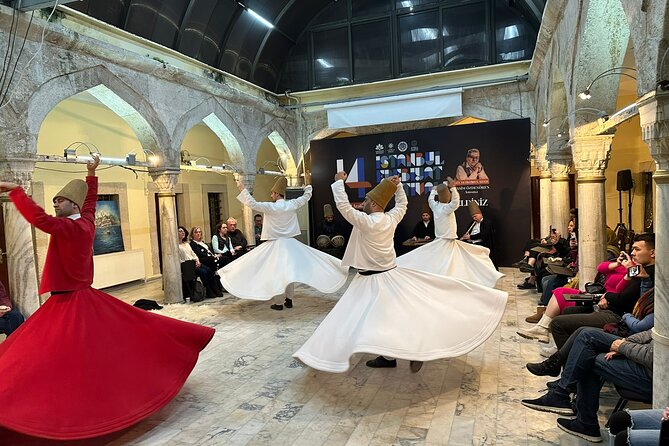
The ceremony is held at Hoca Rüstem Medrese in central Istanbul. The location is convenient if you are already visiting the Fatih or Sultanahmet area, and several people found it easy to reach once they had the meeting point.
The hall is part of the appeal. It is small and intimate, with seating close to the performance area. That closeness lets you see the dervishes’ posture and the musicians’ work better than you might in a large theater.
It also creates limits. There are only about two rows in some seating arrangements, and a pillar or side panel can interfere with your view. Some lighting panels at the sides have been distracting, especially if you want to take photographs.
I would arrive 30 to 40 minutes early if the ceremony matters to you. Fifteen minutes is the official minimum, but it is not the best strategy for a front seat. One person arrived about 40 minutes early and still missed the very first row. Another found that arriving much earlier helped secure a clear view.
The hall may feel crowded when every seat is taken. If you are short, sitting behind someone tall can make it harder to see the footwork. For the best view, choose a central seat near the front. If you prefer to take photographs, a rear position may give you more room to stand, but remember that photography should not disturb the ritual.
A ceremony, not a standard stage performance
This distinction is important. The program is sold as an experience, but the Sema itself is a religious practice. You should not expect a presenter to explain each movement, invite applause, or encourage audience participation.
Keep your phone quiet. Avoid talking once the ceremony begins. Applause may feel natural after the music or at the end, but the atmosphere is more respectful if you treat the event as a service rather than a dance concert.
That does not mean you need special religious knowledge. You can attend as a curious visitor and appreciate the music, discipline, clothing, and movement. Still, a little preparation changes what you see. Once you know that the turning represents a spiritual journey, the white robes and raised hand no longer look like costume details alone.
The ceremony can also feel unusual if you expected a conventional performance. One person found it strange to pay for admission while people applauded around a religious service. That is a fair concern, and it is why I would not recommend this to someone looking only for a lively evening show.
Same base, a different sort of day:
- Istanbul: Bosphorus Dinner Cruise & Show with Private Table
★ 4.8 · 44,561 reviews - Istanbul: Daytime or Sunset Sightseeing Cruise & Audio Guide
★ 4.8 · 14,430 reviews - Istanbul: Bosphorus Dinner Cruise with Turkish Night Show
★ 4.8 · 10,127 reviews - Best of Istanbul 1, 2 or 3-Day Private Guided Istanbul Tour
★ 5.0 · 8,922 reviews
The music is half the experience
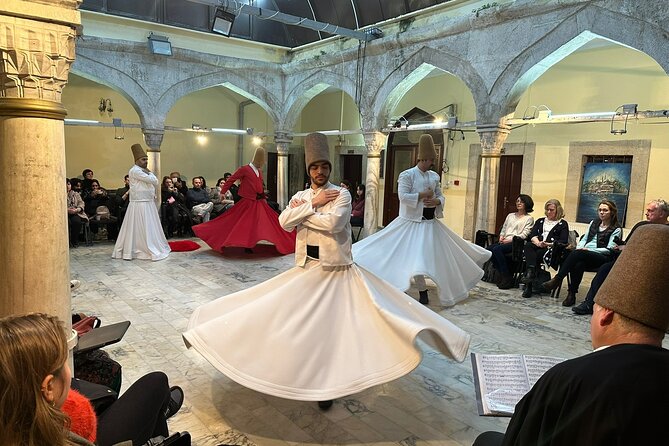
The musicians deserve your attention. The opening is not filler while the dervishes prepare. It creates the atmosphere and introduces the sound world of the ceremony.
You can expect traditional instruments, singing, and chanting. The performance has a slower pace than most Istanbul entertainment, with repetition and quiet concentration doing much of the work. If you enjoy live music, the first half may be as memorable as the whirling itself.
The sound also helps explain why the ceremony can feel peaceful even if you do not understand the words. The music carries the mood, while the turning creates a visual rhythm. Together, they make the hour feel carefully ordered.
Some people may find the music section too long, especially if they came mainly to see the dervishes. I would set your expectations properly: this is not 60 minutes of continuous spinning. The musicians lead the experience, and the dervishes form its central later section.
Getting good value for $23
At $23 per person, this is reasonably priced for central Istanbul. The ticket includes entry to the ceremony and an English audio guide. You are not paying for hotel transport, a meal, or a long guided tour, so the value depends on whether you want a compact cultural event.
I think the price works well for a first introduction to Sufi ceremony. It is less expensive and less time-consuming than a full evening program, and you can build it into a day of sightseeing without losing an entire night.
The value is weaker if you need detailed interpretation on site. The audio guide helps, but it is not the same as having a speaker explain the symbols before the ceremony. You may want to read about Rumi, the Mevlevi Order, and the meaning of Sema before arriving.
The booking terms are also practical. You can reserve now and pay later, and cancellation is free up to 24 hours before the start time. Starting times vary, so check availability for your chosen date.
Who will enjoy this most
I would recommend the ceremony to you if you enjoy history, religious traditions, classical music, or quiet cultural experiences. It is especially useful for a first visit to Istanbul because it offers something beyond mosques, palaces, bazaars, and food tours.
It suits couples, solo visitors, and families with older children who can remain quiet for an hour. The central location also works well if you want to add dinner afterward or continue exploring the old city.
You may want to skip it if you need constant explanation, lively action, or a polished theater production. The room can be crowded, the seating is basic, and the lack of introduction may leave you unsure about what you are seeing.
People who already understand the Sema may appreciate the ritual on its own. First-time visitors should plan to do a little reading. That preparation is the difference between watching people spin and understanding a carefully ordered spiritual practice.
Practical advice for the evening
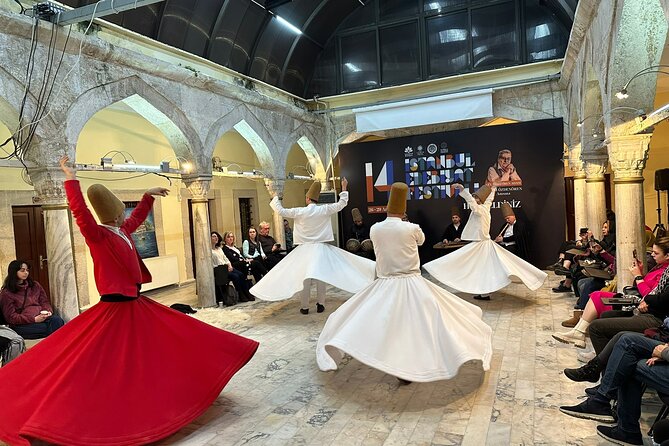
Arrive at least 30 minutes before the start, and earlier if you want the front row. The official instruction says to be in the hall 15 minutes before the ceremony, but that is the minimum needed to avoid rushing.
Bring a charged smartphone and headphones for the audio guide. The guide is in English, and you may want to listen before or after the ceremony rather than during it. There is no need to bring printed material, but a short explanation on your phone can be useful.
The activity is wheelchair accessible. Hotel pickup and drop-off are not included, so you will need to make your own way to Hoca Rüstem Medrese.
Look for the meeting point carefully. The central location is convenient, but the surrounding streets can be confusing if you are unfamiliar with Fatih. Give yourself extra time rather than relying on arriving exactly 15 minutes before the start.
The experience provider is Istanbul E-pass. An English-speaking host or greeter is available, and Kadir has been singled out for being helpful and welcoming. Staff assistance is most useful before the event, since the ceremony itself is intentionally quiet and has little spoken guidance.
Should you book the Whirling Dervishes ceremony?
Book it if you want a short, affordable look at Istanbul’s spiritual culture and you are willing to approach it with respect. The live music, intimate hall, controlled movement, and meaningful symbolism make this far more than a quick photo opportunity.
Do not book it expecting an explained theater show. You will get more from the hour if you read beforehand, arrive early, silence your phone, and treat the Sema as a religious ritual. For $23, it is a strong choice for a culturally curious visitor, especially when paired with other sights in central Istanbul.
FAQ
How long does the Whirling Dervishes ceremony last?
The experience lasts one hour. The music and chanting generally come first, followed by the dervishes’ whirling ritual.
Where does the ceremony take place?
It takes place at Hoca Rüstem Medrese in central Istanbul, in the Marmara Region of Turkey.
What is included in the ticket?
Your ticket includes entry to the Whirling Dervishes ceremony and access to an English audio guide app on your smartphone.
Is hotel pickup included?
No. Hotel pickup and drop-off are not included, so you must make your own way to the venue.
How early should I arrive?
You must arrive at least 15 minutes before the ceremony begins. Arriving 30 to 40 minutes early is a better idea if you want a front-row seat.
Is the ceremony explained before it starts?
There is no full spoken introduction to the ritual. You can use the English audio guide and read about the Mevlevi Sema before arriving.
What should I bring?
Bring headphones and a charged smartphone for the audio guide.
Is the activity wheelchair accessible?
Yes, the activity is listed as wheelchair accessible.
Can I cancel my booking?
Yes. You can cancel up to 24 hours before the activity for a full refund.
Can I reserve now and pay later?
Yes. You can reserve your place and pay later, which lets you keep your plans flexible.
Just added in Istanbul
- From Istanbul: Sapanca & Masukiye Tour with Lunch★ 4.5 · 68 reviews
- From Istanbul: Private Pamukkale and Hierapolis Day Tour★ 4.2 · 19 reviews
- From Istanbul: Troy and Gallipoli 2-Day Trip★ 4.2 · 18 reviews
- From Istanbul: Guided Day Trip to Sapanca and Masukiye★ 4.1 · 21 reviews
- From Istanbul: Private Bursa City Day Trip★ 4.5 · 20 reviews
- From Istanbul: Ephesus Tour with Roundtrip Flight★ 4.5 · 23 reviews
- From Istanbul: 4-Day Istanbul, Cappadocia, Flight,Cave Hotel★ 4.6 · 17 reviews
- From Istanbul: Best of Turkey 8 Days, 7 Nights Guided Tour★ 5.0 · 15 reviews
Whirling Dervish Shows, compared.
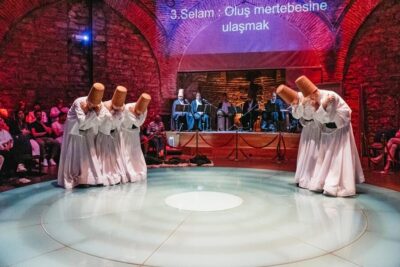
Hodjapasha Whirling Dervishes Show & Exhibition
Read our review →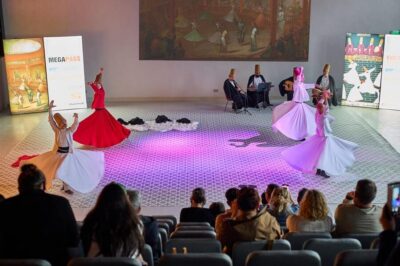

Istanbul Traditional Turkish Dinner and Dervish Experience
Read our review →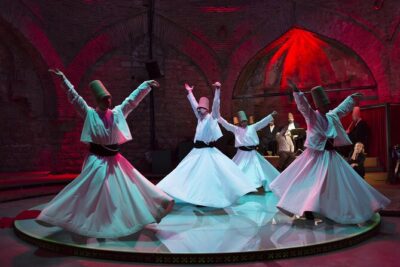
Whirling Dervishes Ceremony & Optional Transfer
Read our review →
Cappadocia Dervish Ritual with live music (With 2 options)
Read our review →Browse the lists this tour appears in