
Reviewed · WHIRLING DERVISH SHOWS
Istanbul: Hodjapasha Whirling Dervishes Show & Exhibition
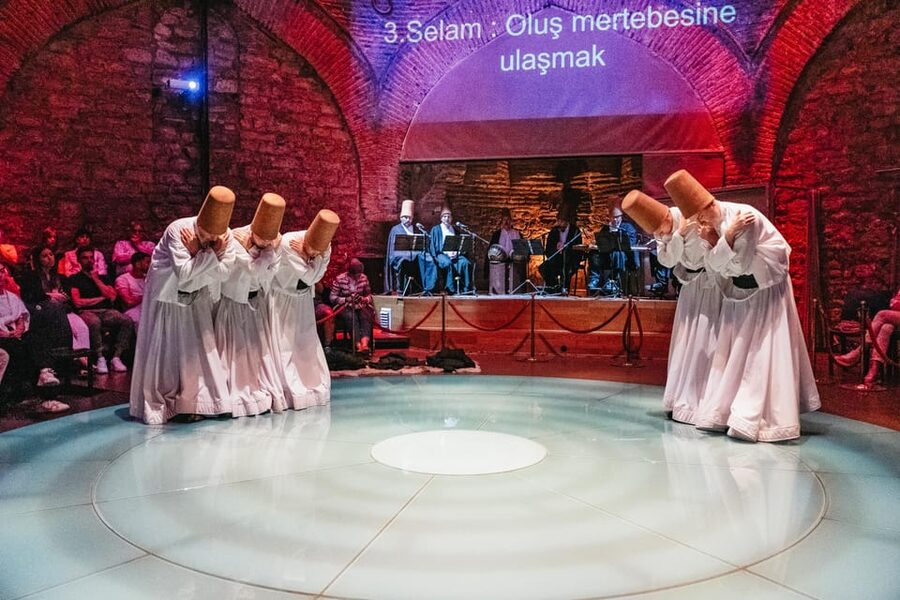
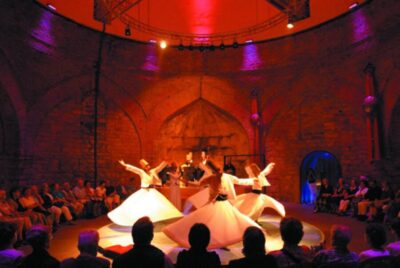
The remarkable thing here is that this is not a stage performance in the usual sense. The Mevlevi Sema ceremony is a solemn Sufi ritual, built around music, prayer, and the controlled turning of the dervishes. Inside a restored 550-year-old Ottoman Turkish bath, the setting feels far more fitting than a modern theater.
I like two things in particular: the live Turkish music, with instruments such as the ney, oud, and kanun, and the small exhibition that explains what you are about to see. The ceremony is also short enough to fit neatly into an Istanbul evening. The main consideration is that the hour can feel repetitive if you are looking for a fast-moving dance show, and the close seating is not especially comfortable.
Key points to know before booking
- A real religious ceremony: Treat the hour as prayer and ritual, not as a tourist dance performance.
- A historic venue: The ceremony takes place in the former HodjaPasha hamam, a restored Ottoman bath near Sirkeci.
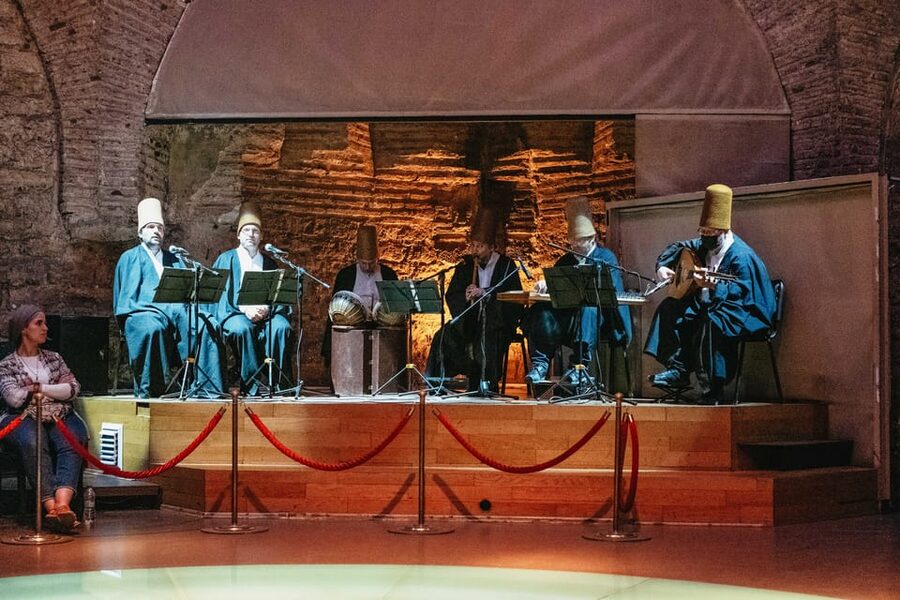
- Live Turkish music: Expect vocals, ney, oud, kanun, and traditional percussion before and during the Sema.
- Arrive early: The foyer exhibition and information panels help explain Sufism, the dervishes, and the symbols of the ceremony.
- Silence is required: Photography, talking, applause, and other disruptions are not permitted inside.
- Book early for seating: Seats are allocated according to booking order, though the chairs are close together.
What the HodjaPasha ceremony really is
The Mevlevi Sema is associated with the Mevlevi order, a Sufi tradition founded around the teachings of Jalal al-Din Rumi. The turning of the dervishes is not meant to be a trick or a theatrical stunt. It represents a spiritual journey, moving from ordinary human awareness toward love, understanding, and closeness to God.
That context matters. If you arrive expecting a folk dance with applause at the end, you may find the evening quiet and repetitive. If you understand that the movements are part of a prayer, the slow pace makes more sense. You are being asked to watch carefully, remain silent, and let the music and patterns carry the ceremony.
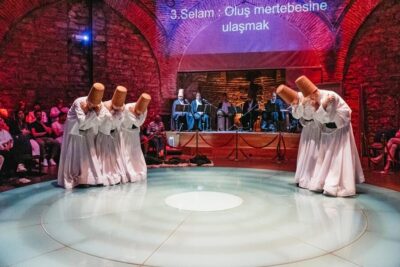
The program presents a compact version of the traditional seven-part Sema. It includes the musicians, a sheikh, and the dervishes. The performers move with impressive control, but the point is not athletic display. The strongest moments come from the combination of concentration, music, and the old stone interior.
Other evening ceremonies in Istanbul:
- Istanbul: Whirling Dervishes Ceremony and Mevlevi Sema
★ 4.3 · 1,694 reviews - Istanbul: Whirling Dervish Ceremony next to Hagia Sophia
★ 4.5 · 906 reviews - Istanbul Hodjapasha Whirling Dervishes Show & Exhibition
★ 4.0 · 503 reviews
Entering the restored Ottoman bath near Sirkeci
The HodjaPasha Culture Center is about 100 meters from the Sirkeci Tram Stop, making it one of the easier evening cultural activities to reach in central Istanbul. The location sits in the Sultanahmet-Sirkeci area, close to many of the city’s major sights.
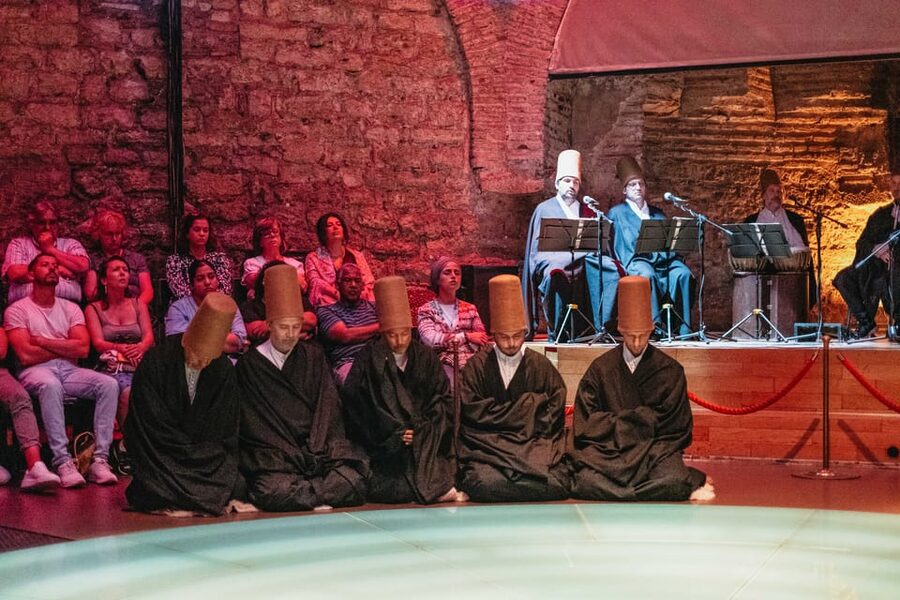
Inside, the old bathhouse gives the evening its character. The domed performance room and historic masonry create natural echoes, especially during the ney passages and vocal sections. This is not a grand concert hall, and that is part of the appeal. The space feels intimate, with the ceremony taking place close to the audience.
You will need to go upstairs to reach the venue. One useful practical tip is to arrive with time to spare, particularly if stairs are difficult for you. The experience is not suitable for wheelchair users, and late arrivals can be distracting once the ceremony has begun.
The building itself deserves a few minutes. The exhibition area includes panels and objects explaining the Mevlevi tradition and the meaning of the Sema. I would not rush past it. A little background changes what you notice later, especially the gestures, the musical transitions, and the role of the sheikh.
The first part: classical Turkish music
The program begins with a concert of classical Turkish music. This opening gives you time to settle into the room before the religious ceremony begins. The music includes traditional instruments and singing, with the ney providing the sound most closely linked with Sufi musical practice.
The musical group may include vocalists, a drummer, ney, oud, and kanun. Each instrument brings a different texture. The kanun has a bright, precise sound, while the oud is warmer and more rounded. The ney can sound almost breath-like, which suits the reflective mood of the ceremony.
The old bathhouse affects the music in a noticeable way. Notes linger and overlap with the stone surfaces. One practical point: coughs and phone sounds carry clearly in this small room. Turn off your phone before entering, and bring water if your throat tends to dry out. Bottled drinking water is included.
This opening section is important for another reason. It reminds you that the Sema is not simply a silent spinning display. Music guides the entire ceremony. The performers have to listen closely to one another, and the changes in rhythm help mark the movement from one section to the next.
The seven-part Sema and the whirling dervishes
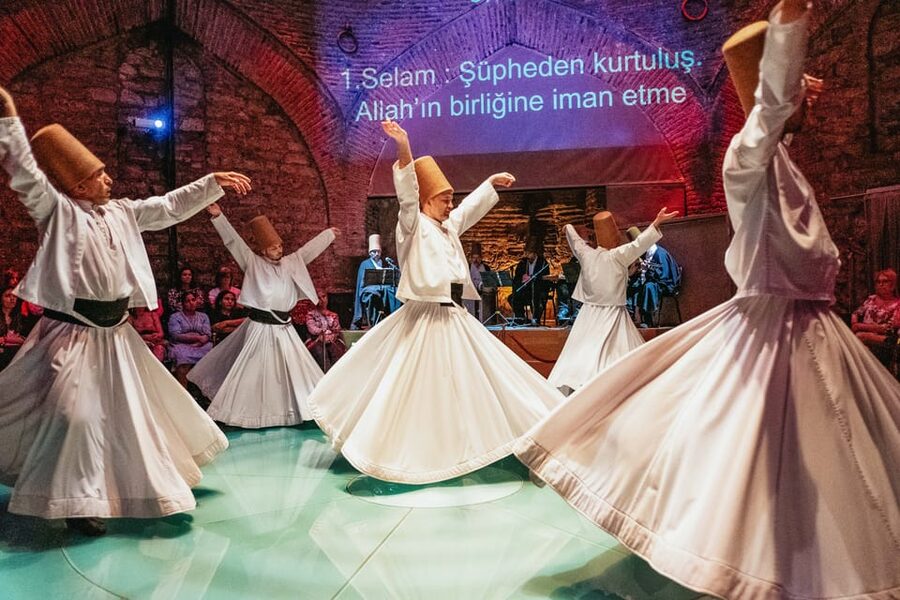
After the music, the dervishes and sheikh take their places. The ceremony includes praise for the Prophet Mohammed, followed by the drum and the movements of the Sema.
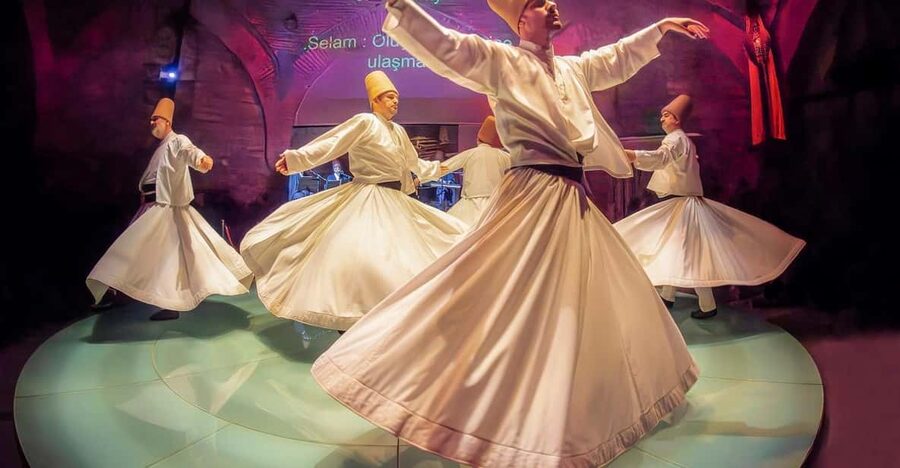
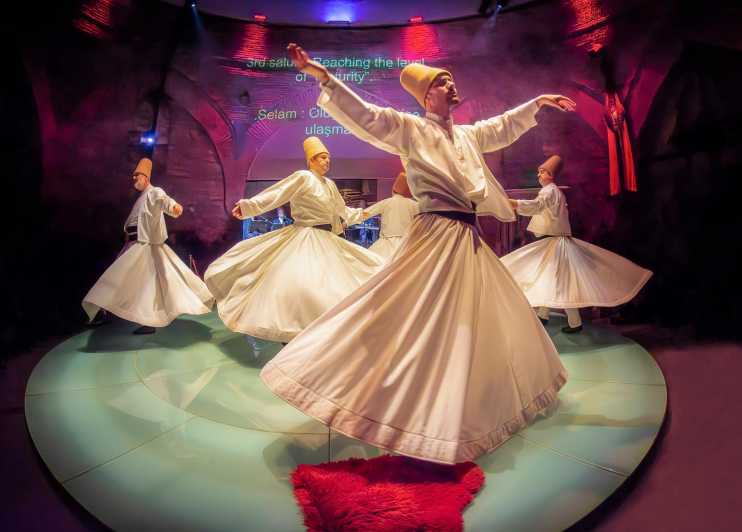
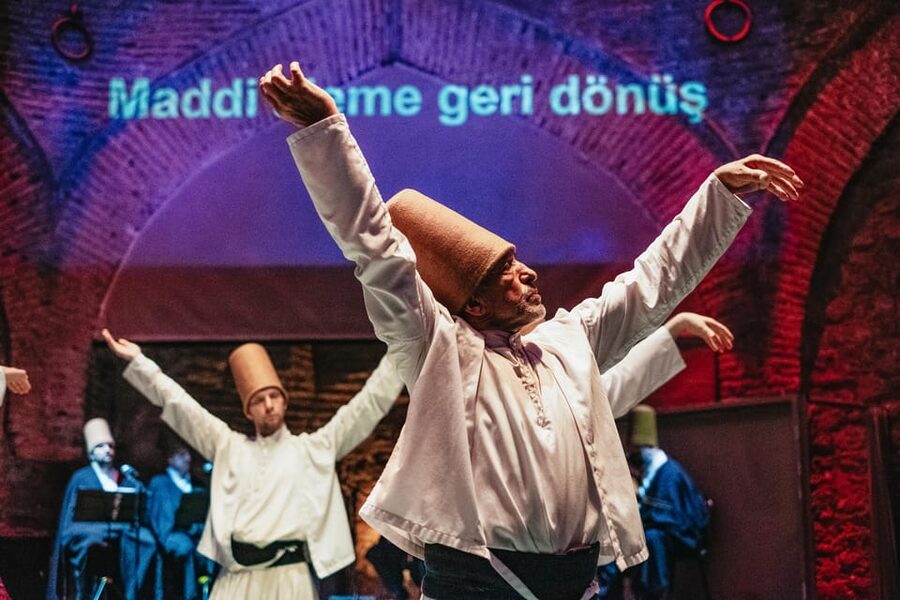
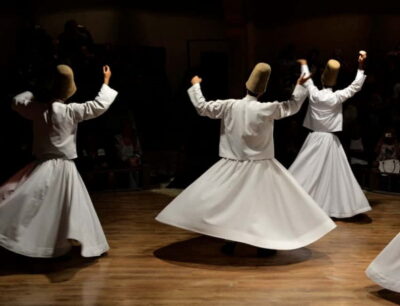
The dervishes wear long white robes that spread outward as they turn. Their motion is controlled and continuous, yet each section has its own shape. The turning represents the birth of humanity and the person’s spiritual ascent through thought and love.
You will see the dervishes rotate around the performance space while also turning individually. The effect is calm rather than frantic. Their heads remain inclined, their arms extend in a symbolic posture, and their robes create a steady circular pattern.
The physical skill is striking. Some sections involve extended spinning, followed by sudden stops that appear effortless. It is easy to focus on the mechanics, but the ceremony asks you to look beyond that. The turning has religious meaning, and the silence in the room allows the ritual to retain its gravity.
There is no applause between sections. You should not talk, take photographs, or record video. That rule may disappoint anyone hoping for a souvenir image, but it also protects the atmosphere. For one hour, you are not watching through a phone screen or competing with camera flashes.
The Sema closes with a Fâtiha for the souls of prophets, martyrs, and believers, along with a prayer for the salvation of the country. The ending is quiet and devotional. Do not expect a theatrical finale or a curtain call.
A few more things to do in Istanbul worth a look
- Istanbul: Hagia Sophia Skip-the-Line Ticket & Museum Option
★ 3.7 · 4,958 reviews - Istanbul: Topkapi Palace & Harem Museum Ticket & Audio Guide
★ 4.1 · 3,977 reviews - Istanbul: Topkapi Palace and Harem Museum Tour with Ticket
★ 4.7 · 247 reviews - Cappadocia: Small-Group Red Tour, Open Air Museum with Lunch
★ 4.8 · 862 reviews
Why the exhibition is worth your early arrival
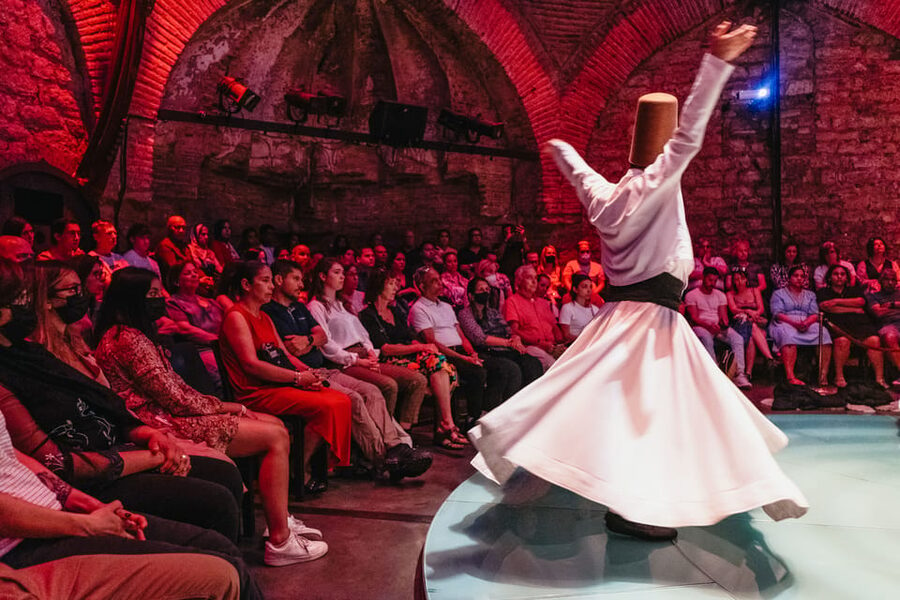
The foyer exhibition is modest, but it adds real value. It gives you a basic explanation of the Mevlevi tradition, the history of the ceremony, and the meaning behind the dervishes’ clothing and movements.
The supplied program booklet helps as well. Still, the panels in the exhibition can answer questions that are difficult to resolve during the ceremony itself. Why do the dervishes turn? What does the posture of the arms mean? Why is the music so central? Reading first gives you a framework.
I would allow enough time to read before taking your seat. The ceremony itself does not provide a running explanation, and nobody talks you through each stage once it begins. If you want a fuller academic introduction to Sufism, this is not the place to expect one. The information is concise and practical rather than scholarly.
That balance works for most visitors. You receive enough background to watch respectfully without turning the hour into a lecture. If you have a particular interest in Islamic history or Rumi, you may still want to do extra reading before arriving.
Seating, timing, and comfort
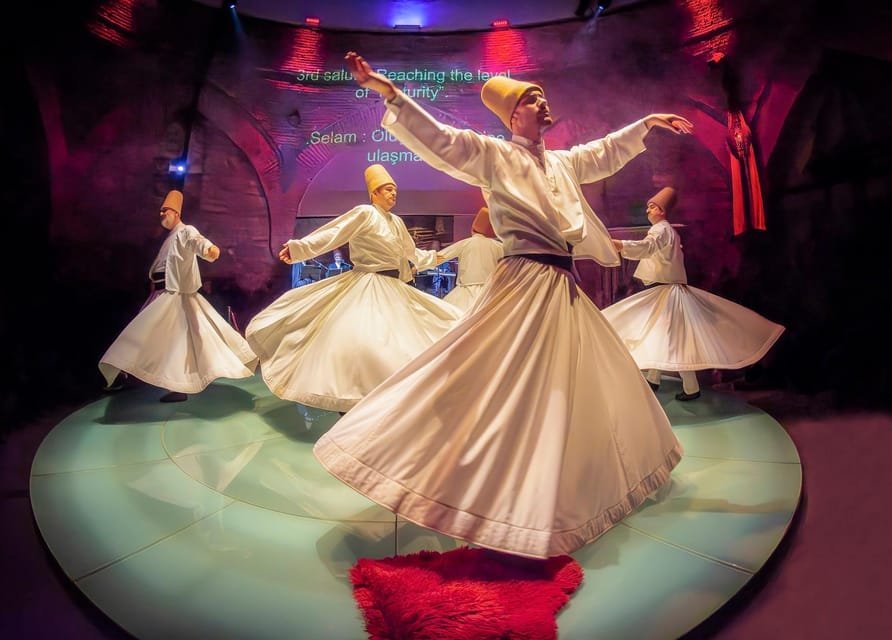
The entire activity lasts about one hour. That makes it easy to combine with dinner, a walk around Sirkeci, or an evening visit to another central Istanbul sight.
Seats are allocated on a first-booked, first-served basis. Booking early is therefore sensible if your position in the room matters. The performance area is intimate, so most seats should provide a clear view, but you should not assume that booking on the day will place you near the front.
The chairs are close together. Several details point to comfort being the weak spot here, especially for anyone with broad shoulders or a need for extra legroom. You are sitting still for the full ceremony, so this is worth considering.
Arrive early for three reasons: to read the exhibition, to find your assigned seat without disturbing anyone, and to settle before the music starts. Late entry is especially awkward because talking and movement are forbidden once the ritual is underway.
Children under seven are not permitted. Older children may understand the cultural value, but the required silence and slow pace may not suit every family. This is better for adults and older children who can remain still and treat the ceremony seriously.
Is $32 a fair price?
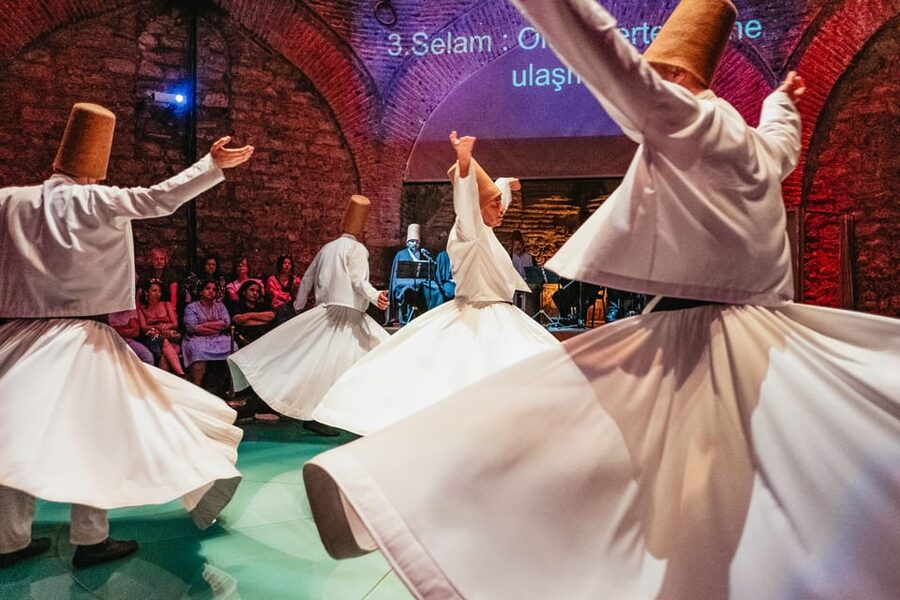
At $32 per person, this is not the cheapest one-hour activity in Istanbul. You are paying for a ticket to a specialized cultural ceremony, not a full-day tour with transport, a meal, or a personal guide.
The value comes from the setting and the complete format. You receive entry to the ceremony, the exhibition, the booklet, and bottled water. More important, you get live music in a historic building and a compact introduction to a major part of Turkish spiritual culture.
For someone who already knows the Mevlevi Sema and wants a longer, more elaborate religious gathering, an hour may feel brief. Some of the music and turning can also feel repetitive if you do not connect with the spiritual purpose.
For a first introduction in Istanbul, the price is easier to justify. The location is central, the program fits into an evening, and the exhibition gives you useful context without requiring a separate museum visit. I see it as a cultural experience rather than a conventional entertainment ticket.
Free cancellation is available up to 24 hours before the start time, and you can reserve now and pay later. Those options help if your Istanbul schedule is still changing.
Who will enjoy this, and who may not
I recommend the ceremony if you want to see a spiritual side of Turkey rather than only its mosques, palaces, markets, and food. It suits anyone curious about Sufism, traditional Turkish music, religious art, or the history of the Mevlevi dervishes.
You will probably appreciate it most if you can sit quietly and accept a slow rhythm. The absence of applause and photography is not a minor rule. It shapes the whole experience.
You may want to skip it if you are looking for a lively dance show, audience interaction, or a detailed spoken tour. The ceremony does not explain itself as it unfolds, and the whirling can seem monotonous without some interest in its meaning.
It is also a poor choice for anyone who cannot manage stairs, as the venue is not suitable for wheelchair users. Tight seating may be uncomfortable for some people, and children under seven cannot attend.
Practical tips for a respectful visit
- Read the exhibition panels before the ceremony rather than after.
- Keep the booklet nearby for a quick reminder of the Sema’s stages.
- Turn off your phone completely, not just to silent.
- Do not take photographs or video inside.
- Avoid talking, applause, and movement during the ceremony.
- Arrive early if you want the best chance of a favorable assigned seat.
- Bring or use the included water if you are prone to coughing.
- Wear something comfortable for the stairs and the hour of seated viewing.
The best approach is simple: arrive curious, read a little, and lower your expectations of a typical show. You are there to witness a ritual shaped by music, prayer, and disciplined movement.
Should you book the HodjaPasha Whirling Dervishes ceremony?
Book it if you want a respectful, focused introduction to Mevlevi culture in a beautiful historic setting. The music, the old bathhouse, and the calm precision of the dervishes make this one of Istanbul’s more distinctive evening activities.
Do not book it expecting spectacle. The turning is beautiful, but the ceremony moves at a measured pace and may feel repetitive. The close chairs, no-photo rule, and strict silence also require some patience.
For most adults interested in Turkish culture, I think the $32 price is reasonable, especially if you arrive early to use the exhibition and secure your place in the room. For the best experience, treat it as a religious ceremony with an audience, not as a dance show with a religious theme.
FAQ
How long does the HodjaPasha Whirling Dervishes ceremony last?
The activity lasts one hour.
Where does the ceremony take place?
It takes place at the Hocapaşa Culture Center, about 100 meters from the Sirkeci Tram Stop in central Istanbul.
What is included with the ticket?
The ticket includes entry to the Mevlevi Sema ceremony, a program booklet, and bottled drinking water.
Can I take photographs or videos?
No. Photography is not allowed inside, and recording is not permitted during the ceremony.
Can I talk or applaud during the performance?
No. Talking, applause, and other disruptions are prohibited so the ceremony can continue without interruption.
Are young children allowed to attend?
Children under seven are not permitted.
Is the venue accessible for wheelchair users?
No. The experience is not suitable for wheelchair users, and the venue includes stairs to the performance area.
Just added in Istanbul
- From Istanbul: Sapanca & Masukiye Tour with Lunch★ 4.5 · 68 reviews
- From Istanbul: Private Pamukkale and Hierapolis Day Tour★ 4.2 · 19 reviews
- From Istanbul: Troy and Gallipoli 2-Day Trip★ 4.2 · 18 reviews
- From Istanbul: Guided Day Trip to Sapanca and Masukiye★ 4.1 · 21 reviews
- From Istanbul: Private Bursa City Day Trip★ 4.5 · 20 reviews
- From Istanbul: Ephesus Tour with Roundtrip Flight★ 4.5 · 23 reviews
- From Istanbul: 4-Day Istanbul, Cappadocia, Flight,Cave Hotel★ 4.6 · 17 reviews
- From Istanbul: Best of Turkey 8 Days, 7 Nights Guided Tour★ 5.0 · 15 reviews
Whirling Dervish Shows, compared.
Istanbul Hodjapasha Whirling Dervishes Show & Exhibition
Read our review →
Istanbul Traditional Turkish Dinner and Dervish Experience
Read our review →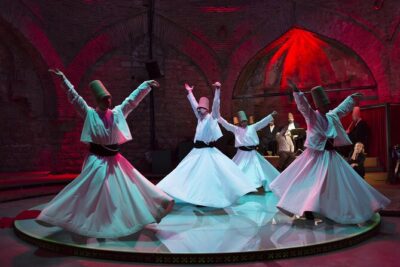
Whirling Dervishes Ceremony & Optional Transfer
Read our review →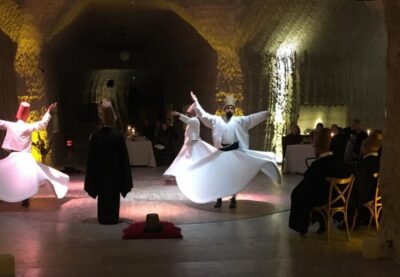
Browse the lists this tour appears in