
Reviewed · WHIRLING DERVISH SHOWS
Istanbul Hodjapasha Whirling Dervishes Show & Exhibition
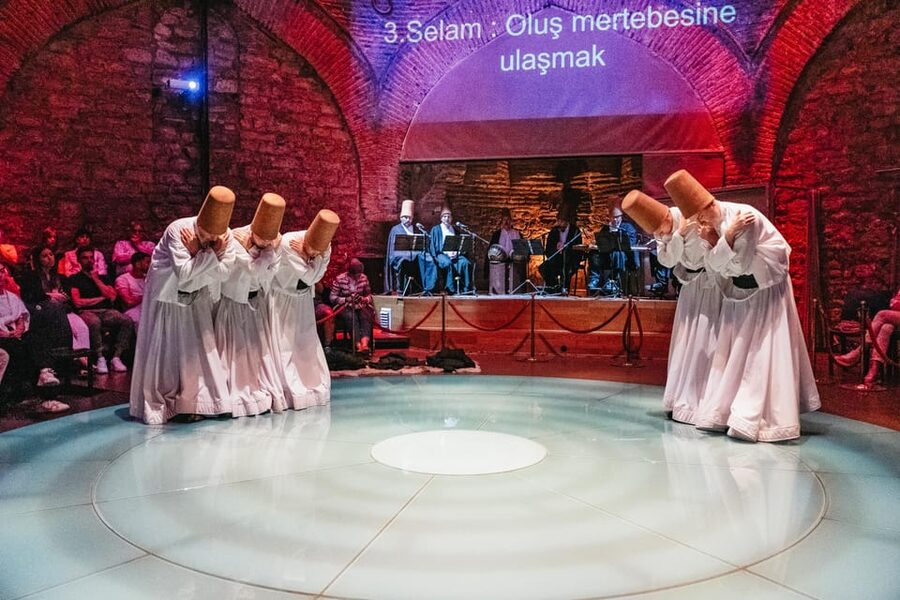
The most important thing to know is that this is a Sufi religious ceremony, not a theatrical dance show. The dervishes bow, pray, and turn in a slow, controlled rhythm while musicians and singers create a calm, serious mood. If you expect constant action, the hour may feel long. If you want a respectful look at an important part of Turkish culture, it can be quietly powerful.
I like two things right away: the small historic venue makes the ceremony feel close and personal, and the exhibition gives you useful background before you sit down. The live music, wall explanations, Rumi poetry, and multilingual booklet help you understand what you are seeing instead of watching a string of unexplained movements.
The main drawback is the repetition and stillness. The whirling does not begin at once, and much of the ceremony involves bowing, prayer, and slow movement. Children and anyone seeking an entertaining evening may lose interest. You should also plan your route carefully, since the entrance is on a small alley near the main road.
Key points to know before booking
- Expect a ceremony, not a stage spectacle: The mood is solemn, meditative, and religious.
- Arrive early for the exhibition: Read about Sufism, Rumi, and the meaning of each part before the performance.
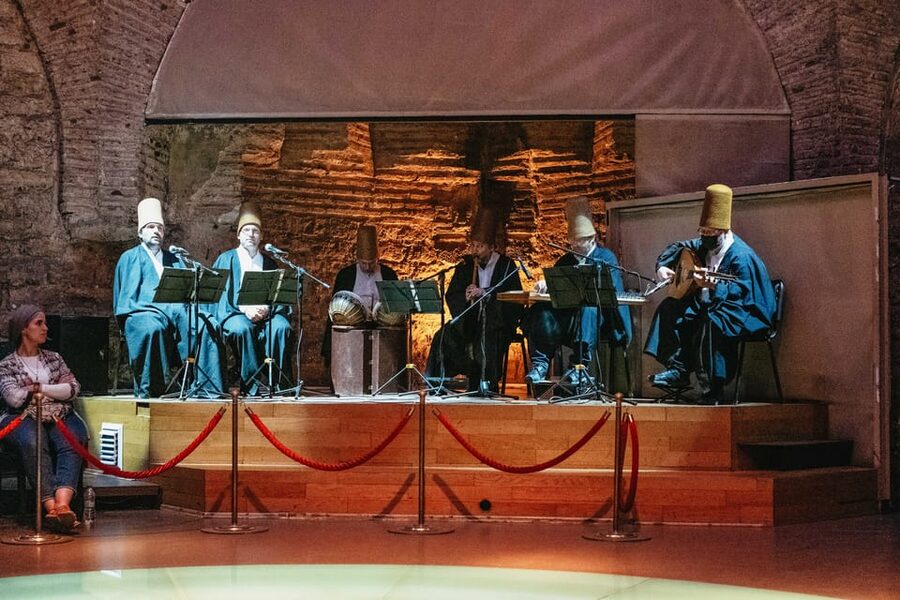
- Live music shapes the experience: Traditional instruments, singing, and soft lighting are central to the atmosphere.
- No photos, videos, or applause: Treat the event as worship taking place in front of an audience.
- The venue is central: Hodjapasha is near public transportation, restaurants, cafes, the Spice Market, and the historic center.
- The $32 price includes more than a seat: You get admission, the exhibition, a multilingual booklet, and bottled water, but not food or transport.
Why the Hodjapasha ceremony feels different
Istanbul gives you plenty of grand mosques, crowded bazaars, and noisy evening shows. This experience moves in the opposite direction. At Hodjapasha, the lights are low, the music is restrained, and the ceremony asks you to sit quietly and pay attention.
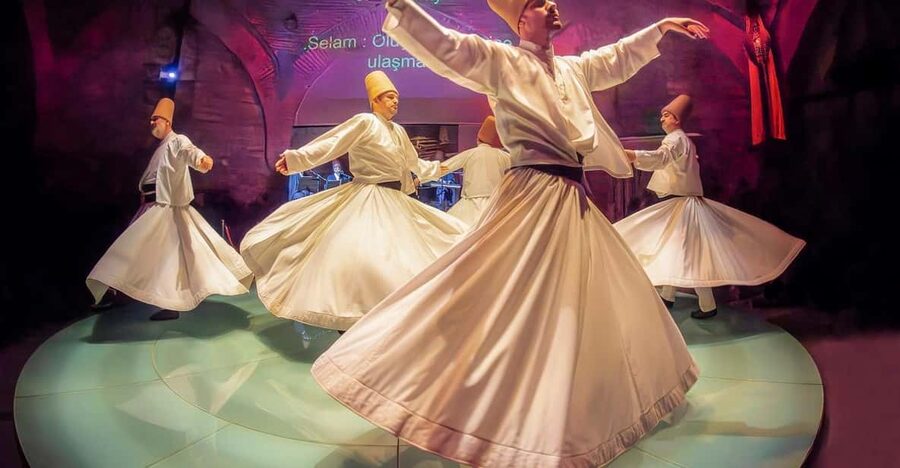
The whirling dervish tradition is tied to Sufi Islam and the teachings of the poet Rumi. The turning is not simply a dance trick. It forms part of a religious practice involving prayer, discipline, humility, and a search for spiritual closeness to God. You do not need to be religious to appreciate it, but you do need to accept its pace and purpose.
That point matters. Some people arrive expecting a colorful folk performance with dramatic movement from beginning to end. Instead, the first portion may include music, recitation, bows, and ritual steps before the whirling begins. The turning itself is repetitive by design. For some, that repetition becomes mesmerizing. For others, it becomes tedious.
I would compare it to attending a quiet service or a traditional musical performance rather than going to a modern show. The audience is asked not to clap, photograph, or record. That rule can feel strict if you are used to documenting every stop, but it protects the atmosphere and shows respect for the ceremony.
Other evening ceremonies in Istanbul:
- Istanbul: Hodjapasha Whirling Dervishes Show & Exhibition
★ 4.4 · 4,790 reviews - Istanbul: Whirling Dervishes Ceremony and Mevlevi Sema
★ 4.3 · 1,694 reviews - Istanbul: Whirling Dervish Ceremony next to Hagia Sophia
★ 4.5 · 906 reviews
Start with the Rumi and Sufi exhibition
The best way to improve this experience is simple: arrive early and spend at least 20 minutes in the exhibition area. The displays explain Sufi traditions, the place of Rumi, and the stages of the ceremony you are about to see.
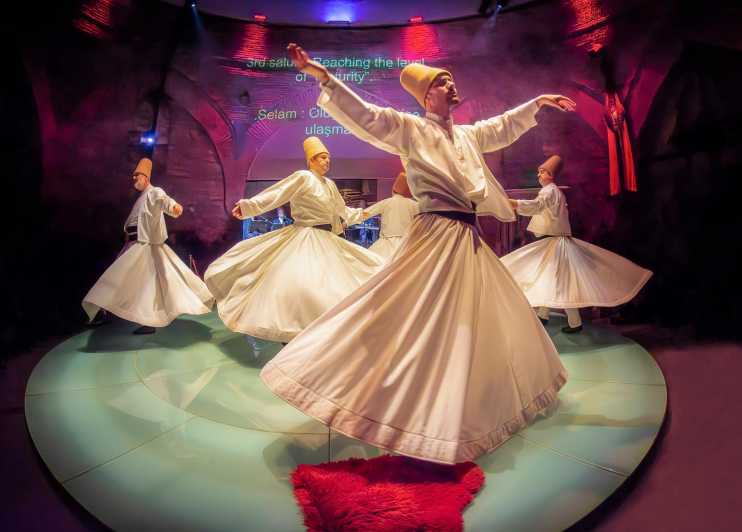
This background changes the evening. Without it, you may see several people bowing and turning without knowing why. With it, you can follow the order of the ritual and understand that each gesture has a purpose. Information is also shown through projections or slides during the ceremony, with explanations of the different stages lit onto a wall.
The exhibition includes poems and written material, and the included multilingual booklet gives you something useful to read before or during your visit. You do not need to become an expert in Sufism. A little preparation is enough to turn a puzzling performance into a meaningful cultural encounter.
The displays are also useful if you are comparing this with other dervish performances in Istanbul. Hodjapasha presents a formal and restrained version. It does not appear designed to entertain with jokes, fast choreography, or audience interaction. The strength is its focus.
What happens during the one-hour performance
The entire visit lasts about one hour and takes place at Hodjapasha Cultural Centre. The published meeting address is Hoca Paşa Mahallesi Ankara Caddesi, Hoca Paşa, Hocapaşa Hamamı Sk. No:3 D:B, in Istanbul’s Fatih district.
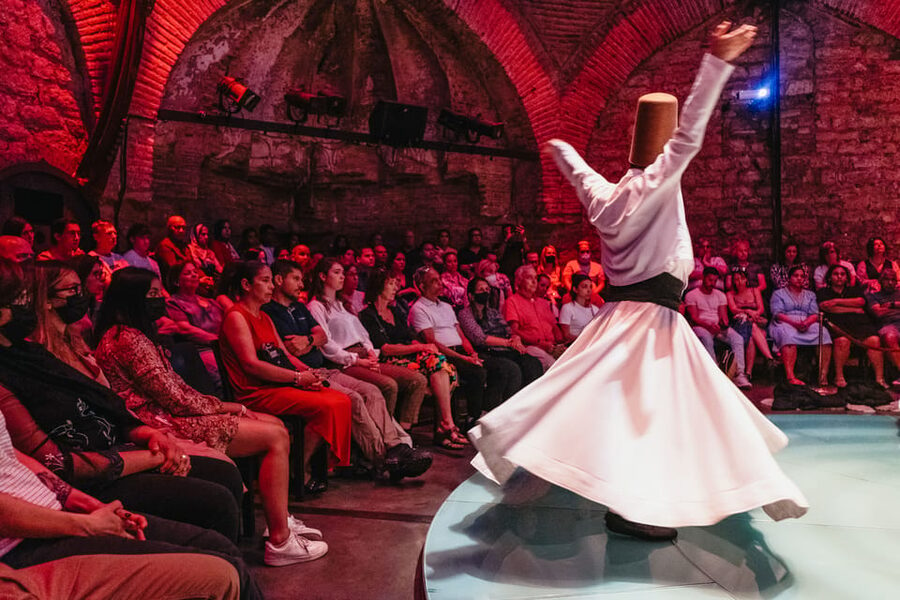
You enter, find your assigned seating if seats have been arranged for your performance, and settle into a compact room. The venue is described as small and intimate, with some performances accommodating around 75 people. The official maximum is higher, up to 170 people, so the exact crowd can vary.
The ceremony begins with traditional music and singing. The sound is a major part of the experience. Several people who respond warmly to the performance focus as much on the musicians and vocalists as on the dervishes. The music gives the ritual its slow pulse and helps explain why the turning feels more like meditation than choreography.
The dervishes then move through a series of bows and ritual actions. The whirling comes later, not immediately. This is where your expectations matter most. If you want a short burst of spinning followed by a dramatic finish, you may find the structure slow. If you appreciate disciplined repetition, the gradual build can be absorbing.
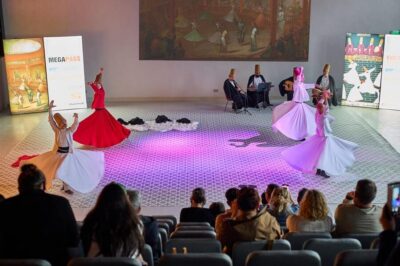
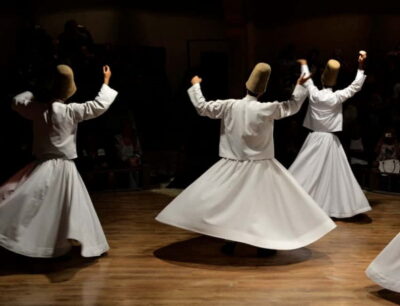
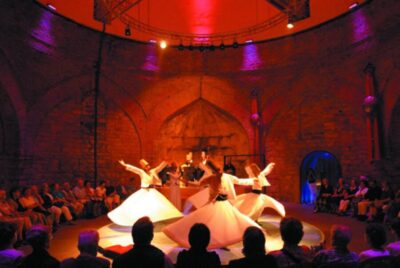
Once the turning begins, the movement is simple and sustained. White robes, raised arms, controlled balance, and soft music create a focused image. You may find yourself watching small details, such as the calm expression of the performers or the precision of their steps, rather than waiting for a new dance move.
The room’s silence adds weight. No applause breaks the concentration. No phone screens flash. The result is less like a performance that asks for your reaction and more like an observance you are allowed to witness.
A small room changes what you see
The compact setting is one of the strongest features here. You sit close enough to see expressions and small movements. That proximity can make the ceremony feel personal, but it also means the experience is not a large-scale spectacle.
You will not get the visual sweep of a big theater production. There are no grand sets or complex staging details in the information provided. Instead, the room, lighting, sound, and ritual carry the evening.
This closeness makes respectful behavior especially important. Keep your phone away, avoid talking, and do not clap unless the staff clearly indicates that the ceremony has ended and applause is appropriate. The stated expectation is no photography or video, and several descriptions also emphasize no applause during the ritual.
The quiet setting can be soothing. It can also make some people sleepy, especially with low light, gentle strings, soft vocals, and repeated turning. That is not a defect in the ceremony, but it is a real consideration when deciding if it suits you.
A few more things to do in Istanbul worth a look
- Istanbul: Hagia Sophia Skip-the-Line Ticket & Museum Option
★ 3.7 · 4,958 reviews - Istanbul: Topkapi Palace & Harem Museum Ticket & Audio Guide
★ 4.1 · 3,977 reviews - Istanbul: Topkapi Palace and Harem Museum Tour with Ticket
★ 4.7 · 247 reviews - Cappadocia: Small-Group Red Tour, Open Air Museum with Lunch
★ 4.8 · 862 reviews
Getting to Hodjapasha without frustration
The center is near public transportation and easy to combine with the Spice Market or a meal in the surrounding restaurant and cafe area. It is a practical evening stop in the Fatih district, especially if you are already sightseeing around the historic center.
The address can be confusing because the venue is reached through a smaller alley rather than directly from the main road. A taxi may stop on the main street, leaving you to walk the final stretch. If you use a taxi, allow time to find the entrance after being dropped off.
The simplest advice is to use public transportation or walk from nearby sights if you know the area. The tram is mentioned as a useful option, and the Spice Market is close enough to combine with the ceremony on foot. Do not leave this until the last minute. Getting lost for ten minutes in Istanbul’s side streets is easy, especially after dark.
The activity ends back at the same venue. There is no hotel pickup or drop-off, so you are responsible for getting there and returning to your hotel. Food is also not included, though the surrounding streets have plenty of places to eat before or after the performance.
Is $32 a fair price?
At $32 per person, this is not the cheapest way to fill an hour in Istanbul. You are paying for a reserved cultural performance in a central venue, not a full evening with dinner, transport, or a private guide.
The value is better if you use the exhibition properly. Reading the displays, studying the booklet, and paying attention to the ceremony’s stages add real substance. If you simply arrive at the last moment, watch the spinning, and leave, the price may feel high for what seems like one repeated movement.
I consider the price reasonable for someone who wants a convenient introduction to Sufi ceremony without arranging a separate visit outside the city. Admission is included, bottled water is provided, and the central location makes it easy to fit into a sightseeing day.
You should not book it as an entertainment bargain. You should book it as a focused cultural experience. That distinction is the key to deciding if the cost feels worthwhile.
Who will appreciate this experience most?
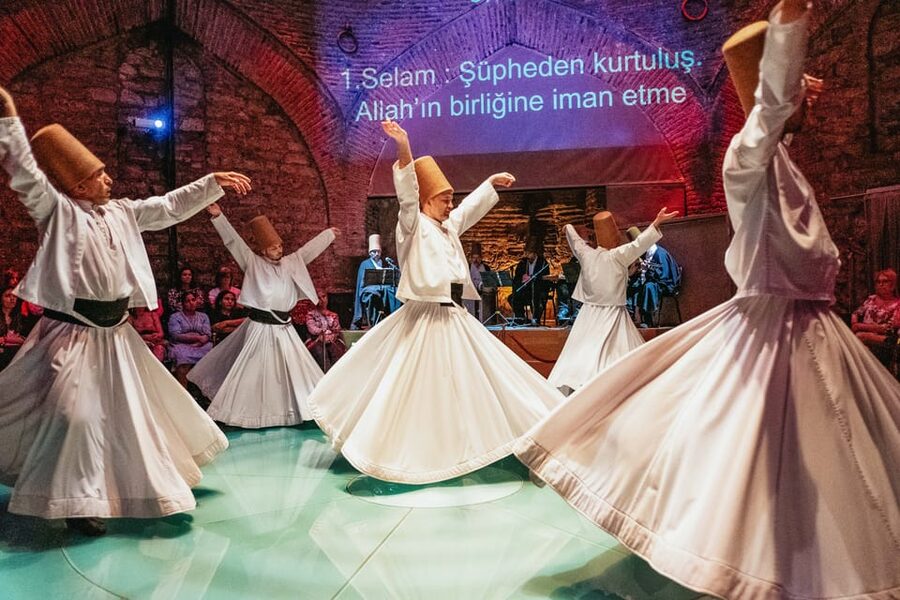
I would recommend Hodjapasha to adults interested in religion, music, Turkish culture, poetry, and quiet forms of performance. It also suits people who enjoy observing traditional practice without needing constant explanation or action.
You may especially like it if:
- You want to learn about Rumi and Sufi traditions.
- You enjoy live traditional music and singing.
- You can sit quietly for an hour.
- You appreciate repetition, ritual, and meditative movement.
- You want a central evening activity near Istanbul’s historic sights.
- You are willing to follow rules about photography and applause.
I would think twice if you are booking for young children, although the minimum age is seven. The experience is open to children who can remain quiet, but the slow pace may test their patience. It is also a poor match for anyone expecting a lively dance performance, audience participation, or a dramatic theatrical production.
People of different faiths can appreciate the ceremony, but it is worth approaching it as a religious event. You are not being asked to adopt its beliefs. You are being asked to observe respectfully.
Practical details that affect your evening
Confirmation is provided at booking, and the experience is offered with a mobile ticket. It is generally booked well ahead, with an average booking time of about 17 days before the visit. That makes prebooking sensible if your Istanbul dates are fixed, especially during a busy season.
The minimum age is seven, and most people can participate. The activity has a maximum capacity of 170 people, though the room can feel much smaller in practice.
Free cancellation is available if you cancel at least 24 hours before the start time. Changes or cancellations made less than 24 hours before the local start time are not accepted for a refund. Keep that deadline in mind if your Istanbul plans depend on weather, ferry schedules, or other moving parts.
Bring your phone for the mobile ticket, but expect to put it away during the ceremony. You may find a small notebook useful if you want to remember details from the exhibition, since photography is not allowed.
My verdict: book it for culture, not spectacle
I would book the Hodjapasha Whirling Dervishes experience if I wanted a respectful introduction to Sufi ritual in a central Istanbul venue. The exhibition, live music, wall explanations, close seating, and serious atmosphere give the one-hour visit more value than a simple spinning performance.
I would skip it if I wanted a fast, colorful show or if I knew I would become bored by repeated movement. The ceremony asks for patience. Arrive early, read the displays, and treat the hour as an act of observation rather than entertainment.
For the best experience, pair it with the Spice Market and dinner nearby. That gives you a lively Istanbul evening before or after a calm and contemplative hour at Hodjapasha.
FAQ
How long does the Hodjapasha Whirling Dervishes experience last?
The ceremony lasts approximately one hour.
Where does the ceremony take place?
It takes place at Hodjapasha Cultural Centre at Hoca Paşa Mahallesi Ankara Caddesi, Hoca Paşa, Hocapaşa Hamamı Sk. No:3 D:B, 34110 Fatih, Istanbul.
Where does the experience end?
It ends back at the same meeting point, Hodjapasha Cultural Centre.
Is this a dance show or a religious ceremony?
It is presented as a cultural and mystical ceremony. You should expect a religious Sufi ritual with music, prayer, bows, and whirling rather than a conventional dance show.
Are photographs and videos allowed?
No. Photography and video are not allowed during the ceremony. Audience members are also asked not to applaud during the ritual.
What is included in the ticket?
Admission to the ceremony, a multilingual booklet, and bottled water are included.
Are food and hotel transfers included?
No. Food and hotel pickup and drop-off are not included.
Is the experience suitable for children?
The minimum age is seven. Most people can participate, but the slow and quiet format may not suit children who need frequent activity.
Can I cancel for a refund?
Yes. You can receive a full refund if you cancel at least 24 hours before the experience start time. Cancellations or changes made less than 24 hours before the local start time are not accepted for a refund.
Just added in Istanbul
- From Istanbul: Sapanca & Masukiye Tour with Lunch★ 4.5 · 68 reviews
- From Istanbul: Private Pamukkale and Hierapolis Day Tour★ 4.2 · 19 reviews
- From Istanbul: Troy and Gallipoli 2-Day Trip★ 4.2 · 18 reviews
- From Istanbul: Guided Day Trip to Sapanca and Masukiye★ 4.1 · 21 reviews
- From Istanbul: Private Bursa City Day Trip★ 4.5 · 20 reviews
- From Istanbul: Ephesus Tour with Roundtrip Flight★ 4.5 · 23 reviews
- From Istanbul: 4-Day Istanbul, Cappadocia, Flight,Cave Hotel★ 4.6 · 17 reviews
- From Istanbul: Best of Turkey 8 Days, 7 Nights Guided Tour★ 5.0 · 15 reviews
Whirling Dervish Shows, compared.
Hodjapasha Whirling Dervishes Show & Exhibition
Read our review →

Istanbul Traditional Turkish Dinner and Dervish Experience
Read our review →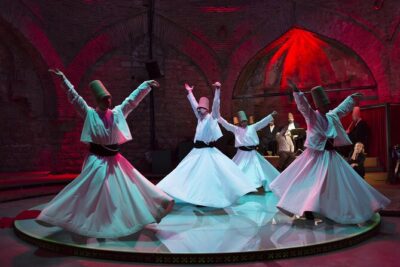
Whirling Dervishes Ceremony & Optional Transfer
Read our review →
Browse the lists this tour appears in