Reviewed · TOURS IN ISTANBUL
Istanbul Haunted Night Tour
Istanbul’s darkest stories are not tucked away in a horror attraction. They happened beside the Column of Constantine, under the walls of the Hippodrome, and near the gates of the Ottoman palace. This two-hour night walk links those places with tales of executions, coups, fratricide, torture, and alleged hauntings.
I like the mix of serious history and hands-on ghost-hunting equipment, and I like that the route leads you into corners of Sultanahmet that are easy to miss after sunset. Guides including Sara, Brent, and Mehmet bring different personalities to the walk. The main consideration is that this is a storytelling tour with paranormal tools, not a guaranteed ghost encounter, and some stories involve grim violence.
Key points before you book
- Ancient crimes in familiar places: The route turns the Hippodrome, Sultanahmet Square, and Topkapi Palace area into a night-time history lesson.
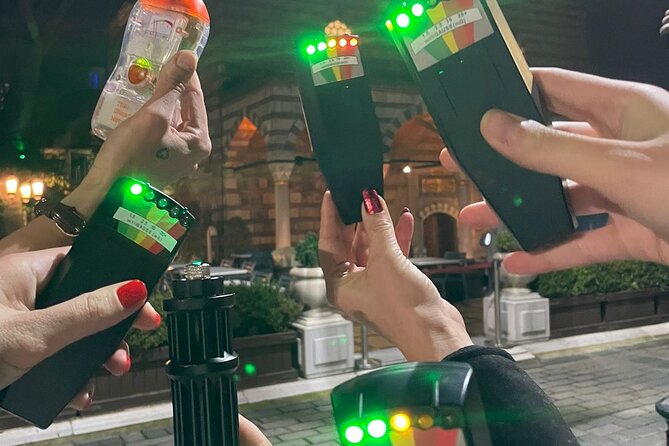
- Useful equipment: You can handle EMF detectors, dowsing rods, an EVP recorder, and Maddusa’s Web green laser.
- Small-group feel: The maximum group size is 20, enough for shared participation without a huge crowd.
- A walk through the European side: You finish at Topkapi Palace’s Imperial Gate, with the guides able to direct you back toward the starting area.
- Strong guide-led atmosphere: Sara, Brent, and Mehmet are praised for their energy, historical detail, and ability to keep the evening moving.
- Weather matters: The tour requires good weather, and poor conditions can lead to a new date or a full refund.
Why Istanbul’s old center works so well after dark
Sultanahmet is packed with famous monuments, but it can feel different once the daytime crowds thin out. The stones remain, the monuments are still lit, and the open spaces around the Hippodrome give the guide room to explain how public power was displayed in earlier centuries.
I like this setting because the tour does not need to create a spooky backdrop from scratch. The Column of Constantine, the Sphendone ruins, the Serpent Column, and the Imperial Gate already carry centuries of political drama. The ghost stories add a layer of mystery, while the historical setting gives the evening more substance than a simple scare walk.
The tone is also flexible. You can approach the tour as a paranormal outing, a dark-history walk, or an unusual introduction to Istanbul. The strongest parts are the places where those three threads meet: a real execution, a real revolt, a real palace custom, and then a chance to test an EMF detector or dowsing rod nearby.
The guides are important here. Sara is praised for her enthusiasm and ability to make the past entertaining. Brent is described as personable and good at drawing attention to overlooked parts of the city. Mehmet brings strong historical detail and a clear passion for the subject. Your guide may be one of them, but the exact assignment is not specified.
Other trips people book in Istanbul:
- Istanbul: Bosphorus Dinner Cruise & Show with Private Table
★ 4.8 · 44,561 reviews - Istanbul: Daytime or Sunset Sightseeing Cruise & Audio Guide
★ 4.8 · 14,430 reviews - Istanbul: Bosphorus Dinner Cruise with Turkish Night Show
★ 4.8 · 10,127 reviews
From the Column of Constantine to the first dark tales
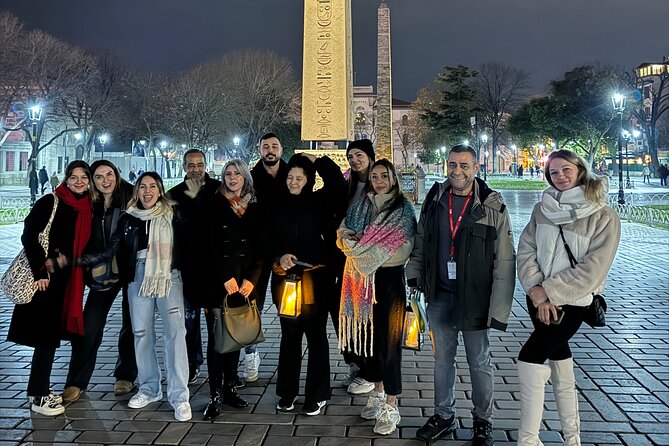
The meeting point is the Column of Constantine on Molla Fenari Street, and the tour begins at 8 pm. This is a practical starting place because the column marks the old Forum of Constantine, where the Roman capital was formally shifted to Constantinople in the year 330.
Your first stop lasts about 10 minutes. The guide uses the column and the vanished forum around it to establish the main idea of the evening: places built to celebrate imperial power also witnessed fear, punishment, and political violence.
The column itself is more than an old monument to admire and photograph. It represents the moment when Constantine’s new capital began to take shape. The tour connects that public symbol with darker stories from the city’s past, giving you a reason to look at the stone with more than architectural interest.
The stop is free, as are most points along the route. That keeps the price focused on the guide, the research, the evening format, and the equipment rather than on entrance tickets.
A graveyard of Ottoman power
At Ahmet Tevfik Pasa Mezarı, you enter a cemetery connected with a 19th-century sultan and his advisers. The stop lasts about 10 minutes and centers on betrayal and assassination.
This is the kind of pause I value on a tour like this. Istanbul’s grand Ottoman story can easily become a parade of palaces, mosques, and sultans. A graveyard changes the pace. It brings the discussion down to individual lives, political suspicion, and the dangers faced by people close to power.
You should expect storytelling rather than a long visit inside a major monument. The appeal is the setting and the account of what happened there. Since the tour takes place at night, you will also experience the cemetery as a quiet historical space rather than as a daytime sightseeing stop.
The Sphendone and the prison beneath the Hippodrome
The first visit to the Sphendone lasts about 10 minutes. This curved, vaulted remnant is part of the south side of the ancient Hippodrome. The guide discusses a prison on the site, including the use of wild animals for the circus and the harsh treatment of prisoners.
This is one of the more disturbing sections. The subject includes torture and disfiguration, so I would not choose this tour for young children or anyone who prefers light ghost stories. The stories are meant to show how entertainment, punishment, and imperial authority could overlap in the ancient city.
The Sphendone is also a good example of the tour’s value. It is not one of Istanbul’s headline monuments, and you might walk past it without understanding what the large stone structure represents. The guide gives it a human and political context, even when the subject is unpleasant.
The route returns to the Sphendone later from another side. That may sound repetitive on paper, but the two visits deal with different parts of the structure and different stories. The second stop focuses on the best seats in the ancient arena, the deaths connected with that space, and a successful coup against a powerful emperor.
Same base, a different sort of day:
- Best of Istanbul 1, 2 or 3-Day Private Guided Istanbul Tour
★ 5.0 · 8,922 reviews - Istanbul: Basilica Cistern Fast-Track Entry and Audio Guide
★ 4.6 · 7,521 reviews - Istanbul: Hagia Sophia Skip-the-Line Ticket & Museum Option
★ 3.7 · 4,958 reviews - Istanbul: Hodjapasha Whirling Dervishes Show & Exhibition
★ 4.4 · 4,790 reviews
The Hippodrome, where sport and terror met
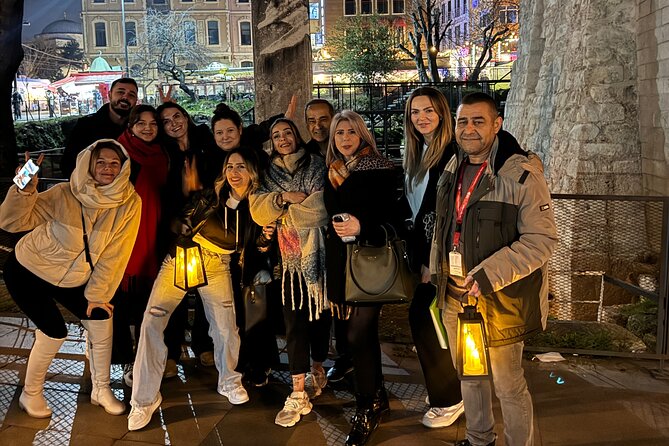
The Hippodrome receives about 20 minutes, making it the longest stop on the route. That is appropriate. This was the sporting and social heart of Constantinople for more than a thousand years, and one of the most important public spaces in the Roman world.
The guide explains the famous chariot races and the rival factions that filled the arena with noise, loyalty, and political tension. The Hippodrome was also where citizens could see the emperor directly. It was a place for public executions, and it witnessed one of the most terrible massacres in the city’s history.
I like this stop because it shows that the ancient arena was not simply an entertainment venue. It was a stage for authority. The emperor appeared there, crowds demanded action there, and political unrest could turn deadly there.
At night, the open square gives you room to picture the scale of the old arena, even though much of the original structure has disappeared. The guide’s account does the work that missing walls cannot. You should expect a strong historical explanation here, with the supernatural element used to sharpen the atmosphere rather than replace the history.
Little Hagia Sophia and a palace crime
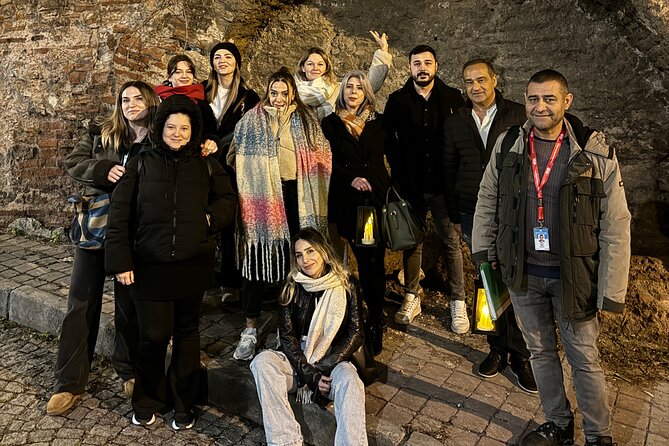
The stop at Kucuk Ayasofya, also called the Gazi Suleyman Pasa Mosque, lasts about 10 minutes. Admission is included here, unlike most of the other stops.
The building began as the Church of Saints Sergius and Baccus and later became a mosque under Ottoman rule. Before that church was built, the area was connected with a palace where Justinian lived before becoming emperor in the sixth century.
The tour then moves to a much later Ottoman story involving a high-ranking eunuch who embezzled money and avoided taxes. He was eventually found and executed, with the punishment involving the loss of something especially personal.
This is a good stop for visitors who want the tour to move beyond generic ghost talk. You get a change in setting, a link between Byzantine and Ottoman Istanbul, and a specific story about corruption inside the ruling system. The visit is brief, so do not expect a full architectural tour of the mosque.
The Serpent Column and a brutal imperial fate
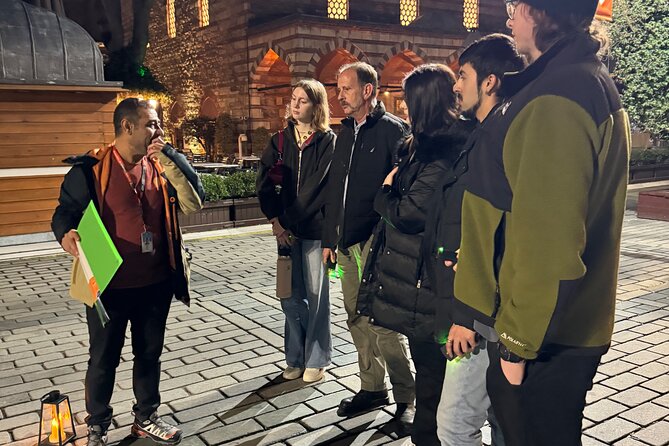
The Serpent Column is one of the most recognizable objects in the old Hippodrome area. The stop lasts about eight minutes and links the column’s origins as war spoils with the brutal execution of a Byzantine emperor.
The phrase haunted column may catch your attention, but the historical background is the more useful part. The monument reflects victory, conquest, and the habit of bringing symbols from defeated places into the imperial capital. The execution story adds a sharper sense of danger around the people who ruled from Constantinople.
This is also one of the shorter talks, so the guide has to keep it focused. You will not get every detail of the column’s long story, but you will get a dark interpretation of a familiar monument that you may already have passed during daytime sightseeing.
The German Fountain and an unpaid army
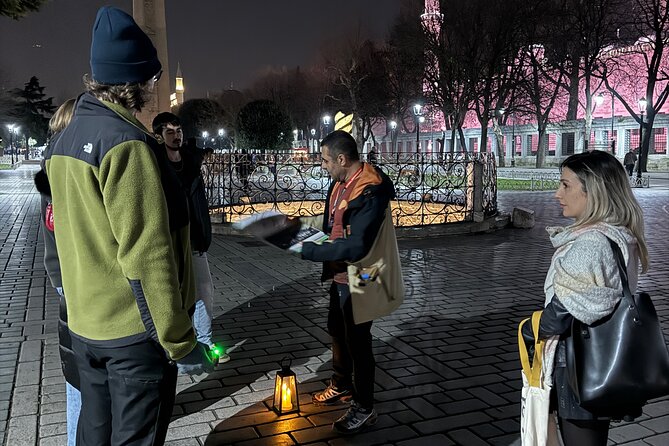
The German Fountain receives about 10 minutes. Today, it is a decorative landmark, but the guide also identifies this area with the starting gates of the ancient chariot races.
The story then shifts to the 17th century, when Ottoman soldiers returned from war without receiving their pay. The resulting unrest led to a deadly event at this location, where an old tree once stood.
I enjoy this kind of connection because it shows how Istanbul’s public spaces changed purpose over time. A place associated with spectacle in the Byzantine period later became connected with military anger and Ottoman political failure. The exact setting may look peaceful now, but the tour asks you to picture the crowd pressure and fear that once filled it.
The Sultan Ahmet Tomb and the law of fratricide
The Sultan Ahmet Tomb is the setting for one of the most troubling Ottoman subjects on the route. For about 10 minutes, the guide explains the law of fratricide, which allowed Ottoman sultans to kill brothers and children who might threaten the throne.
The stories of brothers killing brothers give the mausoleum its haunted theme. They also explain a brutal political practice that cannot be understood simply as palace legend. The law was tied to the fear of civil war and succession struggles, though its human cost was immense.
This section will suit you if you want the tour to explain why Ottoman history can be both grand and deeply unsettling. It is not a light anecdote between monuments. The subject is family murder carried out for political control, and the guide treats the dead in the tomb as part of that story.
Coffee, censorship, and deadly punishment
At Sultanahmet Square, the tour pauses for about five minutes to discuss a ban on public coffee drinking in the early 17th century. The consequences of breaking the rule could be deadly.
This is a short stop, but it adds a useful change of scale. Not every dark story involves a palace coup or a battlefield. Daily habits, public gatherings, and social customs could also become matters of state control.
I would pay attention here because the briefest stops can pass quickly if the group is large. The tour allows up to 20 people, and the guide may need to keep everyone together in the square. Staying close makes it easier to hear the point of the story.
Finishing at Topkapi’s Imperial Gate
The walk ends at Bab-i Humayun, the Imperial Gate of Topkapi Palace. This grand entrance was designed to impress, but also to intimidate anyone entering the palace grounds.
The guide discusses the head gardener of the palace and a special race that was literally a matter of life and death. It is an effective final stop because the gate represents the machinery of Ottoman rule. You finish not with a general ghost story, but with another tale about status, danger, and the cost of failure near the sultan.
The official end point is behind and to the side of Hagia Sophia. The guides can direct you back toward the starting area or help you find your way onward. That is useful after dark, particularly if you are still getting your bearings in the Sultanahmet district.
What the equipment adds to the evening
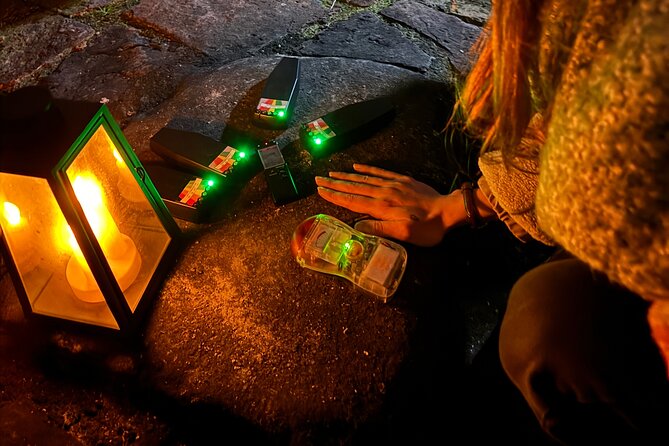
The tour includes EMF detectors, Maddusa’s Web green laser, dowsing rods, and an EVP recorder. These tools give you something to do between stories and let the group take part rather than simply listen.
I would treat them as entertainment and atmosphere, not as scientific proof of spirits. The best value comes from using the equipment to focus attention on a place while the guide explains what happened there. If you are hoping for clear paranormal evidence, keep expectations modest. One person specifically enjoyed the tour despite not encountering a ghost.
The equipment does make the walk more social. You can take turns with the devices, compare readings, and stay involved during quieter moments. That hands-on element is especially useful for a group of friends or couples who want more than a standard history lecture.
Price, group size, and practical value
The price is $48.06 per person for roughly two hours. Most stops have no admission charge, and only Kucuk Ayasofya is listed with admission included. So you are paying mainly for the guide’s preparation, the evening route, the storytelling, and access to the ghost-hunting equipment.
I consider that fair if you want a themed introduction to Sultanahmet and a guide who can connect scattered sites into one narrative. It is less attractive if your main goal is extended interior sightseeing, because most stops are short and outdoors.
The group can reach 20 people. That is not a private walk, but it is still manageable for an interactive evening. The tour is offered in English, uses a mobile ticket, and is near public transportation. Most people can participate, and service animals are allowed.
Wear shoes suited to walking and check the forecast. The tour requires good weather. If poor weather causes cancellation, you are offered another date or a full refund. You can also cancel for a full refund up to 24 hours before the start time. A cancellation inside that window is not refundable.
Who should book this night walk
I would choose this tour if you have already seen some of Istanbul’s major monuments and want a different way to understand the old center. It also works well early in a stay, since the route introduces the Column of Constantine, Hippodrome, Sultanahmet Square, and Topkapi area from a dramatic angle.
It suits adults, history fans, people who enjoy ghost stories, and friends looking for a lively evening activity. The guides keep the mood friendly, and the chance to continue with a drink after the walk may appeal to social groups, though that is not part of the formal tour.
I would think twice if you dislike stories about torture, executions, political murder, or family killing. The walk is not frightening because of jump scares. Its darker effect comes from real historical cruelty, told in the places where it happened.
Should you book the Istanbul Haunted Night Tour?
Book it if you want dark Ottoman and Byzantine history, a night walk through Sultanahmet, and a few simple paranormal tools to make the evening interactive. The strongest reasons are the route, the guide-led storytelling, and the way familiar monuments take on a different character after sunset.
Skip it if you want a formal museum tour, long indoor visits, or a reliable supernatural encounter. At $48.06, the experience offers good value for a focused two-hour evening, especially if Sara, Brent, or Mehmet brings the same energy and detail associated with the tour. I would reserve ahead, since it is commonly booked about 15 days in advance.
FAQ
Where does the Istanbul Haunted Night Tour begin?
It begins at the Column of Constantine, at Molla Fenari, Vezirhan Cd. No:16 D:18, 34120 Fatih, Istanbul.
What time does the tour start?
The tour starts at 8 pm.
Where does the tour finish?
It finishes at Bab-i Humayun, the Imperial Gate of Topkapi Palace, in Cankurtaran. The guides can direct you back toward the starting area or onward to another location.
How long does the tour last?
The tour lasts approximately two hours.
What language is the tour offered in?
It is offered in English.
What ghost-hunting equipment is included?
The tour includes EMF detectors, Maddusa’s Web green laser, dowsing rods, and an EVP recorder.
Can I cancel for a full refund?
Yes. You can cancel at least 24 hours before the start time for a full refund. Cancellations made less than 24 hours before the start time are not refunded. If poor weather cancels the tour, you are offered another date or a full refund.
Just added in Istanbul
- Private Custom Tours in Istanbul★ 5.0 · 38 reviews
- Magical Sights of Istanbul Private Walking Tour★ 5.0 · 50 reviews
- Private Cultural Tour of Istanbul with Certified Guide★ 5.0 · 81 reviews
- Istanbul Airport Transfer Service with Private Minivan★ 4.5 · 61 reviews
- Istanbul: Princes Islands Tour with Heybeliada and Büyükada★ 4.0 · 104 reviews
- Private 4 Days Turkey Tour from Istanbul to Cappadocia, Ephesus, Pamukkale★ 5.0 · 80 reviews
- Private Airport Transfer in Istanbul★ 5.0 · 20 reviews
- Princes Island Full Day Tour★ 4.0 · 36 reviews
Tours in Istanbul, compared.
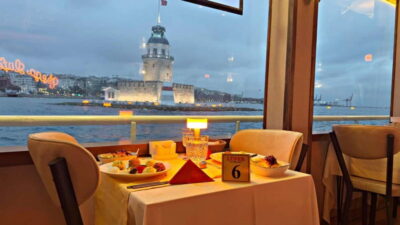
Bosphorus Dinner Cruise & Show with Private Table
Read our review →
Bosphorus Dinner Cruise with Turkish Night Show
Read our review →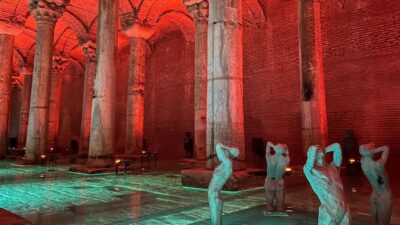
Basilica Cistern Fast-Track Entry and Audio Guide
Read our review →
Hagia Sophia Skip-the-Line Ticket & Museum Option
Read our review →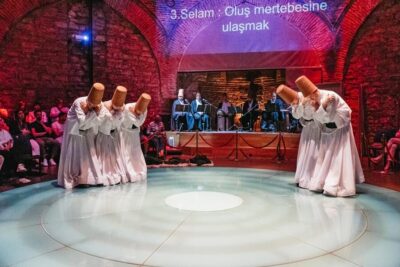
Hodjapasha Whirling Dervishes Show & Exhibition
Read our review →
Topkapi Palace & Harem Museum Ticket & Audio Guide
Read our review →
Sunset or Day Small-Group Yacht Cruise with Snacks
Read our review →