Reviewed · TOURS IN ISTANBUL
Byzantion Walk Path and City Walls of Istanbul
Istanbul’s old city walls are the main event here. You move from Yedikule’s formidable towers and Golden Gate through Silivrikapı and Mevlanakapı, tracing the defenses that protected Constantinople for more than a thousand years. I like the way this tour connects separate monuments into one story, and I like that a private guide can adjust the pace, answer questions, and build in breaks. The main drawback is physical: expect a long walk, uneven surfaces, and some effort around the walls.
I also like the final stop at Chora Museum, where fourteenth-century Byzantine mosaics and frescoes reward anyone who cares about medieval art. Guides such as Taha, Ally, and Taja are praised for clear explanations, friendly conversation, and tailored plans. Just remember that Chora admission is extra, the museum is closed Fridays, and the broad group price is strongest when shared by several people.
Key points to know before booking
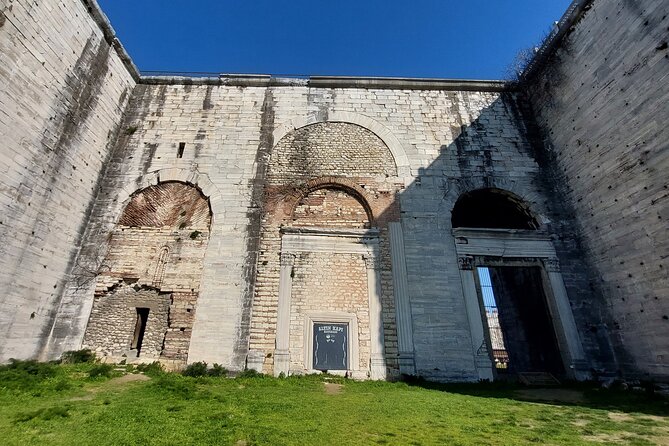
- Yedikule begins the story: See the largest section of the city walls and the important Golden Gate.
- The route follows real defensive layers: Moat, outer wall, and twelve-meter inner wall help explain how Constantinople resisted attack.
- This is a private tour: One group of up to 15 people can set the pace and ask as many questions as needed.
- Transport is part of the plan: You meet at the German Fountain, then reach Yedikule by taxi or public transportation.
- Chora is the artistic payoff: Its mosaics and frescoes are among Istanbul’s most important Byzantine works, but admission is not included.
- Plan for a physical morning: The route lasts roughly one to five hours, with the listed stops adding up to about four hours and fifteen minutes before transport time.
Why Istanbul’s walls make such a good walking tour
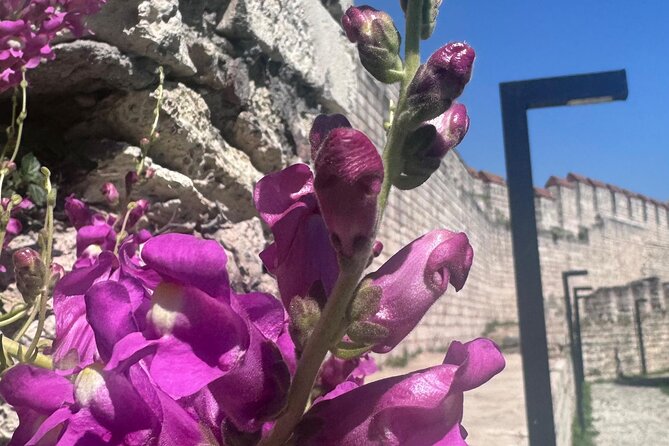
Istanbul’s most famous sights sit around Sultanahmet, but the landward walls tell a different story. They show how the city worked as a fortress, not just as a collection of palaces, mosques, and churches. This walk takes you away from the standard postcard route and into the defensive belt built to guard Constantinople from armies approaching across Thrace.
The Theodosian Walls were not one simple barrier. They formed a layered system with a deep moat, an outer wall, and a huge inner wall rising about twelve meters. That design gave defenders several chances to slow an enemy before the final line was reached. Your guide can point out how towers, gates, and overlapping barriers fit together.
I find this setting especially useful for making sense of Istanbul’s geography. Instead of hearing about sieges as distant dates, you can see the narrow gates, heavy masonry, and long stretches of fortification that shaped the city’s survival. The walls also give the tour a more open, physical quality than an indoor museum visit.
The route is not presented as a polished monument at every step. Some areas feel worn and irregular. That is part of the appeal, but it also means you should wear sturdy shoes and be ready for a moderate level of exertion. Anyone with leg problems should think carefully before booking.
Other trips people book in Istanbul:
- Istanbul: Bosphorus Dinner Cruise & Show with Private Table
★ 4.8 · 44,561 reviews - Istanbul: Daytime or Sunset Sightseeing Cruise & Audio Guide
★ 4.8 · 14,430 reviews - Istanbul: Bosphorus Dinner Cruise with Turkish Night Show
★ 4.8 · 10,127 reviews
Starting at Yedikule and the Golden Gate
You meet your English-speaking guide at the German Fountain near Sultanahmet at 9:00 a.m. From there, the group goes to Yedikule by taxi or public transportation. The transfer matters because Yedikule is not right beside the German Fountain, and the tour is designed around seeing the walls in sequence rather than spending the whole morning in the central sightseeing zone.
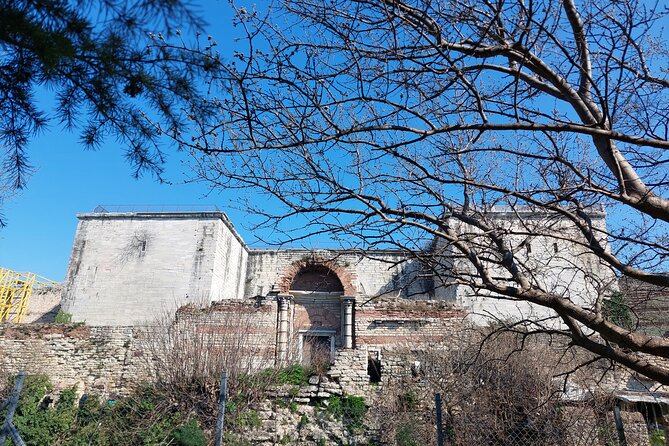
Yedikule is the strongest opening stop. It contains the biggest part of the city walls featured on this route, along with the Golden Gate, one of the most important entrances in the old defenses. The gate carried imperial and military importance in the Byzantine period, and Yedikule later became associated with Ottoman dungeons.
I like beginning here because the scale becomes clear quickly. You are not looking at a single surviving arch in isolation. You are seeing a substantial defensive complex and learning why this part of the wall mattered. The guide can also place the gate within the changing story of the city, from Constantinople to Ottoman Istanbul.
The stop is scheduled for about an hour and thirty minutes. That is enough time for explanation, photographs, and a careful look without rushing. The wall admission listed for this part is free, though conditions can change at historic sites, so your guide remains the best source for what is open on the day.
The Yedikule area also sets the tone for the rest of the experience. This is a tour for people who enjoy old stonework, military design, and the relationship between a city and its defenses. If you want only grand interiors and polished exhibits, this may feel too rough around the edges.
Silivrikapı and the gates between the towers
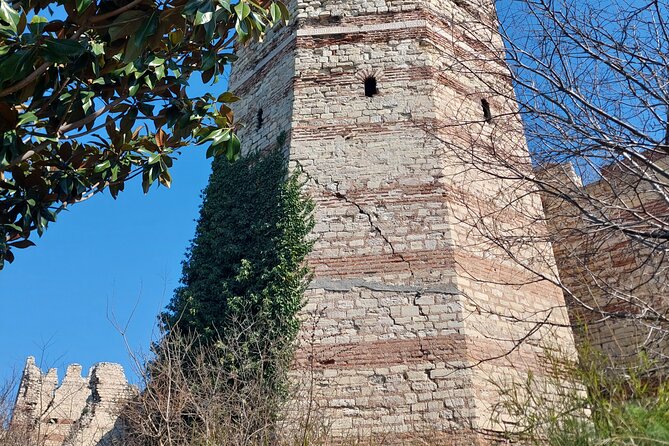
From Yedikule, the walk continues north to Silivrikapı. This gate sits between two polygonal gateway towers and was renewed during the late Byzantine period. Its irregular stones and bands of brick show that the wall was repaired and altered over time rather than built once and left untouched.
The scheduled visit lasts about forty minutes. That may sound brief, but it works well as a focused stop. Your guide can draw attention to the masonry, the position of the towers, and the practical purpose of the gate. I find details like these more rewarding when someone explains what to look for, since a weathered wall can otherwise seem like one long stretch of stone.
Silivrikapı is also a good place to understand that the walls were working infrastructure. Gates controlled movement into the city. Towers allowed defenders to watch and protect weak points. Repairs reveal that the fortifications had to be maintained across centuries of political and military change.
The route between stops adds walking time beyond the individual visit estimates. Your total day is advertised as roughly one to five hours, while the four listed stops account for about four hours and fifteen minutes. Transport, pauses, and your group’s pace affect the final length.
Mevlanakapı and the engineering of the Theodosian Walls
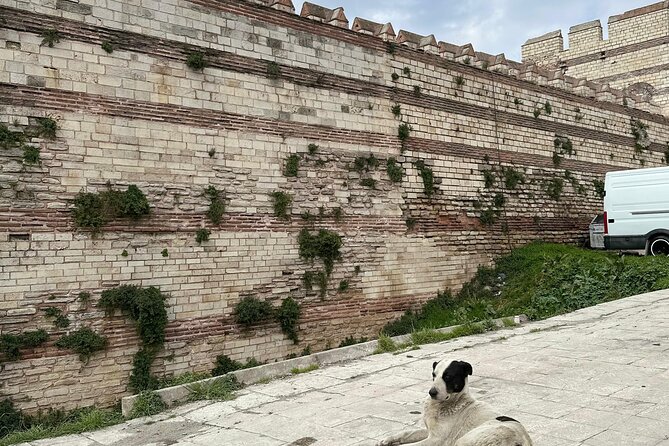
Mevlanakapı is the most useful stop for understanding the full defensive system. Here, the guide explains how the walls were designed to absorb attacks from siege engines and later artillery. The key lesson is that Constantinople relied on layers, not a single unbroken vertical face.
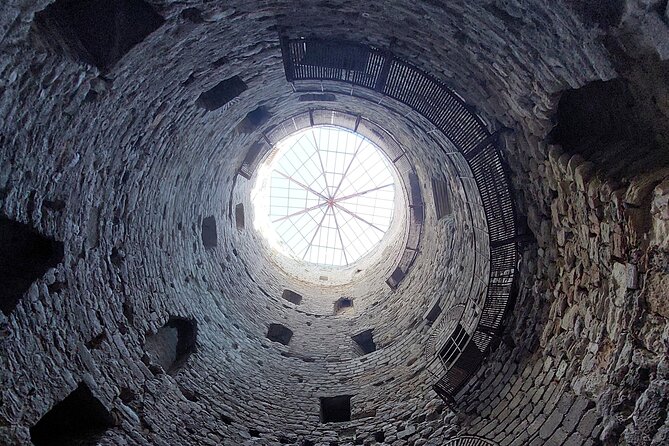
The moat formed the first obstacle. Beyond it came the outer defense wall, followed by the massive inner wall. An attacking force had to cross open ground, pass one barrier, and then face another taller and stronger line. Towers added observation points and allowed defenders to protect sections of the wall from different angles.
I like this part because it turns military engineering into something you can read with your own eyes. The guide is not simply naming a gate and moving on. The point is to show why the fortifications worked for so long and why the city could resist repeated attacks.
One past account describes climbing the city walls and feeling the special character of the experience. Conditions and access can vary, so you should not assume that climbing is guaranteed. Still, the route may involve uneven surfaces and physical effort, and the tour information specifically recommends a moderate fitness level.
This is where Taha’s guiding approach sounds particularly useful. He is described as explaining the important points clearly, answering questions when he is certain of the facts, and checking that the group wants a break. That combination matters on a wall walk, where a good guide should pay attention to both the story and the people hearing it.
Same base, a different sort of day:
- Best of Istanbul 1, 2 or 3-Day Private Guided Istanbul Tour
★ 5.0 · 8,922 reviews - Istanbul: Basilica Cistern Fast-Track Entry and Audio Guide
★ 4.6 · 7,521 reviews - Istanbul: Hagia Sophia Skip-the-Line Ticket & Museum Option
★ 3.7 · 4,958 reviews - Istanbul: Hodjapasha Whirling Dervishes Show & Exhibition
★ 4.4 · 4,790 reviews
Chora Museum and Istanbul’s finest Byzantine art
The final stop is Chora Museum, formerly the Church of the Holy Savior in Chora. The museum is known for its fourteenth-century Byzantine mosaics and frescoes, created during the Palaeologan Renaissance. The art is noted for its movement toward more natural figures and stronger human emotion.
I would treat Chora as essential if medieval art is a major reason you are visiting Istanbul. The building’s mosaics and painted scenes offer a different experience from the defensive walls. After spending the morning looking at fortifications from the outside, you enter a place where the Byzantine world survives in color, figures, and religious storytelling.
The scheduled visit is about one hour and twenty minutes. That is a sensible amount of time for seeing the major decoration without turning the whole tour into an art lecture. Your guide can help you notice how the images differ from earlier Byzantine work and why the site is often compared with Europe’s great religious art interiors.
Chora admission is not included in the tour price. The museum is also closed Fridays, so check your date before booking. If your visit falls on a Friday, the provider should clarify whether the route changes, but the supplied information specifically identifies the closure.
The museum can also change the balance of the tour. If you primarily want walls and gates, Chora adds an art-focused finish that may feel like a shift in subject. I see that as a strength for most people, but serious fortification fans may prefer to confirm how much time will be spent at each stop.
What the private format adds
This is a private activity for your group, with a maximum of 15 people. That makes a noticeable difference on a route where questions and walking pace matter. You do not have to match a large public group’s speed, and the guide can pause when someone needs a rest.
The strongest praise for the guiding centers on personal attention. Taha is described as friendly, well informed about Turkish history and culture, and able to shape a tour around what a group wants to see. Ally and Taja are also named as guides who helped create a suitable itinerary and offered practical help along the way.
You should not assume a particular guide unless the provider confirms one. Still, the experience clearly aims to be conversational rather than scripted. One detailed account describes the guide discussing the group’s day, asking about breaks, and saving time through a well-planned route. Those are small touches, but they can make a four-hour walk much easier.
The private setup is especially useful for families, couples, or friends with a shared interest in Byzantine Istanbul. It is less compelling for a solo visitor if the full $372.07 group price applies without anyone else to share it. For a group of several people, the per-person value improves quickly, especially since the guide is reserved for your party.
Price, food, and practical value
The listed cost is $372.07 per group of up to 15 people. I would judge that price by group size rather than by comparing it with a standard per-person walking tour. For 10 or 15 people, the cost divides into a reasonable amount for a private guide. For one or two people, it becomes a much more expensive way to see sites that have free admission.
The walls themselves do not add an admission charge in the supplied details. Chora Museum is extra, and lunch is also not included. Lunch is estimated at about 300 to 6,000 Turkish lira, an unusually wide range, so ask your guide about the plan before the day begins if a meal matters to you.
The activity starts at 9:00 a.m. at the German Fountain and ends back at that meeting point. Since the group must reach Yedikule first, the taxi or public transport transfer is part of the practical calculation. Near the starting point, public transportation is available.
The tour requires good weather. If poor weather causes cancellation, you are offered another date or a full refund. You can also cancel up to 24 hours before the start time for a full refund. Changes or cancellations inside that window are not accepted, so keep your plans firm once the cutoff passes.
Who will get the most from this walk
I would recommend this experience to anyone who wants to understand how Istanbul was defended and prefers a guide who can connect architecture with political and military history. It suits first-time visitors who want a different side of the city, as well as repeat visitors who have already seen Hagia Sophia and the Blue Mosque.
It is also a good match for people who like asking questions. The private format gives you room to focus on gates, masonry, Ottoman use of Yedikule, or the art at Chora, depending on your interests.
I would hesitate if you have leg problems, dislike uneven ground, or want a short, effortless sightseeing outing. The route is not simply a vehicle tour with quick photo stops. You will walk, stand, and possibly encounter difficult surfaces around the defenses.
Should you book the Byzantion Walk?
Book it if the walls of Constantinople and Byzantine art sound more interesting to you than another standard Sultanahmet circuit. Yedikule, Silivrikapı, Mevlanakapı, and Chora form a strong sequence: fortress, gates, defensive engineering, then religious art.
The best value comes with a group large enough to share the private price. Before paying, confirm the guide, check that Chora is open on your chosen day, and be realistic about the walking required. If those points fit your plans, this is a thoughtful way to see an important part of Istanbul that many visitors miss.
FAQ
Where does the tour start?
The tour starts at the German Fountain on At Meydanı Caddesi in the Fatih district of Istanbul. The stated start time is 9:00 a.m.
Where does the tour end?
The activity ends back at the German Fountain meeting point.
How long does the tour take?
The advertised duration is approximately one to five hours. The listed stops total about four hours and fifteen minutes, not including transport and variations in walking pace.
Is Chora Museum included in the price?
No. Admission to Chora Museum is not included. The museum is closed on Fridays.
Is this a private tour?
Yes. Only your group participates, with up to 15 people included in the group price.
What fitness level is needed?
A moderate level of physical fitness is recommended. The tour is not recommended for anyone with leg problems, and service animals are allowed.
Just added in Istanbul
- Private Custom Tours in Istanbul★ 5.0 · 38 reviews
- Magical Sights of Istanbul Private Walking Tour★ 5.0 · 50 reviews
- Private Cultural Tour of Istanbul with Certified Guide★ 5.0 · 81 reviews
- Istanbul Airport Transfer Service with Private Minivan★ 4.5 · 61 reviews
- Istanbul: Princes Islands Tour with Heybeliada and Büyükada★ 4.0 · 104 reviews
- Private 4 Days Turkey Tour from Istanbul to Cappadocia, Ephesus, Pamukkale★ 5.0 · 80 reviews
- Private Airport Transfer in Istanbul★ 5.0 · 20 reviews
- Princes’ Islands Tour from Istanbul★ 3.5 · 21 reviews
Tours in Istanbul, compared.
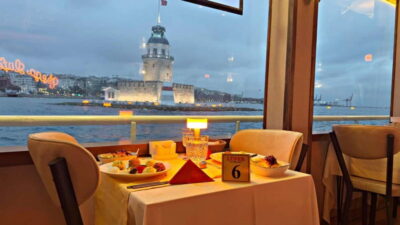
Bosphorus Dinner Cruise & Show with Private Table
Read our review →
Bosphorus Dinner Cruise with Turkish Night Show
Read our review →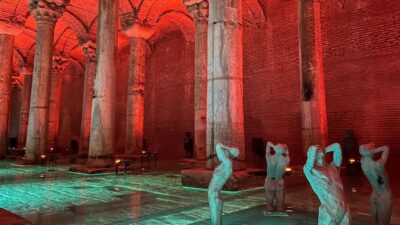
Basilica Cistern Fast-Track Entry and Audio Guide
Read our review →
Hagia Sophia Skip-the-Line Ticket & Museum Option
Read our review →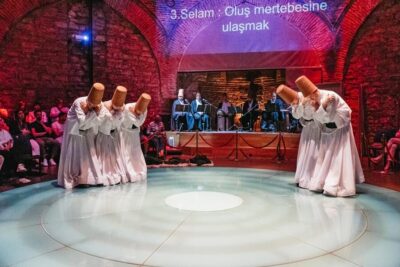
Hodjapasha Whirling Dervishes Show & Exhibition
Read our review →
Topkapi Palace & Harem Museum Ticket & Audio Guide
Read our review →
Sunset or Day Small-Group Yacht Cruise with Snacks
Read our review →