Reviewed · TOURS IN ISTANBUL
Ancient Rome Under Istanbul
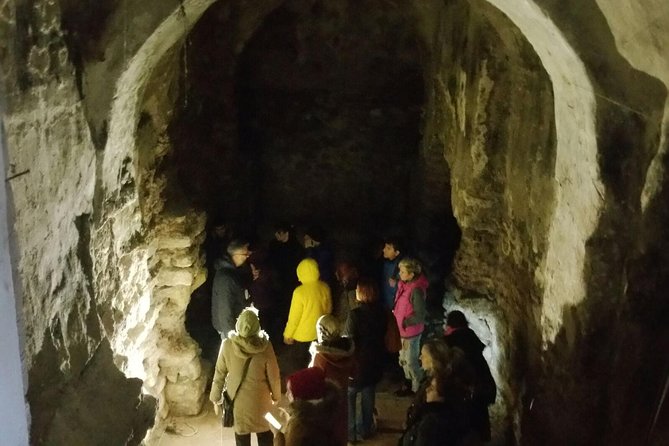
Istanbul’s oldest story is often under your feet. This tour takes you below modern shops, hotels, and streets to see Roman and Byzantine remains that are easy to miss on your own. You may visit ancient cisterns, former chapels, Constantine-era sites, and other fragments hidden inside the old city.
I like two things here: the tour reaches places that are not part of the usual sightseeing circuit, and a strong guide can connect scattered stones to the larger story of Constantinople. Guides named Ece and Ege receive especially warm praise for clear explanations and lively presentations. The main drawback is that access and timing can vary, and some people may find three hours too short for a tour advertised as lasting up to five.
Key points to know before booking
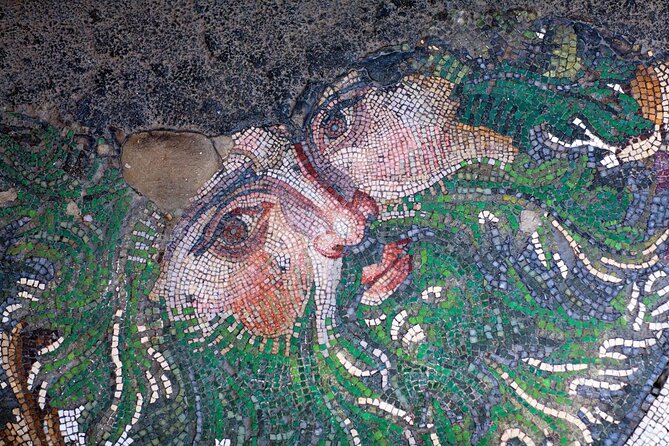
- Ancient remains beneath everyday buildings: Parts of the route pass through shops, hotels, and other modern spaces built over old ruins.
- Strong guide-led experience: Ece, Ege, AJ, Eve, and Erkan are among the guides named in especially positive feedback.
- A different view of Sultanahmet: The focus is on overlooked Roman and Byzantine traces, not only Istanbul’s grand monuments.
- Küçük Ayasofya adds architectural context: This former church, now Gazi Süleyman Paşa Mosque, helps explain the design tradition behind Hagia Sophia.
- Small groups keep the tour personal: The maximum group size is 15 people, with occasional one-on-one departures.
- Expect walking and flexible timing: The listed duration is about three to five hours, though some departures have lasted closer to three.
Why Istanbul’s Roman past is often underground
Modern Istanbul sits on layers of older cities. The Roman city of Constantinople and the later Byzantine capital did not disappear when new streets, homes, hotels, and shops were built. Much of the old fabric simply became part of the foundations below them.
That is the central idea of this experience. You are not moving from one grand museum to the next. You are looking for clues: a column in an unexpected place, a cistern beneath a commercial building, fragments of a chapel, or masonry that makes more sense once your guide explains its original purpose.
I find this approach useful because it changes how you see Sultanahmet after the tour. A plain doorway or basement entrance may no longer look ordinary. You begin to notice how the modern city has grown around, over, and sometimes into its ancient past.
The experience is especially suited to you if you already plan to see Hagia Sophia, the Blue Mosque, Topkapı Palace, and the Basilica Cistern, but want a less familiar angle on the same district. It is not a replacement for Istanbul’s major museums. It works best as a companion to them.
Other trips people book in Istanbul:
- Istanbul: Bosphorus Dinner Cruise & Show with Private Table
★ 4.8 · 44,561 reviews - Istanbul: Daytime or Sunset Sightseeing Cruise & Audio Guide
★ 4.8 · 14,430 reviews - Istanbul: Bosphorus Dinner Cruise with Turkish Night Show
★ 4.8 · 10,127 reviews
Starting at Binbirdirek in the old city
The meeting point is in Binbirdirek at Divan Yolu Caddesi No. 15, in the Fatih district. The stated start time is 10:00 a.m., and the activity ends back at the same meeting point.
This matters because hotel pickup is not part of the basic arrangement. Some guides have collected people from hotels by prior agreement, but transport to the old city may cost extra. If you are staying outside Sultanahmet, ask about this before you book. Do not assume that a hotel pickup is included simply because one person received it.
The meeting area is near public transportation, which makes the start practical if you are already in or near the historic center. Give yourself enough time to find the exact point. Divan Yolu is a busy central street, and a calm arrival helps you begin the tour without rushing.
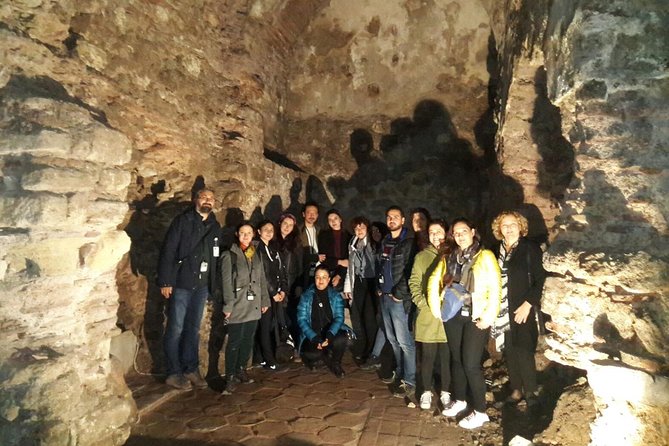
The group limit is 15 people. That is small enough for questions and conversation, though the actual group may be much smaller. Some departures have had only one or two participants. That can make the tour feel almost like a private lesson, but it also means the quoted duration may feel less fixed.
Following ruins beneath shops and hotels
The main three-hour portion takes place around Istanbul’s old city. The route is not presented as a simple straight walk from one famous monument to another. Instead, you may enter modern businesses and buildings where ancient remains survive below the current street level.
This is the tour’s most unusual feature, and also the part that needs the clearest expectations. You are not walking through one large, polished archaeological complex. You may move between several small sites, some reached through shops, hotels, or other working buildings.
That setting gives the tour an appealing sense of discovery. A room used for modern business can contain masonry from a far older period. A low ceiling or narrow passage may reveal how much the street level has changed. With a good guide, these fragments become part of a readable plan rather than random old stones.
Ece is praised for explaining Roman-era Istanbul, its people, and the changes brought by different ruling powers. Ege is also singled out for giving a long historical introduction over coffee before setting out. Those details suggest that the guide is a major part of the value.
At the same time, the quality of the experience depends heavily on who leads your departure. The supplied information names several guides, but it does not promise a particular person. If having Ece or Ege matters to you, ask the operator if a guide request is possible.
Ancient cisterns and the practical meaning of hidden ruins
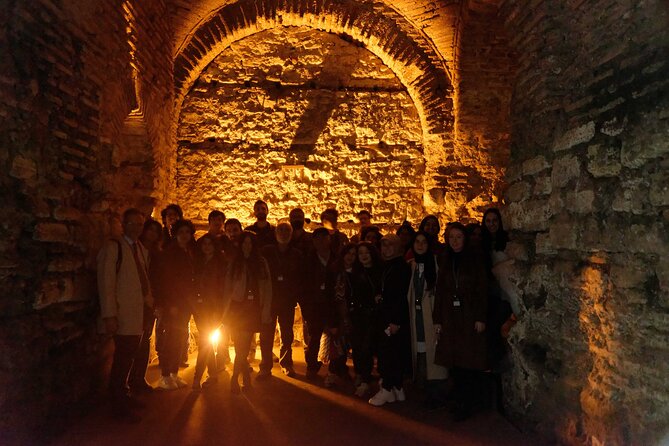
The cisterns are a major reason to book. Istanbul’s water system was vital to life in the imperial city, and underground reservoirs show how much planning was required to supply a huge urban population.
This tour can take you to cistern spaces outside the best-known paid attractions. You may find these places smaller, less polished, or reached through an unexpected entrance. That is part of their appeal. You see how old water storage was folded into later buildings rather than displayed as a single grand attraction.
Do keep your expectations measured. The phrase ancient cisterns can suggest a large, atmospheric hall filled with columns and dramatic lighting. This experience may instead offer several modest underground remains. The reward is not always spectacle. It is the chance to understand how old structures survive in an active neighborhood.
The route may also include Byzantine chapels and other religious fragments. These are valuable because they show the city at a more intimate scale. Hagia Sophia gives you imperial ambition. A small chapel fragment can show the ordinary architectural and devotional world around it.
Some access points may be inside businesses, and opening conditions can affect what you see. That makes the tour less predictable than a standard museum visit. It also explains why a guide is important. Without one, you might pass the same building and never know anything old is beneath it.
Same base, a different sort of day:
- Best of Istanbul 1, 2 or 3-Day Private Guided Istanbul Tour
★ 5.0 · 8,922 reviews - Istanbul: Basilica Cistern Fast-Track Entry and Audio Guide
★ 4.6 · 7,521 reviews - Istanbul: Hagia Sophia Skip-the-Line Ticket & Museum Option
★ 3.7 · 4,958 reviews - Istanbul: Hodjapasha Whirling Dervishes Show & Exhibition
★ 4.4 · 4,790 reviews
Constantine’s Palace and the problem of surviving names
The tour description highlights Constantine’s Palace, but the supplied schedule does not provide a separate timed stop for it. Treat this as part of the broader Roman and Byzantine remains route rather than a guaranteed standalone palace visit with a clearly marked entrance.
That distinction is important. In Istanbul, famous ancient names often refer to scattered remains rather than a complete building waiting behind a ticket gate. You may see traces connected to an imperial complex, hear where it once stood, or examine fragments incorporated into later construction.
A skilled guide can explain what survives, what has disappeared, and why. This is more useful than presenting every old wall as a complete monument. Ask questions if you want to understand the difference between an original structure, a later repair, and a modern reconstruction.
The same caution applies to the Byzantine chapels. The tour promises the chance to admire their remains, but exact access may depend on the day and the buildings involved. One critical experience described several sites under shops or hotels and found the overall visit underwhelming. That is a fair warning for anyone expecting a formal archaeological site at every stop.
Küçük Ayasofya and the road to Hagia Sophia
The second listed stop is Küçük Ayasofya, also identified as Gazi Süleyman Paşa Mosque. You spend about 20 minutes here.
The building began as a church and was later converted into a mosque. Its architectural role is the key point: it served as a model for ideas later used in Hagia Sophia. That gives you useful context before or after visiting the larger monument.
I like this stop because it adds scale to Istanbul’s architecture. Hagia Sophia can feel overwhelming. Seeing a related, smaller building helps you think about proportions, structural choices, and the way a religious building can change meaning over time.
The stop is brief, so do not expect a full architectural lecture on every feature. Its value comes from the guide’s explanation and from comparing what you see here with the better-known Hagia Sophia. The route also shows how a former church became part of the city’s Islamic history without losing its earlier identity.
Admission is listed as free for this stop. The tour price covers the guide and taxes rather than a separate entry ticket here.
The Hippodrome in a short final stop
The last listed stop is the Hippodrome, now Sultanahmet Square, with about 15 minutes scheduled.
This was the center of Byzantine chariot races, ceremonies, and public celebrations. Today it is an open urban square surrounded by some of Istanbul’s most visited sights. The contrast is striking: the crowds and traffic of modern Sultanahmet occupy the same broad public space once used for imperial display and competitive racing.
Fifteen minutes is enough for an orientation and a short explanation, but not a full study of the Hippodrome. Think of it as a connecting point that helps place the underground remains within the larger city plan.
If you want a detailed look at the square’s monuments, inscriptions, and surviving ancient elements, you may need extra time on your own. The tour’s strength is the link between the surface and what lies beneath it, not an exhaustive treatment of every object in Sultanahmet Square.
Why the guide matters more than the ticket price
At $45, the tour is reasonably priced if you want expert interpretation and access to places you would not find easily by yourself. The basic package includes a professional guide, local taxes, and all listed fees. Food and drinks are not included.
The price is harder to justify if you want a long, formal archaeological visit with many major monuments. The tour is mostly about interpretation, access, and context. You are paying to learn what you are seeing and to reach overlooked remains, not simply to enter a famous attraction.
The strongest feedback centers on the guides. Ece is described as warm, thorough, and able to explain complex history in an easy way. One departure extended during rain, and another included helpful local advice over tea. Ege is praised for starting with an hour of historical background over coffee, while AJ is credited with making the city’s past feel alive.
There is one important warning. One person expected five hours but received about three, and found the English difficult to follow. The operator responded that the tour normally takes about three to five hours and that all planned sites were visited. The practical lesson is simple: confirm the expected duration and language level before booking, especially if your schedule is tight.
You may also encounter stops at a tile or rug shop, depending on the route and guide. Some people enjoy a tile demonstration or a Turkish coffee break. Others may see commercial stops as a distraction. Ask in advance if you want a strictly archaeological walk.
Walking, weather, and group size
Wear comfortable shoes. The route involves walking around Sultanahmet and may include underground spaces, stairs, or uneven surfaces, though the supplied details do not specify every access condition.
Rain can change the pace. One guide extended a tour after a delay caused by wet weather, but you should not count on extra time. Bring suitable clothing and leave room in your day rather than scheduling a critical appointment immediately afterward.
Most people can participate, and service animals are allowed. The tour is near public transportation. Cruise ship passengers must provide ship name, docking time, disembarkation time, and re-boarding time when booking. That information helps the operator judge whether the start and finish fit your port schedule.
The maximum group size is 15. A smaller group is likely to make it easier to ask about architecture, religion, or daily life in Byzantine Constantinople. A one-person departure can be especially personal, but the tour may also feel less like a set performance and more like a flexible conversation.
Who should book Ancient Rome Under Istanbul?
Book it if you like old cities in their imperfect, layered form. You will get the most from this experience if you enjoy connecting fragments, asking questions, and listening to a guide explain why a modern building may contain an ancient wall.
It suits repeat visitors to Istanbul, architecture fans, Roman and Byzantine history enthusiasts, and anyone who has already seen the major Sultanahmet sights. It is also a good choice if you want a small group rather than a large coach outing.
Think twice if you want guaranteed access to grand monuments, a fixed five-hour schedule, or a polished museum-style route. The sites can be modest, the order may vary, and some stops may take place through commercial buildings. At $45, that uncertainty is acceptable for a curious history fan. It is less appealing if you mainly want dramatic photographs and famous interiors.
The free cancellation rule gives you some flexibility. You can cancel at least 24 hours before the local start time for a full refund. Cancellations or changes inside that window are not refunded.
Should you book it?
I would book Ancient Rome Under Istanbul if you want to see how the old city survives beneath daily life. The best version of the tour is not a parade of grand monuments. It is a well-told walk through fragments, cisterns, former chapels, and buildings whose older purposes are easy to miss.
Before paying, confirm the meeting point, expected duration, guide language, and whether hotel pickup or commercial stops are involved. If those details suit you, this is a smart $45 addition to a first or repeat visit. Go with comfortable shoes, an open mind, and realistic expectations about small remains rather than complete palaces.
FAQ
Where does the tour start?
It starts at Binbirdirek, Divan Yolu Cd. No. 15, 34122 Fatih, Istanbul.
What time does the tour begin?
The stated start time is 10:00 a.m.
Where does the tour finish?
The activity ends back at the meeting point.
How long does the experience last?
The estimated duration is about three to five hours.
What is included in the price?
The price includes a professional guide, local taxes, and all taxes, fees, and handling charges.
Are food and drinks included?
No. Food, drinks, and lunch are not included.
How many people can join the group?
The maximum group size is 15 people.
Will I visit Küçük Ayasofya?
Yes. The route includes Küçük Ayasofya, also called Gazi Süleyman Paşa Mosque, for about 20 minutes.
Is the Hippodrome part of the tour?
Yes. The tour includes a roughly 15-minute visit to the Hippodrome, now Sultanahmet Square.
Can I cancel for a full refund?
Yes. You must cancel at least 24 hours before the local start time for a full refund. Cancellations or changes made less than 24 hours before the start are not refunded.
Just added in Istanbul
- Private Custom Tours in Istanbul★ 5.0 · 38 reviews
- Magical Sights of Istanbul Private Walking Tour★ 5.0 · 50 reviews
- Private Cultural Tour of Istanbul with Certified Guide★ 5.0 · 81 reviews
- Istanbul Airport Transfer Service with Private Minivan★ 4.5 · 61 reviews
- Istanbul: Princes Islands Tour with Heybeliada and Büyükada★ 4.0 · 104 reviews
- Private 4 Days Turkey Tour from Istanbul to Cappadocia, Ephesus, Pamukkale★ 5.0 · 80 reviews
- Private Airport Transfer in Istanbul★ 5.0 · 20 reviews
- Princes’ Islands Tour from Istanbul★ 3.5 · 21 reviews
Tours in Istanbul, compared.
Bosphorus Dinner Cruise & Show with Private Table
Read our review →
Bosphorus Dinner Cruise with Turkish Night Show
Read our review →
Basilica Cistern Fast-Track Entry and Audio Guide
Read our review →
Hagia Sophia Skip-the-Line Ticket & Museum Option
Read our review →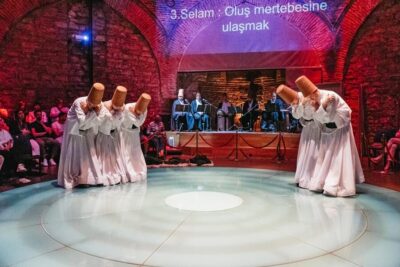
Hodjapasha Whirling Dervishes Show & Exhibition
Read our review →
Topkapi Palace & Harem Museum Ticket & Audio Guide
Read our review →
Sunset or Day Small-Group Yacht Cruise with Snacks
Read our review →