Reviewed · TOURS IN ISTANBUL
Istanbul Private Full-Day Classics Tour with Options
Istanbul’s classic sights sit close together on the historic peninsula, and this private tour turns that compact center into one focused day. You’ll trace Byzantine and Ottoman power from the Hippodrome to Topkapi Palace, then finish among the shops and lanes of the Grand Bazaar. The private format lets your guide adjust the pace, which is especially useful for families or anyone who wants explanations instead of a quick photo stop.
I like the strong lineup of monuments and the fact that a guide can connect them into one story. I also like the hotel pickup on foot, which avoids arranging a vehicle for a district where much of the sightseeing is best done by walking. The main drawback is the extra cost of entrance fees, lunch, and transport, plus six hours is a brisk schedule for five major stops. One guide, Salim, earned praise for keeping children engaged, while another visitor noted that a guide’s frequent cellphone use could affect the personal feel.
Key points to know before booking
- Five major sights in six hours: The route covers the Hippodrome, Blue Mosque, Topkapi Palace, Hagia Sophia, and Grand Bazaar.
- A genuinely private outing: You have a private group and a live guide in English, French, or German.
- A walking-based start: Hotel pickup is available on foot, but transport is not included.
- Topkapi Palace needs planning: The palace is closed on Tuesdays.
- Entrance fees are extra: Your guide has pre-reserved tickets, but you pay the entrance value separately to the guide.
- A good family option: Salim was praised for handling children’s changing energy levels during a long sightseeing day.
Why this six-hour route works in Istanbul
This tour focuses on Istanbul’s historic core, where the city’s most famous monuments are within walking distance of one another. That saves you from spending the day in traffic, though it also means you should expect steady walking between indoor visits and open public spaces.
The schedule begins in the morning and runs for about six hours. The word full-day is a little generous for a six-hour tour, especially once you include lunch and movement between sites. Still, the route covers the essential sights most first-time visitors want to see, and a private guide can spend more or less time at each stop depending on your interests.
The private setup is the biggest practical advantage. You are not tied to a large group’s pace or forced to listen from the back of a crowd. You can ask why a building was made, how a mosque functions today, or which palace rooms matter most. A PhD-level guide provided especially serious explanations of Istanbul’s historical, cultural, and theological influences, while keeping the commentary lively rather than academic for its own sake.
That level of guidance matters here. These monuments are visually impressive, but their meaning is easy to miss if you only walk through and take pictures. The Hippodrome was a social center, the Blue Mosque still functions as a mosque, Topkapi was an imperial home, and Hagia Sophia changed religious and political roles over many centuries. A good guide ties those pieces together.
A few more things to do in Istanbul worth a look
- Istanbul: Bosphorus Dinner Cruise & Show with Private Table
★ 4.8 · 44,561 reviews - Best of Istanbul 1, 2 or 3-Day Private Guided Istanbul Tour
★ 5.0 · 8,922 reviews - Istanbul: Private Turkish Bath, Massage, and Spa in Old City
★ 4.6 · 3,225 reviews
The Hippodrome and the remains of Byzantine public life
Your first stop is the Hippodrome, once the center of Byzantine social and recreational life. It was not simply a racetrack or an empty square. This was a major public gathering place, and its surviving monuments give you a small but useful window into Constantinople’s Byzantine past.
You’ll see the Obelisk of Thutmose III, an ancient Egyptian monument brought to the city, and the Serpent Column. Only parts of the original Hippodrome remain, so do not expect a complete ancient structure. The value comes from standing in the open space and learning how the site once shaped public life.
This is a good place to begin because it gives you room to orient yourself. The following monuments are more enclosed and ornate, while the Hippodrome helps you understand the layout of the historic district. Your guide can point out what survives and what has disappeared, rather than leaving you to guess why a modern square matters.
The stop is also relatively light on formal admission logistics. You can start listening and looking right away, which helps the six-hour schedule. I would pay close attention here, even if the ancient stones seem less dramatic than the Blue Mosque. The context makes the rest of the tour easier to follow.
The Blue Mosque and its six minarets
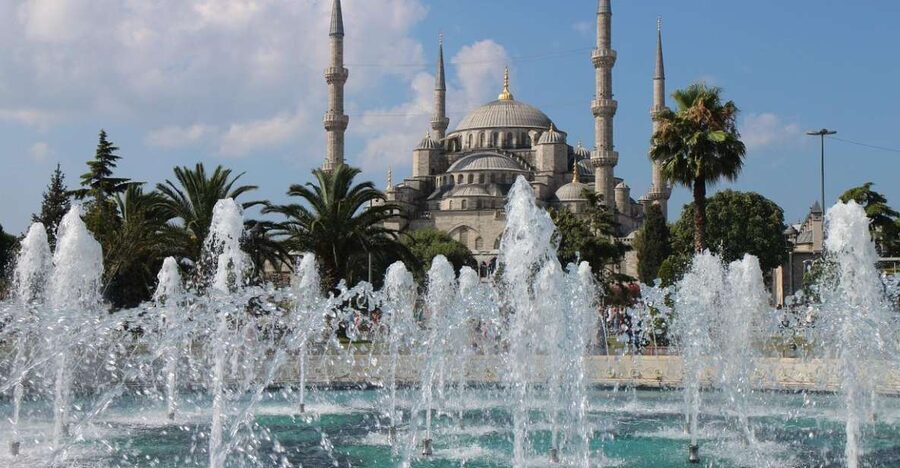
Next comes the Blue Mosque, also called the Sultan Ahmed Mosque. Its design is easy to recognize: one main dome, eight secondary domes, six minarets, and a large number of blue tiles that gave the mosque its familiar name.
The building was commissioned during the reign of Ahmed the First and still functions as a mosque. That active religious role is important. You are not simply entering a historic monument preserved for display. You are visiting a place with a present-day purpose, as well as a long architectural story.
Inside, your guide can help you read the building’s scale and design instead of reducing the visit to a quick look at the tiles. The arrangement of domes and supporting spaces creates the mosque’s broad, open feel, while the minarets define its profile from outside.
The Blue Mosque is one of the tour’s most visually impressive stops, but it can also be one of the busiest. The private format does not remove crowds, yet it gives you someone who can explain what you are seeing and help keep the visit focused. Because the mosque remains in use, the experience is not quite the same as visiting a standard museum. That is a strength if you want a sense of living religious culture, though it also means the visit follows the site’s working role rather than a purely tourist schedule.
Topkapi Palace, the Ottoman court for four centuries
Topkapi Palace is the tour’s largest and most layered stop. Dating from 1459, it served as the main residence of Ottoman sultans for nearly four centuries before becoming a museum in 1924.
The palace covers a broad site and includes several buildings. You’ll see imperial and Ottoman utensils, relics, caftans, and portraits of the sultans. These objects give the visit substance beyond grand courtyards and impressive architecture. The palace was a working center of imperial life, and the collections help show how power was displayed, used, and remembered.
I would expect this stop to take a large share of the day. Topkapi is not a single-room monument that you can understand in twenty minutes. The compound’s size makes a guide especially helpful because you need someone to select the most meaningful sections and explain how the palace functioned.
The tradeoff is time. If you want to inspect every object or linger over every building, six hours will feel tight. If you prefer a clear introduction to the palace, the private format works well. Tell your guide what interests you most, such as royal clothing, utensils, portraits, or the palace’s role in Ottoman government, and use the limited time wisely.
Topkapi is closed on Tuesdays. That is the most important scheduling warning in the entire experience. Check the operating day before you book, since a closure would affect one of the tour’s central stops.
Same base, a different sort of day:
- Istanbul: Daytime or Sunset Sightseeing Cruise & Audio Guide
★ 4.8 · 14,430 reviews - Istanbul: Bosphorus Dinner Cruise with Turkish Night Show
★ 4.8 · 10,127 reviews - Istanbul: Basilica Cistern Fast-Track Entry and Audio Guide
★ 4.6 · 7,521 reviews - Istanbul: Hagia Sophia Skip-the-Line Ticket & Museum Option
★ 3.7 · 4,958 reviews
Lunch in the historic center
After Topkapi Palace, you’ll have a lunch break. The guide recommends restaurants where you can try Turkish food, but lunch is not included in the tour price.
This arrangement gives you some choice, which can be useful if you have dietary preferences or want to control your spending. It also means the final price is not limited to the advertised group rate. Budget for the meal, entrance fees, and any personal purchases before deciding that this is the right fit.
Lunch is also the natural point to judge the day’s pace. By then, you have already visited the Hippodrome, Blue Mosque, and Topkapi Palace. A proper pause can help, especially for families. Salim received specific praise for managing children whose energy changed during the day, and that is the sort of practical guiding skill that can make a private tour much easier.
Do not treat lunch as a major culinary program, though. The supplied details promise recommendations, not a dedicated food tour. Think of it as a useful break with local restaurant guidance, not a prepaid dining experience.
Hagia Sophia and the meeting of two religious traditions
After lunch, the route continues to Hagia Sophia. Few buildings in Istanbul carry such a clear record of changing power and faith. It was built in 537 as an Eastern Orthodox church, converted into an imperial mosque after the Ottoman conquest of Constantinople in 1453, and later converted into a museum.
That sequence gives your guide plenty to explain. Hagia Sophia is not just an old building with a famous dome. It represents the shift from Byzantine Constantinople to Ottoman Istanbul, and it connects Christian and Islamic periods within the same architectural space.
You’ll want to look beyond the scale of the hall. The important point is how the building was adapted over time and how its role changed with the city around it. A guide can make those transitions understandable rather than presenting them as a list of dates.
This stop is also a good match for the tour’s cultural and theological focus. One guide was praised for explaining the influences that shaped Istanbul, including religious and cultural forces, in an engaging way. That sort of context is useful at Hagia Sophia, where the building’s meaning cannot be separated from its history.
The drawback is that the visit comes late in a packed schedule. If the first half runs long, you may have less time here than you would like. A private guide can help by keeping the group moving and choosing the most important details, but you should not expect an unhurried museum-style visit to every corner.
The Grand Bazaar and the art of browsing
The final stop is the Grand Bazaar, one of the oldest and largest covered markets in the world. It includes 61 covered streets and more than 3,000 shops, offering almost anything you might want to buy.
The bazaar forms part of Istanbul’s walled city and was built between 1455 and 1461. Those dates place it close to the early Ottoman period, when the city was being reshaped after the conquest. Its commercial role is as important as its age. This is a place built for trade, not just a decorative market preserved for sightseeing.
You can browse, shop, or simply observe the maze of lanes. The sheer size makes a guide useful if you want a quick introduction, but it can also make the final stop feel less structured than the monuments before it. If you hope to bargain, compare goods, or make a serious purchase, you may want to return on your own later rather than trying to fit all of that into the final part of a six-hour tour.
The bazaar is a lively ending because it shifts the focus from imperial architecture to everyday commerce. You move from palaces and religious buildings into a working marketplace filled with shops. That change gives the tour a better sense of Istanbul as a city people use, not simply a collection of historic sites.
What the private price really covers
The price is $244 per group of up to one, so the value depends heavily on how many people are in your private party. It is not a per-person rate in the usual sense. For a couple, family, or small private group, you are paying for a dedicated guide rather than joining a large shared tour.
The price includes the guide and hotel pickup on foot. Pre-reserved entrance tickets are arranged, but the admission value is paid separately to the guide. Transportation, lunch, admission fees, and personal expenses are not included, so you should calculate the total before booking.
That extra admission arrangement has one practical benefit: your guide handles the pre-reserved tickets, and the tour advertises skip-the-ticket-line access. You spend less time sorting out entry on site. The important distinction is that reservation help does not mean the admission itself is free.
I see the strongest value in the private interpretation, not in the basic sightseeing alone. You can visit these places independently, but then you must manage the route, entry arrangements, timing, and historical context yourself. The tour earns its price if you want those tasks handled and you value direct questions and a flexible pace.
The value is weaker if you already know Istanbul well, dislike guided commentary, or want to spend hours shopping or studying one palace collection. Six hours gives you a strong first look, not unlimited time at every stop.
Walking, languages, and guide quality
Hotel pickup is available on foot, and transportation is not included. That means the tour works best if your hotel is in an area where an on-foot meeting and walking route are practical. The supplied information does not promise a vehicle, so do not book expecting door-to-door transport across Istanbul.
A live guide is available in English, French, or German. The private group format gives you a better chance to ask questions than a large coach tour, and the guide can adapt explanations to your interests.
Guide quality matters more than usual on a route with this much history. Salim was praised for being fun to talk with and for handling children’s energy well. Another guide offered serious academic insight while remaining enthusiastic and engaging. Those details suggest that the best fit is someone who wants both facts and conversation, not a silent escort from monument to monument.
There is one caution. A cellphone used too often can undermine the personal feel of a private tour. When you are paying for individual attention, you are entitled to expect the guide to remain present and focused. That is not a reason to reject the tour outright, but it is worth remembering when you assess the value of a private experience.
Who should book this Istanbul classics tour?
I would choose this tour for a first visit to Istanbul, especially if you want the essential historic sights in one organized outing. It suits couples, families, and small groups who prefer private explanations and do not want to solve the city’s historic-center logistics alone.
It is also a good match if you want cultural context. The route covers Byzantine public life, Ottoman imperial power, Christian and Islamic history, religious architecture, and the city’s long commercial tradition. That is a lot for six hours, but the sequence makes sense.
Families should consider it because the private format can respond to changing energy levels. The tour is still walking-heavy and packed, so younger children may need patience and a real lunch break.
I would hesitate if you want a leisurely pace, a dedicated shopping day, or included food and transport. I would also avoid Tuesday because Topkapi Palace is closed then.
Should you book it?
Book this tour if you want a private, guide-led introduction to Istanbul’s most famous historic sites and you value a clear story more than unlimited time at each monument. The strongest reasons are the compact route, private attention, and the chance to connect the Hippodrome, Blue Mosque, Topkapi Palace, Hagia Sophia, and Grand Bazaar in one day.
Before you commit, confirm the day, budget for entrance fees and lunch, and make sure an on-foot hotel pickup suits your location. If those details work, this is a practical first-day overview with enough historical depth to make the monuments meaningful.
FAQ
How long does the tour last?
The tour lasts six hours. Starting times depend on availability.
Which sights are included?
The route includes the Hippodrome, the Blue Mosque, Topkapi Palace, Hagia Sophia, and the Grand Bazaar.
Is the tour private?
Yes. It is operated as a private group experience.
Which languages are available?
The live guide is available in English, French, or German.
Is hotel pickup included?
Hotel pickup is available on foot. Transportation is not included.
Are entrance fees included in the price?
No. Entrance fees are paid separately, with the value of the pre-reserved entrance tickets paid to the guide.
Is lunch included?
No. Lunch is not included. The guide recommends restaurants for the lunch break.
Is Topkapi Palace open every day?
Topkapi Palace is closed on Tuesdays.
Can I cancel for a full refund?
Yes. You can cancel up to 24 hours in advance for a full refund. You can also reserve now and pay later.
Just added in Istanbul
- Private Custom Tours in Istanbul★ 5.0 · 38 reviews
- Magical Sights of Istanbul Private Walking Tour★ 5.0 · 50 reviews
- Private Cultural Tour of Istanbul with Certified Guide★ 5.0 · 81 reviews
- Istanbul Airport Transfer Service with Private Minivan★ 4.5 · 61 reviews
- Istanbul: Princes Islands Tour with Heybeliada and Büyükada★ 4.0 · 104 reviews
- Private 4 Days Turkey Tour from Istanbul to Cappadocia, Ephesus, Pamukkale★ 5.0 · 80 reviews
- Private Airport Transfer in Istanbul★ 5.0 · 20 reviews
- Princes’ Islands Tour from Istanbul★ 3.5 · 21 reviews
Tours in Istanbul, compared.
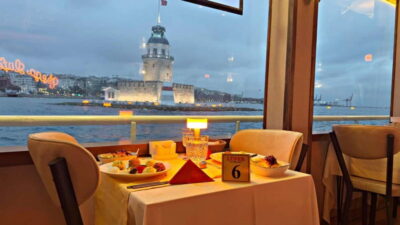
Bosphorus Dinner Cruise & Show with Private Table
Read our review →
Bosphorus Dinner Cruise with Turkish Night Show
Read our review →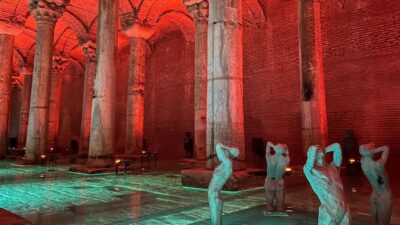
Basilica Cistern Fast-Track Entry and Audio Guide
Read our review →
Hagia Sophia Skip-the-Line Ticket & Museum Option
Read our review →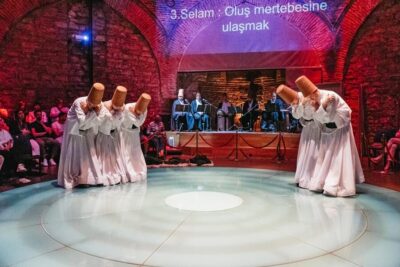
Hodjapasha Whirling Dervishes Show & Exhibition
Read our review →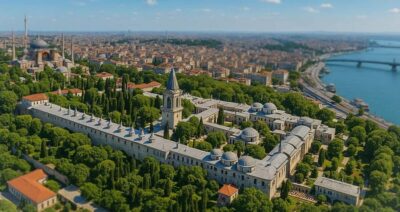
Topkapi Palace & Harem Museum Ticket & Audio Guide
Read our review →
Sunset or Day Small-Group Yacht Cruise with Snacks
Read our review →