Reviewed · TOURS IN ISTANBUL
Tour to Byzantium
Constantinople lasted more than 1,000 years as the capital of the Byzantine Empire, and this tour takes you away from Istanbul’s usual sights to the city that came before. You’ll walk old streets near the Golden Horn, visit imperial ruins, and trace the walls that once guarded the city.
I like the focus on places many first-time visitors miss, especially Anemas Dungeons and Tekfur Palace. I also like that the tour puts religious history beside military and palace history, giving you a fuller picture of Constantinople. The main drawback is the long pickup window and uncertain departure time, plus the Chora stop is viewed from outside.
Key points about the Byzantine Istanbul tour
- The Golden Horn sets the scene: Begin at the natural harbor that shaped Byzantine trade, defense, and daily life.
- Fener links Istanbul to Orthodox Christianity: Visit the Patriarchate area and learn why it became so important after Constantine’s conversion.
- Panagia of Blachernae is a living religious site: See a shrine tied to holy water and sacred bathing traditions.
- Chora is an exterior stop: The former St. Savior in Chora is famous for mosaics and frescoes, but this tour does not include an interior visit.
- Anemas Dungeons offer unusual imperial history: Explore the remains of a prison built into the Blachernae Palace complex.
- The walls explain Constantinople’s survival: See remains of the fifth-century defenses, once stretching 22 kilometers with 96 towers.
Why Byzantine Istanbul deserves a half-day
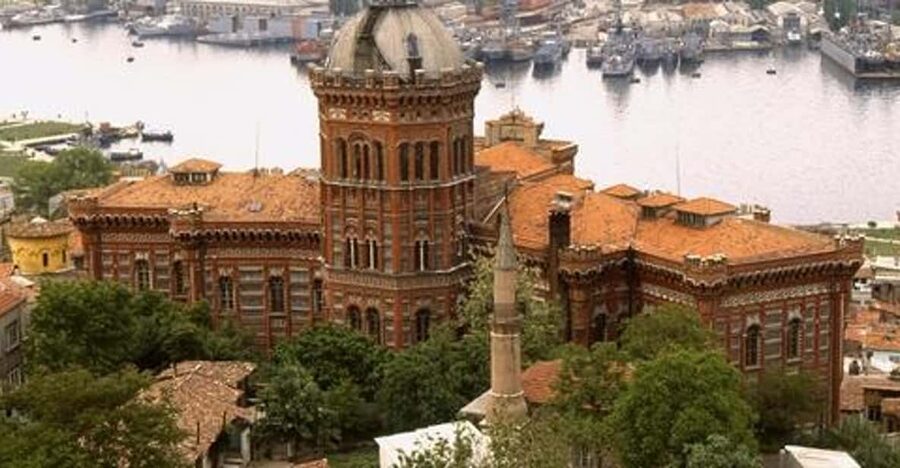
Istanbul is often presented through its Ottoman landmarks: Topkapı Palace, the Blue Mosque, Hagia Sophia, and the Grand Bazaar. Those places deserve your time, but they can leave you with the impression that the city’s story began with the Ottoman conquest in 1453.
It did not. Byzantine Constantinople was the eastern capital of the Roman world and later the center of the Byzantine Empire for more than a millennium. This tour gives you a practical way to see that earlier city, especially if you do not have time to build a Byzantine route on your own.
The price is $85 per person. That is reasonable if you value a guide, air-conditioned transport, admission fees, and hotel pickup. It is less attractive if you prefer to move at your own pace or plan to visit only one or two sites. Much of the value comes from the explanation between stops, since several ruins are easier to understand with a guide than from a quick look at weathered stone.
The advertised duration is four hours, while the sightseeing description refers to about three hours. Pickup may take 45 to 60 minutes, so treat this as a half-day commitment rather than a tightly timed three-hour outing.
Other trips people book in Istanbul:
- Istanbul: Bosphorus Dinner Cruise & Show with Private Table
★ 4.8 · 44,561 reviews - Istanbul: Daytime or Sunset Sightseeing Cruise & Audio Guide
★ 4.8 · 14,430 reviews - Istanbul: Bosphorus Dinner Cruise with Turkish Night Show
★ 4.8 · 10,127 reviews
Crossing the Golden Horn into old Constantinople
The route begins at the Golden Horn, the horn-shaped inlet that served as Byzantium’s natural naval harbor. Its protected waters helped the city control shipping and defend its northern side. From higher ground, sunlight could give the inlet a golden appearance, which explains the name.
This is a useful opening because the Golden Horn is not just a pleasant view. It explains why the city grew here. Constantinople was positioned between Europe and Asia, with access to the Bosphorus and a sheltered harbor for ships. Geography did much of the work before walls, palaces, and churches were added.
You will cross to the historic districts on the Golden Horn side and walk through streets associated with Byzantine Constantinople. Do not expect a restored ancient city laid out like an archaeological park. Modern Istanbul surrounds and overlaps the old remains. That mixture is part of the point, but it also means you need to pay attention to the guide’s explanations to connect present-day streets with the vanished imperial capital.
Air-conditioned transport helps because the route covers several separated areas. You are not spending the whole outing on foot, though you should still bring comfortable shoes. The tour includes walking around historic remains and city walls, and surfaces may not always be smooth.
Fener and the Patriarchate of Orthodox Christianity
The Fener area introduces the religious side of Byzantine history. The Patriarchate is associated with the leadership of Orthodox Christianity and with the period after Constantine the Great made Christianity the official religion of the Roman Empire.
That change reshaped Constantinople. Churches, shrines, monasteries, and religious ceremonies became central to public life and imperial power. The Patriarchate stop helps you understand that the Byzantine Empire was not simply a political state with old Roman buildings. Faith was woven into government, ceremony, and everyday identity.
This part of the tour is especially useful if you have seen Istanbul’s great Ottoman mosques but want to understand the Christian city that preceded them. The tour does not turn the Patriarchate into a long theological lecture. Instead, it places the site within the wider story of how Constantinople became a major center of Orthodox Christianity.
Expect an urban stop rather than an isolated ruin. Fener is a neighborhood, so the experience comes from seeing the religious center in its city setting. Your guide’s commentary will do much of the work here.
Panagia of Blachernae and the city’s sacred water
The Church of Panagia of Blachernae was one of the best-known shrines to the Holy Virgin in Byzantine Constantinople. It was famous for its Hagiasma, or holy water, and its Hagion Lousma, a sacred bath.
The site gives the tour a different feel from the walls and dungeons. Here, you are looking at a place valued for devotion and healing traditions rather than military strength. It also shows how Byzantine religious life was tied to physical spaces, water, rituals, and pilgrimage.
The church is connected to the Blachernae district, which was important to the imperial court. As the tour continues, you will see how closely religious shrines, palaces, prisons, and defensive walls were grouped in this part of the city.
Your guide may spend more or less time here depending on access and the group’s pace. The supplied details do not promise a particular interior program, so you should think of this as a stop centered on the shrine’s history and setting.
Same base, a different sort of day:
- Best of Istanbul 1, 2 or 3-Day Private Guided Istanbul Tour
★ 5.0 · 8,922 reviews - Istanbul: Basilica Cistern Fast-Track Entry and Audio Guide
★ 4.6 · 7,521 reviews - Istanbul: Hagia Sophia Skip-the-Line Ticket & Museum Option
★ 3.7 · 4,958 reviews - Istanbul: Hodjapasha Whirling Dervishes Show & Exhibition
★ 4.4 · 4,790 reviews
Chora, mosaics, and an important limitation
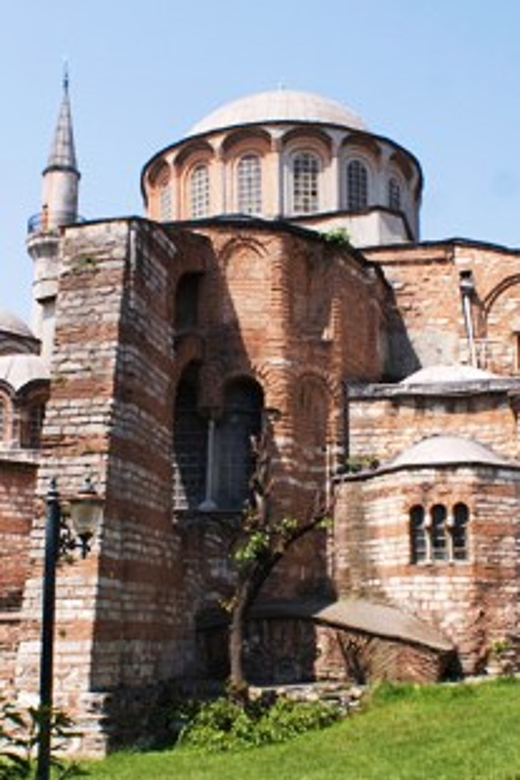
The former Church of St. Savior in Chora, now known as the Kariye Museum, is one of the best-known Byzantine monuments in Istanbul. It began as a Byzantine monastery and became famous for its mosaics and frescoes, including biblical scenes rendered with remarkable detail.
This is one of the tour’s most important historical stops, but you need to be clear about what is included: the visit is from outside, with no interior visit. If you want to see the mosaics and frescoes directly, you will need to check separate access arrangements and opening conditions during your stay.
Even from the exterior, Chora helps explain the artistic and religious world of late Byzantium. The building was not just a place of worship. It was also a statement about patronage, biblical storytelling, and the importance of visual teaching in a largely premodern society.
For me, the outside-only visit is the tour’s clearest weakness. The church interior is the reason many people make a special trip to Chora. Still, an exterior visit can make sense if you want a broad survey of Byzantine Istanbul and do not want to arrange every site separately.
Anemas Dungeons beneath the Blachernae Palace
The Anemas Dungeons are among the most unusual stops on the route. They formed part of the Blachernae Palace complex and were used to imprison high-ranking statesmen.
The structure consisted of 14 separate dungeons, with two basement levels below sea level. That detail alone gives you a sense of the site’s unusual engineering and its grim purpose. These were not ordinary jail cells for common criminals. The complex was connected to the court and held important political prisoners.
I like this stop because it broadens the usual image of Byzantine history. You are not only hearing about emperors, churches, and artistic achievements. You are also seeing how imperial power dealt with rivals and officials who fell out of favor.
Do not expect a polished palace interior. The appeal is the structure itself and the stories attached to it. The dungeons can be stark, and some people may find the stop less immediately attractive than a church or palace. If you are interested in political history, though, this may be one of the most memorable parts of the afternoon.
Tekfur Palace, the last surviving Blachernae pavilion
Tekfur Palace was built in the 12th century beside the city walls. It is described as the only surviving pavilion of the Blachernae Palace, making it a key piece of the imperial district.
The word palace can create the wrong expectation. This is not a complete royal residence with grand rooms, furnishings, and a full collection of objects. It is a surviving fragment, and its value comes from what it tells you about the location of imperial life near the city’s northern defenses.
The palace and walls work well together. You can picture the court operating close to the defenses, with the Blachernae area serving as both a royal center and a military stronghold. The surviving structure also shows how little of the Byzantine palace complex remains compared with the Ottoman buildings most visitors know.
Admission fees are included, which is helpful here. Small or lesser-known sites can be annoying to arrange independently, especially when they sit away from Istanbul’s main tourist circuit. Having transport and a guide connect them into one route gives this $85 experience much of its practical value.
Walking the fifth-century city walls
The final major section follows the remains of Constantinople’s fifth-century walls. The old defenses once surrounded the acropolis of Byzantium and stretched about 22 kilometers, with 96 towers and nine main gates.
Those numbers matter because they show the scale of the city’s defenses. These were not decorative boundaries. They were a huge military system that helped Constantinople withstand repeated attacks for centuries.
The surviving sections vary in condition, and you should not expect one continuous, perfectly restored wall walk. The experience is about seeing remaining towers and masonry in context, then understanding how the defensive line shaped the city.
This is also where comfortable footwear matters most. The tour involves walking around historic areas, and the ground near old walls can be uneven. Bring water and protect yourself from the sun when needed, since the amount of shade can vary at outdoor ruins.
The guide can make or break the experience
A Byzantine tour depends heavily on the guide. Many of the remains are partial, and the modern city does not always make the old layout obvious. Good explanations turn scattered stones into a story about emperors, faith, imprisonment, art, and war.
Umut is specifically praised for presenting Constantinople and the Byzantine Empire as a connected story rather than a string of dates. One useful sign of a flexible guide is the ability to add an extra site when time and conditions allow, something that has happened on this route.
English and Spanish tours are available. After booking, you need to contact the local supplier for the exact start time and to confirm shuttle availability. Departure requires at least six people, although Tuesday afternoon departures are guaranteed.
That minimum group rule is important. If your plans are fixed around a cruise departure, dinner reservation, or museum booking, do not assume the tour will operate on any day you choose. Confirm the details before building your day around it.
Pickup, timing, and what to bring
Pickup is available from centrally located Istanbul hotels. The free shuttle runs between 13:00 and 14:00, depending on your hotel, and the pickup process can take 45 to 60 minutes. Hotels outside the accessible central area may be assigned an alternative meeting point.
There is no hotel drop-off. Plan your evening accordingly, and allow time to continue from the final stop to wherever you are going next.
The tour includes air-conditioned transport and museum entrance fees. Bring a passport or ID card, since identification is required. Pets and smoking are not allowed.
Cancellation is flexible up to 24 hours before departure for a full refund, and you can reserve now and pay later. Those terms help if your Istanbul plans are still shifting, but they do not remove the need to confirm the exact pickup and departure information.
Who should book the Tour to Byzantium
I would choose this tour for you if you have already seen Istanbul’s major Ottoman landmarks, or if Byzantine Constantinople is a central reason for your visit. It is also a good fit if you want historical context without planning a complicated route across several districts.
You will get the most from it if you enjoy ruins, religious history, military architecture, and stories about how empires worked. The tour is less suitable if you want a relaxed café-and-view outing, a fully restored palace, or guaranteed access inside Chora.
Families with older children may find the walls and dungeons more engaging than a long museum visit, though the walking and historical detail require some patience. The tour also suits you if you prefer air-conditioned transport between sites instead of arranging taxis or public transport on your own.
Should you book it?
Book the Tour to Byzantium if you want to see the less obvious side of Istanbul and are happy to trade some independence for a guide and organized transport. The combination of Fener, Panagia of Blachernae, Anemas Dungeons, Tekfur Palace, and the walls gives you a broad view of Byzantine life.
The two points to check first are the outside-only Chora visit and the pickup schedule. If seeing the Chora mosaics inside is your priority, this tour alone will not meet it. If you can accept that limitation, confirm the departure day, group size, and hotel meeting details, then the $85 price offers a useful half-day introduction to the city that existed before Istanbul.
FAQ
How long does the Tour to Byzantium last?
The activity is listed as four hours. The sightseeing portion is described as about three hours, while hotel pickup may take an additional 45 to 60 minutes.
What is the price?
The tour costs $85 per person.
What languages are available?
The tour is offered with a live guide in English or Spanish.
Is hotel pickup included?
Yes. Pickup is available from centrally located hotels in Istanbul.
Is hotel drop-off included?
No. The tour includes pickup only, so you will need to arrange your own return after the final stop.
Is the Chora Museum visited inside?
No. The Chora stop is an exterior visit, and interior access is not included.
What sites are included?
The route includes the Golden Horn area, the Patriarchate at Fener, the Church of Panagia of Blachernae, St. Savior in Chora, Anemas Dungeons, Tekfur Palace, and sections of the Byzantine city walls.
Is the tour guaranteed to operate every day?
A minimum of six people is required for the tour to operate. Tuesday afternoon departures are guaranteed.
What should I bring?
Bring a passport or ID card. Comfortable walking shoes are also sensible for the streets, ruins, and city walls.
Can I cancel for a refund?
You can cancel up to 24 hours in advance for a full refund. You can also reserve the tour and pay later.
Just added in Istanbul
- Private Custom Tours in Istanbul★ 5.0 · 38 reviews
- Magical Sights of Istanbul Private Walking Tour★ 5.0 · 50 reviews
- Private Cultural Tour of Istanbul with Certified Guide★ 5.0 · 81 reviews
- Istanbul Airport Transfer Service with Private Minivan★ 4.5 · 61 reviews
- Private Airport Transfer in Istanbul★ 5.0 · 20 reviews
- Istanbul: Princes Islands Tour with Heybeliada and Büyükada★ 4.0 · 104 reviews
- Private 4 Days Turkey Tour from Istanbul to Cappadocia, Ephesus, Pamukkale★ 5.0 · 80 reviews
- Princes’ Islands Tour from Istanbul★ 3.5 · 21 reviews
Tours in Istanbul, compared.
Bosphorus Dinner Cruise & Show with Private Table
Read our review →
Bosphorus Dinner Cruise with Turkish Night Show
Read our review →
Basilica Cistern Fast-Track Entry and Audio Guide
Read our review →
Hagia Sophia Skip-the-Line Ticket & Museum Option
Read our review →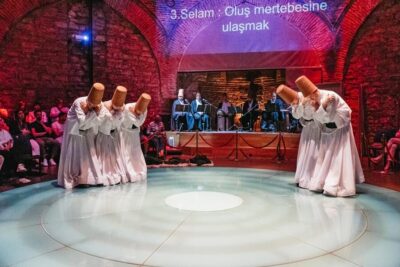
Hodjapasha Whirling Dervishes Show & Exhibition
Read our review →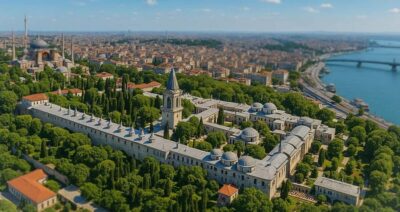
Topkapi Palace & Harem Museum Ticket & Audio Guide
Read our review →
Sunset or Day Small-Group Yacht Cruise with Snacks
Read our review →