
Reviewed · HAGIA SOPHIA & OLD CITY TOURS
Istanbul 3-Hour Old City Tour by Bicycle
Istanbul’s Old City is easier to understand from a bicycle seat. In three hours, you move between the Hippodrome, Hagia Sophia, Basilica Cistern, Topkapı Palace, and narrow streets lined with old wooden houses. The route gives you a useful first look at the peninsula where Roman, Byzantine, and Ottoman rulers built their capitals.
I like the way this tour covers more ground than a walking tour, especially on a first morning in Istanbul. I also like the human touch: guides such as Ilker and Sumit have been praised for explaining the city’s history and culture clearly, while guiding riders through quieter streets when traffic becomes tense.
The main caution is the price, $207 per person, which is a serious outlay for three hours. Cycling in Istanbul traffic can also feel unnerving, and the monuments are viewed from outside only, so you’ll need separate visits if you want to enter them.
Key points to know before you ride
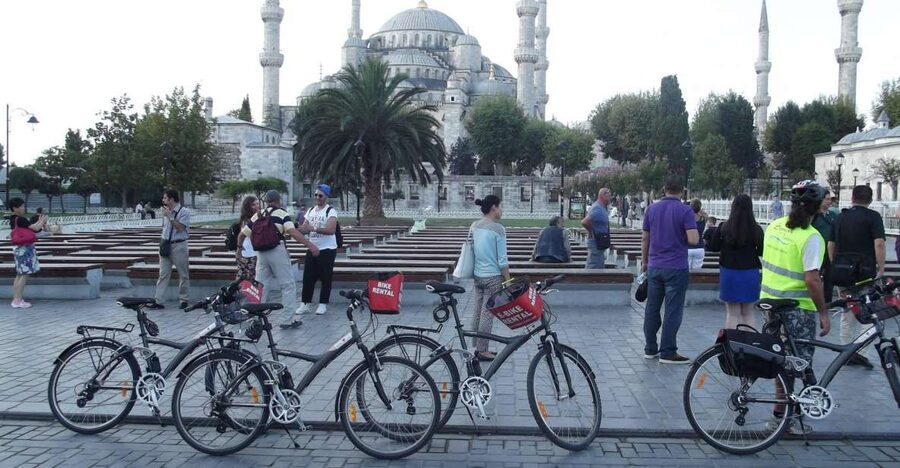
- A strong first-morning orientation: You can see the main shape of Sultanahmet before deciding which monuments deserve more of your time.
- Historic sights from the street: The route includes the Hippodrome, Hagia Sophia, Basilica Cistern, Topkapı Palace, and other landmarks, but does not include interior visits.
- Guides make the difference: Ilker is praised for making the history personal, while Sumit and other guides have helped riders manage the city streets safely.
- Traffic is part of the experience: The guide may use smaller streets and quieter areas, but Istanbul cycling is not a car-free ride.
- Useful equipment is included: Your bike, helmet, bottled water, guide service, and Istanbul map are provided.
- High price, focused format: At $207, this makes the most sense for people who value a private-feeling introduction and active sightseeing over a low-cost group outing.
Starting near Sirkeci and entering Sultanahmet
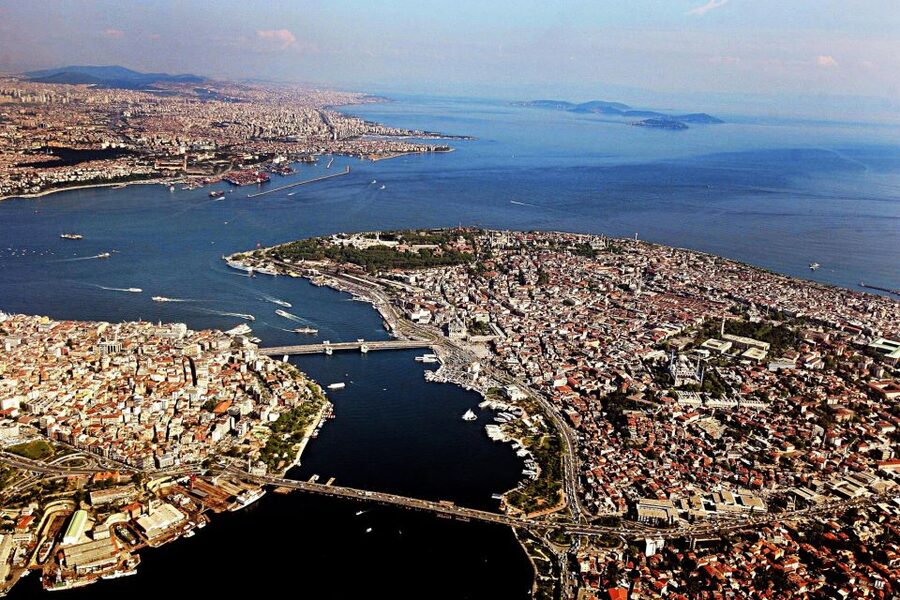
The meeting point is in front of Sirkeci Kahve Deposu, at Hobyar, Mimar Kemalettin Cd. No:31, in Fatih. It is very close to Sirkeci tram station, which makes the start practical if you are already staying near the Old City or using Istanbul’s tram network.
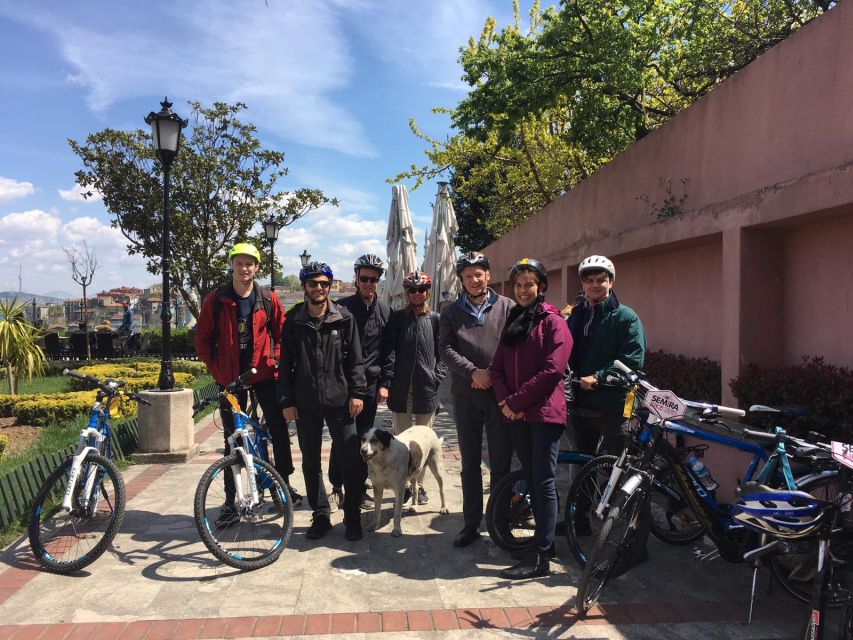
This location also puts you near the historic peninsula from the outset. You are not spending the first part of the tour on a long transfer. After receiving your bicycle, helmet, water, and map, you can expect the guide to set the pace and lead you toward Sultanahmet.
The starting area matters because Istanbul’s Old City is not arranged like a tidy open-air museum. Streets change quickly from broad roads to tight lanes, and major monuments can sit close together while still requiring effort to reach on foot. A bicycle lets you connect these places without turning the whole morning into a march.
You should arrive ready to ride rather than dressed for a formal sightseeing visit. The route includes small rises, according to one detailed account, although the guide handled them gradually and the downhill sections were quicker. No fitness level is stated, so you should be comfortable with ordinary urban cycling and short climbs.
Other city tours in Istanbul people book:
- Istanbul: Daytime or Sunset Sightseeing Cruise & Audio Guide
★ 4.8 · 14,430 reviews - Best of Istanbul 1, 2 or 3-Day Private Guided Istanbul Tour
★ 5.0 · 8,922 reviews - Istanbul: Bosphorus Sightseeing Cruise Tour with Audio Guide
★ 4.6 · 2,694 reviews
The Hippodrome and the heart of old Constantinople
The Hippodrome is one of the natural early stops on a Sultanahmet route. This was the great public arena of Byzantine Constantinople, a place for chariot races, ceremonies, and political tension. Today, you experience it as an open historic square rather than a functioning stadium, but its broad shape helps you picture the scale of the old imperial city.
A bicycle is useful here because you can see the area as part of a connected district. Instead of treating each monument as a separate stop, the guide can explain how the Hippodrome related to nearby churches, palaces, cisterns, and imperial buildings.
You should remember that this is an exterior-focused tour. The guide can point out the setting, architecture, and archaeological importance, but admission to the Hippodrome’s surrounding attractions is not part of the experience. If you want extended time with the monuments, plan a later visit on foot.
The practical benefit is orientation. I like beginning a city visit with a place that explains how public life worked, rather than rushing straight to the most famous building. After the Hippodrome, the nearby landmarks make more sense because you have a basic map of the old imperial center in your head.
Hagia Sophia and the Basilica Cistern from outside
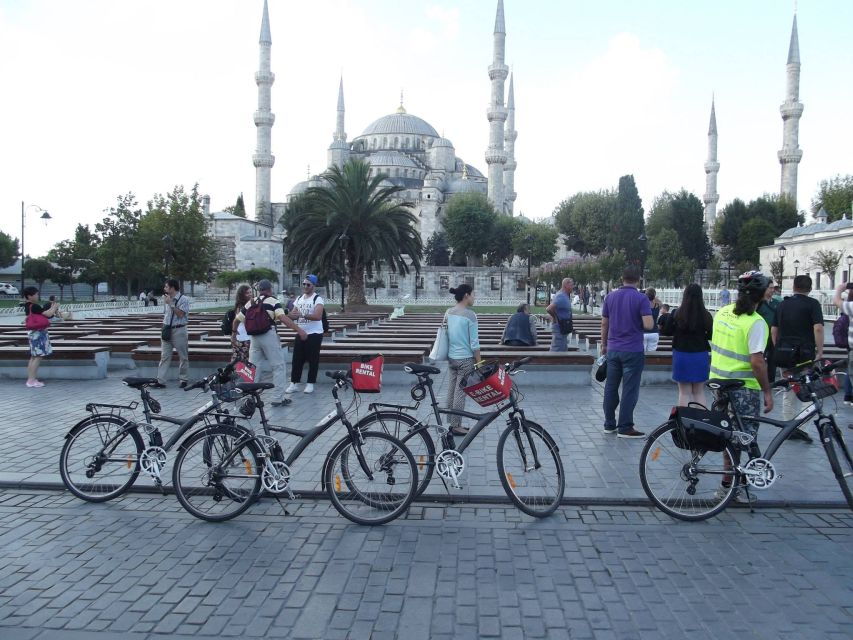
Hagia Sophia is one of Istanbul’s essential sights, and the bicycle route lets you approach it as part of the wider Sultanahmet group. Its huge dome and layered past reflect the city’s shifts between Roman, Byzantine, Ottoman, and modern eras. From outside, you can study the building’s scale and setting, but you will not enter during this tour.
The same rule applies to the Basilica Cistern. The cistern is underground, so the bicycle ride can only introduce you to its location and importance. A guide can explain why Istanbul needed vast water-storage systems and how the cistern fits into the city’s older infrastructure, but the tour does not include the descent below street level.
This is one of the most important points to understand before booking. The tour works as a survey, not as a full monument visit. You will see many major sites in a short period, then you can return to the ones that interest you most with admission tickets and more time.
That arrangement suits me when I am arriving in a city for the first time. I would rather get the geographic picture early, then choose where to spend an afternoon. If Hagia Sophia or the Basilica Cistern is your main reason for coming to Sultanahmet, do not count this bicycle ride as your entrance visit.
Topkapı Palace and the imperial peninsula
Topkapı Palace gives the tour another way to explain Istanbul’s past. The palace was tied to Ottoman rule and sits within the old peninsula, where the city’s rulers controlled a major center between Europe and Asia. From the outside, you can take in the palace area and hear how it fits into the wider story of Ottoman power.
The value here is context. A palace can look like one impressive building when you arrive independently. With a guide, it becomes part of a chain of imperial sites that includes the Hippodrome, Hagia Sophia, waterworks, and the streets around Sultanahmet.
Again, you will not tour the palace rooms, courtyards, collections, or other interior areas on this activity. That limitation keeps the bicycle tour moving, but it also means you should budget extra time if Topkapı Palace is high on your list.
Three hours is enough to introduce the major landmarks without turning the outing into an all-day commitment. You can still have lunch, visit a museum, or return to a favorite monument afterward. Lunch is not included, so the schedule leaves you free to choose where and when to eat.
Other old-city landmarks people visit in Istanbul:
- Istanbul: Hagia Sophia Skip-the-Line Ticket & Museum Option
★ 3.7 · 4,958 reviews - Istanbul: Blue Mosque & Hagia Sophia Guided Tour w/ Tickets
★ 4.8 · 3,600 reviews - Istanbul: Private Turkish Bath, Massage, and Spa in Old City
★ 4.6 · 3,225 reviews - Istanbul: Hagia Sophia Skip-the-Line Ticket and Audio Guide
★ 4.3 · 2,246 reviews
Wooden houses, side streets, and a less polished Istanbul

The most appealing part of the ride may be the movement between famous sights. The narrow side streets contain old wooden houses, some converted into boutique hotels and coffee houses. These streets show a more local layer of the historic peninsula than the postcard views alone.
I like this kind of contrast. The grand monuments tell you about emperors and religious institutions, while the old houses show how the district feels at ordinary street level. You are not just moving from one landmark photograph to another. You are seeing how the old city is stitched together.
The route can change because of traffic, weather, and other unexpected conditions. That is sensible in Istanbul, where road conditions and congestion can alter the safest or most comfortable path. It also means you should not treat the advertised sequence as fixed.
Traffic deserves honest attention. One rider described it as somewhat scary, while also noting that the guide threaded the group through areas with little or no traffic. That is a valuable distinction. This is not a protected cycle path experience, but a guided urban ride in a large, active city.
The guide’s route choice matters more than a rigid list of streets. Ilker received especially warm praise for helping make the history and culture memorable. Another outing involved Sumit and a second guide, with the old-city portion handled separately. Those details suggest that the human side of the tour can vary, but the guide service is central to its value.
How the guide shapes the three-hour experience
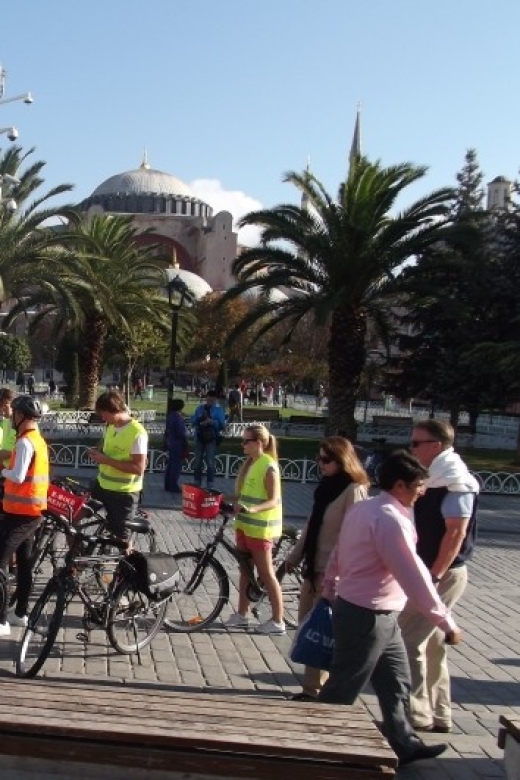
A good guide here has two jobs. The first is to explain the Roman, Byzantine, and Ottoman layers of the peninsula in plain language. The second is to manage the ride, choosing a sensible pace and steering you through complicated streets.
The strongest feedback centers on both jobs. Ilker is singled out for making the day special and bringing the sights closer through explanation. Other guides are praised for their command of Istanbul’s past. You should expect an English-language tour, with a live guide rather than an audio device or printed-only route.
The guides are licensed, and guide service is included in the price. A map of Istanbul is also supplied, which can help you continue exploring after the ride. I would use it to mark the monuments you want to revisit, since the bicycle tour itself only provides outside views.
You may also find that the tour uses more than one guide in some arrangements. One account describes two guides, including a separate guide for the old-city portion. That can be useful, though it may make the experience feel less uniform than a single-guide tour.
There was also a complaint about being taken to a guide’s brother’s shop. No purchase was required, but the stop made the rider uncomfortable. This is not listed as a standard part of the activity, so I would not assume it will happen. Still, if an unplanned shopping stop appears, you are free to decline to buy anything.
Is $207 a fair price for three hours?
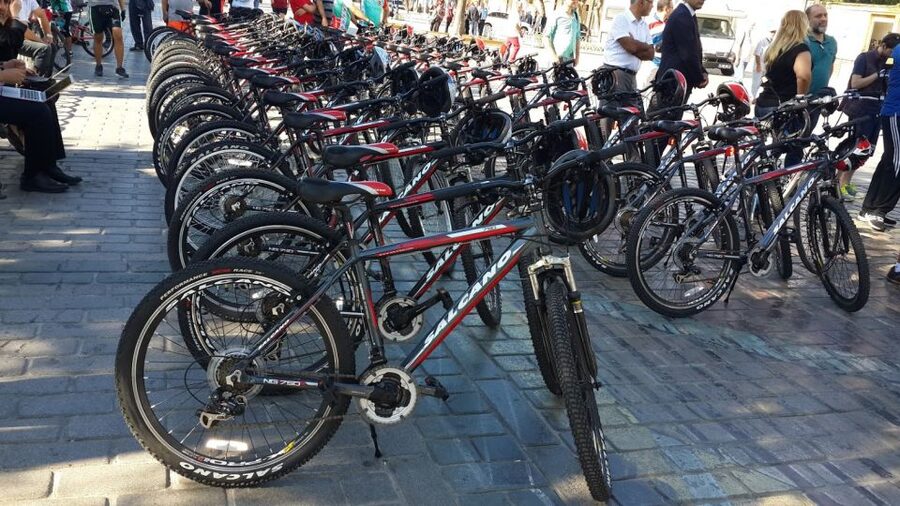
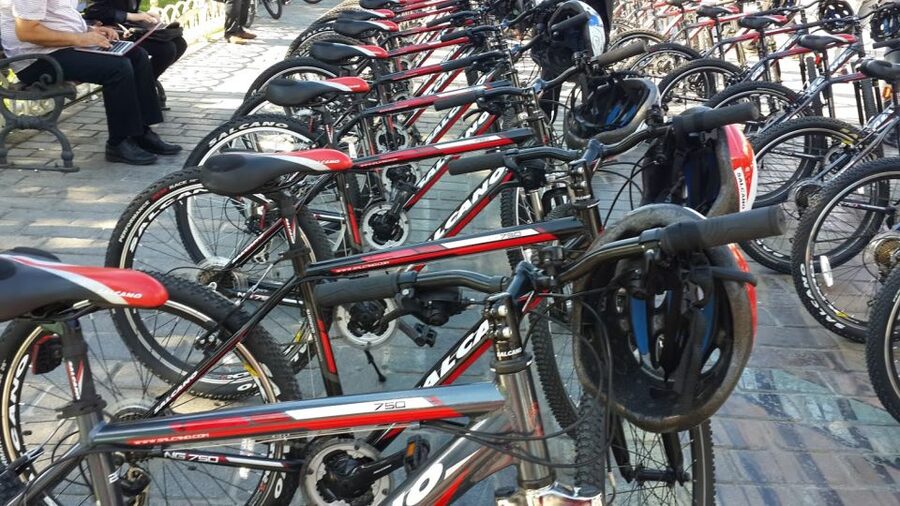
At $207 per person, this tour is expensive compared with many city bike rides. A three-hour duration alone does not justify the cost. You are paying for the bicycle, helmet, water, map, licensed English-speaking guide, and the convenience of seeing several major areas without arranging the route yourself.
The value improves if you have limited time in Istanbul or want an active introduction rather than a long walking tour. One first-morning ride can show you where the main monuments are and how the district fits together. That may save time during the rest of your stay.
The price is harder to defend if you mainly want monument interiors, a long relaxed cycling route, or the lowest-cost way to see Sultanahmet. Since the sights are viewed from outside, you will still need separate entrance fees and time for Hagia Sophia, the Basilica Cistern, Topkapı Palace, or other sites.
I would also compare the price with your party size and priorities. For someone who values a dedicated guide and a quick overview, it can be worthwhile. For a couple or family focused on keeping costs down, public transport and self-guided walking may provide better value, though they will not offer the same live route guidance.
Who should book this bicycle tour?
I would recommend it to first-time visitors who want to get their bearings quickly. It is particularly useful if you prefer seeing a city actively and do not want to spend your first morning covering the Old City on foot.
It also suits history-minded riders who want explanations while moving between sites. You can learn how the Roman, Byzantine, and Ottoman capitals occupied the same peninsula, then return later for deeper visits.
You should think twice if traffic makes you very uneasy, if you want a slow and highly detailed monument tour, or if you have limited cycling confidence. The guide can choose quieter streets, but no route can remove Istanbul’s urban traffic entirely.
This is also not the right booking for anyone expecting admission to the major sights. The tour is best treated as a guided outdoor introduction, followed by your own visits inside the buildings that interest you most.
Practical details before you reserve
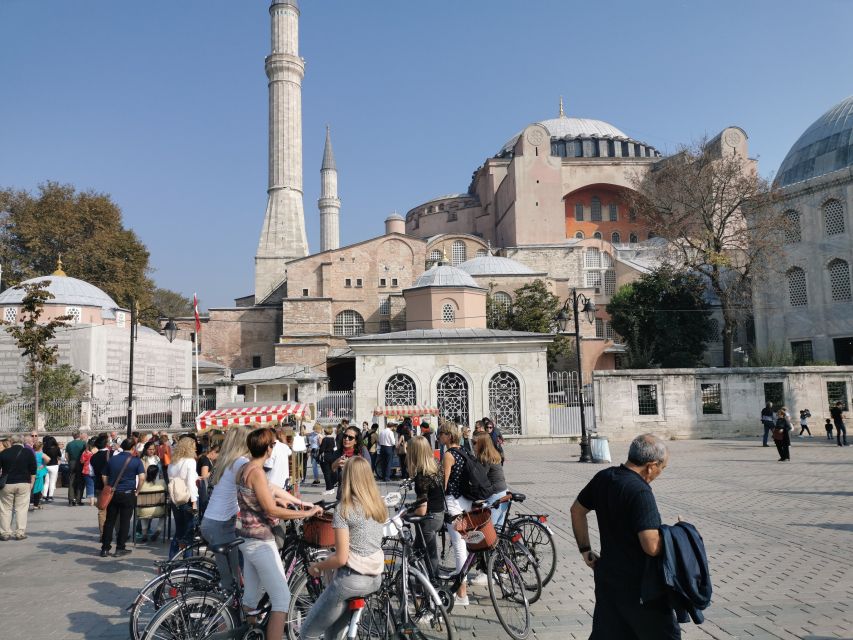
The tour lasts three hours and is conducted in English. Starting times vary, so you need to check availability for your date. Bikes, helmets, bottled water, a map, and guide service are included, while lunch is not.
The meeting point is close to Sirkeci tram station, at Sirkeci Kahve Deposu in Hobyar, Fatih. The route can change because of traffic, weather, or other conditions, so allow the guide some flexibility rather than expecting a perfectly fixed order of stops.
You can cancel up to 24 hours in advance for a full refund, and the reserve-now, pay-later option lets you hold a place without paying immediately. Those policies are useful if your Istanbul plans are still shifting.
Should you book the Istanbul Old City bike tour?
Book it if you want a fast, active introduction to Sultanahmet and value a guide who can connect the Hippodrome, Hagia Sophia, Basilica Cistern, Topkapı Palace, and the old residential streets. The strongest reason to go is the combination of orientation and historical explanation. You will cover more ground than on foot and know which sites deserve a return visit.
Skip it if $207 feels out of proportion to three hours, or if your priority is entering the monuments rather than seeing them from the street. For the right rider, this is a useful first morning in Istanbul. For everyone else, it may be better to spend that money on admissions, a longer guided visit, or several self-guided walks.
FAQ
How long is the Istanbul Old City bicycle tour?
The activity lasts three hours.
Where does the tour meet?
The meeting point is in front of Sirkeci Kahve Deposu, Hobyar, Mimar Kemalettin Cd. No:31, 34112 Fatih, Istanbul. It is very close to Sirkeci tram station.
Which language is the tour conducted in?
The live tour guide speaks English.
Are entrance tickets to the monuments included?
No. The monuments are seen from the outside only, so interior visits and entrance tickets are not included.
What is included in the price?
The price includes guide service, bicycle rental, a helmet, a bottle of water, and a map of Istanbul. Lunch is not included.
Can I cancel the booking?
Yes. You can cancel up to 24 hours in advance for a full refund. You can also reserve now and pay later, subject to the booking conditions.
Just added in Istanbul
- Private Custom Tours in Istanbul★ 5.0 · 38 reviews
- Magical Sights of Istanbul Private Walking Tour★ 5.0 · 50 reviews
- Private Cultural Tour of Istanbul with Certified Guide★ 5.0 · 81 reviews
- Istanbul Airport Transfer Service with Private Minivan★ 4.5 · 61 reviews
- Istanbul: Princes Islands Tour with Heybeliada and Büyükada★ 4.0 · 104 reviews
- Private 4 Days Turkey Tour from Istanbul to Cappadocia, Ephesus, Pamukkale★ 5.0 · 80 reviews
- Private Airport Transfer in Istanbul★ 5.0 · 20 reviews
- Princes’ Islands Cruise with Lunch and Transfer Full-Day Tour★ 3.5 · 114 reviews
Hagia Sophia & Old City Tours, compared.

Hagia Sophia Skip-the-Line Ticket & Museum Option
Read our review →
Blue Mosque & Hagia Sophia Guided Tour w/ Tickets
Read our review →
Private Turkish Bath, Massage, and Spa in Old City
Read our review →
Old City, Waterfalls, Olympos Cable Car, Boat
Read our review →
Hagia Sophia Skip-the-Line Ticket and Audio Guide
Read our review →
Istanbul Party Pub Crawl with Party Bus in Sultanahmet and Taksim
Read our review →
Blue Mosque, Hagia Sophia, & Basilica Cistern Tour
Read our review →
Topkapi, Hagia Sophia and Basilica Cistern Tour
Read our review →Browse the lists this tour appears in